
Product Authenticity on Amazon: How Wholesale Sourcing Reduces Risk
Selling branded products on Amazon can create valuable opportunities, but it also gives sellers an important responsibility: every item must be genuine, correctly described, properly sourced, and supported by reliable business records. The challenge is that a product can look authentic while still creating sourcing problems. A seller may receive genuine-looking inventory from an unknown supplier, list it under the wrong ASIN, receive an incomplete invoice, or discover that the supplier cannot be contacted when Amazon requests verification. That is why product authenticity on Amazon starts before inventory reaches a fulfillment center. It begins with the supplier you choose, the questions you ask, the documents you receive, and the records you maintain. As explained in our previous guide on how to verify a wholesale distributor, supplier verification should happen before payment—not after a listing or account issue appears. Quick Answer How does wholesale sourcing reduce product authenticity risks on Amazon? Wholesale sourcing can reduce risk when sellers purchase products from a traceable distributor, receive detailed commercial invoices, verify product identifiers, confirm selling eligibility, inspect inventory, and keep organized transaction records. These steps do not guarantee Amazon approval or prevent every authenticity complaint. However, they can help sellers demonstrate where their products came from and respond more effectively if Amazon requests sourcing documentation. Amazon recommends researching suppliers, verifying the authenticity and quality of products, and retaining records such as invoices and purchase orders. What Does Product Authenticity Mean on Amazon? Product authenticity means that an item is genuine and comes from the brand or manufacturer represented on the listing. It should not be counterfeit, materially altered, incorrectly branded, or presented as a different version of the product. For Amazon wholesale sellers, authenticity also involves traceability. A seller should be able to explain: A product may be genuine, but weak sourcing records can still make an authenticity review difficult. For example, Amazon may be unable to verify a supplier if the invoice contains incomplete contact information or the business cannot confirm the transaction. AI Snippet Answer What is proof of product authenticity for Amazon sellers? Proof of product authenticity may include original wholesale invoices, supplier contact information, payment records, purchase orders, shipping records, product photographs, and supply-chain documentation. The exact documents required depend on Amazon’s instructions, the product, the complaint, and the marketplace. An invoice is supporting evidence, not an automatic guarantee of approval. Why Product Authenticity Matters for Amazon FBA Sellers Product authenticity matters because customers expect to receive the exact branded product shown on the Amazon listing. When the received item appears different, damaged, used, expired, improperly packaged, or suspicious, the customer may submit a complaint or return request. Authenticity problems can also affect a seller’s ability to list certain products and maintain healthy account records. It Protects Customer Trust Customers rely on the brand name, photographs, product details, size, pack count, and condition information shown on the listing. Problems can occur when: Even a genuine product can create complaints when it does not match the customer’s expectations or the listing information. It Supports Better Documentation Amazon may request invoices or other sourcing information for certain selling applications, authenticity reviews, or policy matters. Amazon’s invoice guidance states that submitted invoices should contain identifiable supplier information, product details, and transaction information. Buying from a professional distributor can help sellers maintain: These records can help sellers respond in a more organized way when documentation is requested. It Can Affect Selling Eligibility Some products, categories, and brands require approval before a seller can list them. Seller Central may display either “Sell this product” or “Apply to sell,” depending on the seller’s eligibility and the product’s requirements. A product being available from a wholesaler does not mean every Amazon account is eligible to sell it. Requirements may vary by brand, ASIN, category, marketplace, and seller account. It Supports Account Health Management Authenticity complaints, product-condition complaints, intellectual-property concerns, and incorrect listing matches may create account health issues. Wholesale sourcing cannot remove all risk. However, buying through a traceable supplier and maintaining proper documents can help sellers avoid preventable problems caused by unknown inventory sources, informal receipts, or mismatched products. Step-by-Step Guide to Reducing Authenticity Risk Step 1: Check Your Eligibility Before Buying Search for the exact product in Seller Central before placing a wholesale order. Confirm: Do not assume that another seller’s ability to list the product means your account has the same access. Step 2: Verify the Wholesale Supplier A supplier should be treated as a business partner, not simply a source of low-priced inventory. Review the supplier’s: You can review the background and sourcing approach of EN Distributions before beginning the account application process. For a more detailed supplier-checking process, read our guide on verifying a wholesale distributor before purchasing inventory. Step 3: Understand the Supplier’s Relationship With the Brand Ask how the supplier obtains the inventory. Useful questions include: An authorized distributor and a general wholesaler are not always the same. An authorized distributor normally has a recognized relationship with a manufacturer or brand, while a wholesale supplier is a broader term for a company selling products in bulk. Our guide to the difference between an authorized distributor and a wholesale supplier explains why this distinction matters for Amazon sellers. Step 4: Request a Proper Wholesale Invoice Ask about the invoice before making payment. A professional wholesale invoice should generally include: The buyer’s information should match the business information connected to the seller account wherever possible. Amazon’s wholesale-sourcing guidance recommends keeping purchasing invoices and notes that sellers may need an invoice from a manufacturer or distributor—or authorization from a brand—when a product requires approval. A valid invoice may help support approval requests or authenticity reviews, depending on Amazon’s requirements. It does not guarantee ungating or approval. Step 5: Match Every Product to the Correct ASIN Do not rely only on the brand name or general product title. Compare the wholesale product with the Amazon listing by checking: For example, a single unit and a two-pack may look almost identical but belong
Amazon FBA Sourcing Mistakes New Sellers Should Avoid
Starting an Amazon FBA wholesale business can feel simple: find a branded product, receive a wholesale price, calculate the margin, and place an order. In practice, a product can look profitable on a spreadsheet and still become an expensive mistake. New sellers often purchase inventory before checking restrictions, trust suppliers without proper verification, accept weak invoices, or overlook important costs. Some mistakes reduce profit, while others can leave sellers with inventory they cannot list or documentation that may not support an Amazon review. The goal is not to remove every possible risk. It is to build a sourcing process that helps you make informed decisions before your money is tied up in inventory. Quick Answer The most common Amazon FBA sourcing mistakes include: A safer approach is to verify the distributor, confirm the exact product, review Amazon requirements, calculate the complete landed cost, and begin with a manageable order. What Are Amazon FBA Sourcing Mistakes? Amazon FBA sourcing mistakes are preventable errors made while selecting products, evaluating suppliers, reviewing documentation, calculating costs, or purchasing wholesale inventory. Before ordering, a seller should be able to answer four important questions: When one of these answers is unclear, the order requires more research. AI Snippet Answer What is the biggest Amazon FBA sourcing mistake? The biggest mistake is purchasing inventory before verifying both the supplier and the exact Amazon listing. A profitable-looking product can become unsellable when the seller is restricted, the ASIN does not match, the invoice is unclear, or the total costs remove the expected margin. Why Sourcing Mistakes Matter for Amazon FBA Sellers Amazon sellers are responsible for the products they list, their condition, and the sourcing records connected to their inventory. Some brands, categories, and individual products require selling approval. Amazon explains that certain branded-product applications may request a purchase invoice from a manufacturer or distributor or a brand authorization letter. Requirements can vary, so sellers should follow the exact instructions shown in their Seller Central account. Amazon also requires accurate product information and restricts illegal, unsafe, and certain regulated products. Product matching and eligibility checks should therefore happen before inventory is purchased. Poor sourcing decisions can lead to: Our previous guide on wholesale business setup for new Amazon FBA sellers explains why business documents, supplier relationships, invoices, product research, and recordkeeping should be prepared before a serious wholesale order is placed. Step-by-Step Practical Guide to Safer Amazon FBA Sourcing Step 1: Confirm Selling Eligibility Before Buying Search the exact product in Seller Central before purchasing inventory. Do not check only the general category. Selling limitations may apply to a specific brand, condition, product type, or individual ASIN. A supplier may legally sell the product to you while your Amazon account is still restricted from listing it. Look for notices such as: Check your eligibility again shortly before making payment because requirements may vary by account, category, product, and marketplace. Step 2: Match the Product to the Exact ASIN A familiar brand name is not enough. Compare the supplier’s product information with the Amazon product detail page. Confirm the following details: A one-pack product should not be sold against a two-pack listing. Amazon also maintains specific multipack identifier rules, so sellers should verify the listing structure carefully before ordering. Even a small mismatch can affect profitability calculations and create customer complaints or return problems. Step 3: Verify the Wholesale Distributor A professional website or attractive stock list does not automatically prove that a supplier is reliable. Review the distributor’s: Amazon’s guidance for finding wholesalers recommends validating supplier credibility before doing business. For a complete due-diligence checklist, read how to verify a wholesale distributor before buying inventory. Step 4: Understand the Supplier’s Brand Relationship An authorized distributor and a general wholesale supplier are not always the same. An authorized distributor normally has a recognized relationship with a manufacturer or brand. A general wholesaler may purchase through distributors, importers, closeout channels, or other legitimate sources. Both may offer authentic inventory, but the available documentation and level of product traceability can differ. Our guide to the difference between an authorized distributor and a wholesale supplier explains what Amazon sellers should verify before purchasing branded products. Remember that distributor authorization does not automatically give you permission to list every product, brand, or ASIN on Amazon. Step 5: Review the Invoice Before Sending Payment Ask what the final invoice will include before placing your order. A wholesale invoice is an important sourcing record, not simply a payment receipt. A proper invoice should clearly show: Amazon publishes invoice requirements for certain policy appeals and may use invoices to evaluate whether products were sourced from legitimate suppliers. Sellers should always follow the exact document request displayed in Seller Central. Never edit an invoice yourself. When a genuine mistake appears, ask the supplier to correct it and issue a new original document. Step 6: Calculate the Complete Landed Cost A product is not profitable simply because the Amazon selling price is higher than the supplier’s wholesale price. Your calculation should include: Use a realistic selling price based on current competition and price history. Avoid calculating profit using a temporary high price that may disappear before your inventory becomes available. Step 7: Start With a Controlled First Order A larger order may offer a lower unit price, but it also increases your exposure to mistakes. A smaller first order allows you to evaluate: Increase your order size only after the supplier and product have performed as expected. Step 8: Keep Complete Sourcing Records Do not rely only on email history or your Amazon inventory dashboard. Create an organized digital folder for every supplier, order, or brand. Keep copies of: Organized sourcing records can help sellers manage inventory, calculate costs, track supplier performance, and respond more efficiently when documentation is requested. Common Amazon FBA Sourcing Mistakes to Avoid Choosing Products Only by Sales Rank Sales rank is only one product-research signal. It does not show your complete competition, selling restrictions, price stability, expected returns, or final profit. Research
Authorized Distributor vs Wholesale Supplier: Key Difference for Amazon Sellers
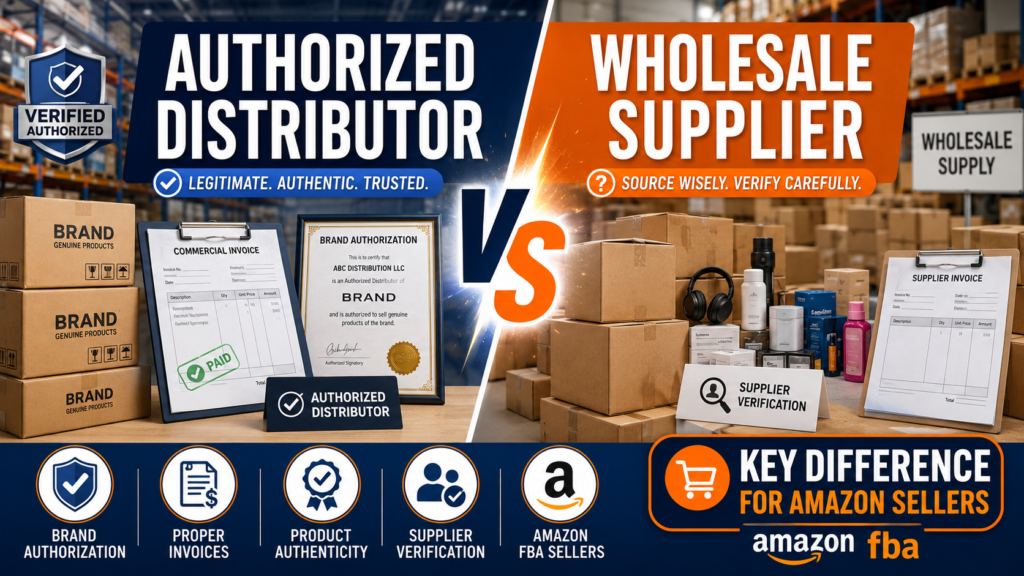
Finding products to sell on Amazon is often easier than finding a trustworthy source for those products. A supplier may offer competitive prices, popular brands, attractive stock lists, and large quantities. However, Amazon FBA sellers must look beyond price and availability. They also need to understand where the inventory comes from, whether the supplier has a legitimate relationship with the brand, and whether proper sourcing records will be available after the purchase. This is where the difference between an authorized distributor and a general wholesale supplier becomes important. Both may sell products in bulk, but they do not always have the same brand relationship, documentation, product traceability, or level of verification. Understanding this difference can help Amazon sellers make more informed sourcing decisions and avoid preventable documentation problems. As explained in our previous guide on how to verify a wholesale distributor before buying inventory, supplier verification should happen before payment—not after Amazon requests sourcing documents. Quick Answer What is the difference between an authorized distributor and a wholesale supplier? An authorized distributor has a recognized or documented distribution relationship with a manufacturer or brand. A wholesale supplier is a broader term for any business that sells products in bulk, but it may or may not be directly authorized by the brand. For Amazon sellers, an authorized distributor may provide stronger product traceability and clearer sourcing documentation. However, buying from an authorized distributor does not automatically guarantee category approval, brand approval, ungating, or permission to sell a particular ASIN. Requirements may vary by brand, category, seller account, marketplace, and Amazon’s current review instructions. What Is an Authorized Distributor? An authorized distributor is a business that has permission from a manufacturer or brand owner to distribute its products within a specific market, territory, sales channel, or customer group. That authorization may be supported by: An authorized distributor generally purchases products directly from the brand, manufacturer, or another approved source within the brand’s distribution network. This does not necessarily mean the distributor can authorize every reseller to sell the products on Amazon. Brand authorization, marketplace selling permission, and distributor status are related concepts, but they are not always the same thing. What an Authorized Distributor May Provide Depending on its relationship with the brand, an authorized distributor may be able to provide: These records can help sellers maintain a clearer sourcing history. They may also help support an approval request or authenticity review depending on Amazon’s requirements. However, sellers should never assume that the words “authorized distributor” automatically make every invoice acceptable. Amazon may review the complete document, supplier details, quantities, product identifiers, transaction history, and the seller’s account information. What Is a Wholesale Supplier? A wholesale supplier is any business that sells products in bulk to retailers, resellers, ecommerce businesses, or other commercial buyers. The term covers several types of businesses, including: This means every authorized distributor may operate as a wholesale supplier, but not every wholesale supplier is necessarily authorized by the original brand. A general supplier may obtain inventory through another distributor, excess stock, closeout channels, imports, secondary markets, or other legitimate sources. The products may still be genuine, but the supply chain could be longer or more difficult to verify. For an ordinary retail business, that may not always create a problem. For an Amazon seller who could be asked to provide detailed sourcing documentation, the difference can be significant. Authorized Distributor vs Wholesale Supplier: Main Differences The following comparison explains the practical differences Amazon sellers should understand. Brand Relationship An authorized distributor usually has a direct or officially recognized relationship with the manufacturer or brand. A general wholesale supplier may purchase from a distributor, importer, liquidator, or another wholesale business without having a direct relationship with the brand. Product Traceability Authorized distributors often have a shorter and clearer supply chain. A wholesale supplier may still sell authentic products, but the seller may need to verify how the supplier obtained the inventory and whether that sourcing path can be documented. Documentation Both businesses may provide invoices, but the strength and detail of those invoices can vary. A useful wholesale invoice should clearly identify: Amazon has stated that invoices used for certain policy appeals should be itemized, authentic, unaltered, connected to a completed transaction, and include identifiable products and supplier contact details. Amazon may also contact a supplier to verify the information. Brand Support An authorized distributor may be in a better position to confirm its relationship with a brand. A regular wholesale supplier may not be able to provide brand relationship details, even when the products are genuine. Amazon Approval Support Documents from a traceable distributor may help support certain applications or reviews, depending on Amazon’s requirements. However, neither an authorized distributor nor a wholesale supplier can promise: Amazon makes its own decisions based on the specific request, documents, account history, product, category, and marketplace. Why the Difference Matters for Amazon FBA Sellers Amazon sellers operate in a marketplace where product authenticity and sourcing records can directly affect listing access and account health. The supplier you choose may influence how easily you can answer questions such as: A low price does not answer any of these questions. It Can Affect Product Authenticity Reviews A customer complaint, rights-owner complaint, product condition issue, or authenticity concern may lead to a request for invoices or sourcing records. A clear invoice from a traceable source can help sellers respond more professionally. Poor documentation, edited files, unclear product descriptions, or an unreachable supplier may make the review more difficult. It May Affect Approval Requests Some brands, categories, and products require sellers to apply before listing. Amazon may ask for invoices, product images, brand documentation, compliance documents, or other records. The exact request should be followed carefully because requirements may vary by category and marketplace. An invoice from a recognized distributor may help support the request, but it should never be presented as a guarantee of approval. It Supports Better Account Records Supplier verification is not only useful when Amazon contacts you. Working with
How to Verify a Wholesale Distributor Before Buying Inventory
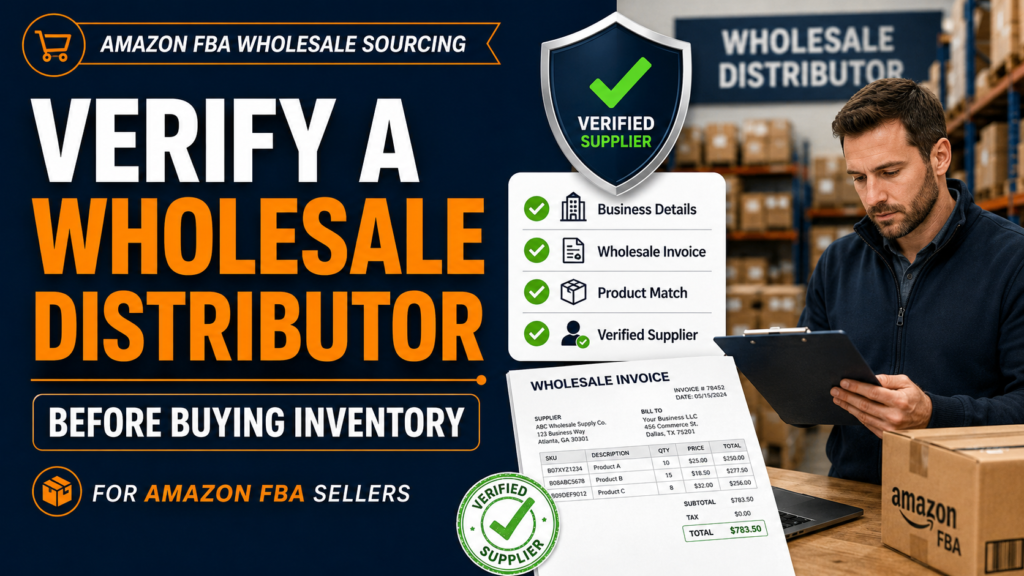
Buying inventory is one of the biggest decisions an Amazon FBA seller makes. The product may look profitable, the sales rank may look attractive, and the wholesale price may seem good — but if the distributor is not verified, the risk can be bigger than the opportunity. Many beginner wholesale sellers focus only on product cost and ROI. That is understandable, but Amazon wholesale sourcing is not only about finding cheap products. It is about finding authentic products from reliable suppliers, keeping proper invoices, and building a clean sourcing record that can support your business if Amazon asks questions later. This article continues the topic from our previous guides on wholesale business setup for new Amazon FBA sellers, Amazon account health for wholesale FBA sellers, and how to read a wholesale stock list before ordering Amazon inventory. Now, let’s focus on one of the most important steps before buying inventory: verifying your wholesale distributor. Quick Answer To verify a wholesale distributor before buying inventory, check the company’s business details, website, contact information, invoice format, product categories, brand relationships, and communication quality. Ask whether they provide proper wholesale invoices and confirm that the products match Amazon listings before ordering. A verified distributor can help sellers keep better sourcing records, but Amazon approval or ungating still depends on Amazon’s requirements. What Does It Mean to Verify a Wholesale Distributor? Verifying a wholesale distributor means checking whether the supplier is a real, professional, and reliable business before you spend money on inventory. It is not enough for a supplier to say, “We sell authentic products.” Sellers should look for proof, business transparency, and proper documentation. For Amazon FBA sellers, distributor verification usually includes checking: A verified wholesale distributor should be able to explain what they sell, how they invoice, what categories they support, and what sellers can expect during the buying process. If a supplier avoids basic questions, uses unclear payment methods, or cannot provide proper invoices, that is a warning sign. For sellers who want a structured sourcing process, working with a company like EN Distributions can make the buying journey more organized because sellers can review business information, services, and contact details before moving forward. Why Distributor Verification Matters for Amazon FBA Sellers Distributor verification matters because Amazon sellers are responsible for the products they list and sell. Even if the supplier makes a mistake, the seller may still face the account health issue, product complaint, or documentation request. Amazon may ask sellers for sourcing documents depending on the product, brand, category, marketplace, or account situation. These documents may include wholesale invoices, supplier details, brand authorization letters, product images, or other records. That is why sellers should verify suppliers before buying inventory — not after a problem happens. A verified distributor can help sellers: This is especially important for branded products and categories such as beauty, health, household, grocery, baby, supplements, toys, and personal care. These categories may have additional documentation or approval requirements depending on Amazon’s rules. Distributor verification also protects your cash flow. If you buy from the wrong supplier, you may end up with products that are restricted, mismatched, expired, damaged, slow-moving, or not accepted by Amazon. Good verification helps you make smarter buying decisions before your money is tied up in inventory. Step-by-Step Guide: How to Verify a Wholesale Distributor Before Buying Inventory 1. Check the Distributor’s Business Identity Start with the basics. A real wholesale distributor should have clear business information. Visit their website, review their about page, check contact details, and see whether the company explains what it does. Look for: You can review a company’s background through its About Us page before starting a business conversation. A supplier that hides basic company information may not be the best choice for Amazon wholesale sourcing. 2. Review Their Website and Services A professional distributor should clearly explain its services. The website does not need to be fancy, but it should help sellers understand what the company offers. Check whether the distributor provides information about: For example, sellers can review the services offered by EN Distributions to understand what type of wholesale sourcing support may be available before applying. 3. Ask About Wholesale Invoices Before placing an order, ask the distributor if they provide proper wholesale invoices. For Amazon sellers, invoices are not just receipts. They are important business records. A good wholesale invoice should usually include: Invoices do not guarantee Amazon approval, but they may help support approval requests, authenticity reviews, or account health documentation depending on Amazon’s requirements. Avoid suppliers who only provide screenshots, informal payment notes, or unclear receipts. Your invoice should look like a real business document. 4. Confirm Product Authenticity and Source Clarity Product authenticity is one of the biggest concerns for Amazon sellers. Before buying, ask the distributor how they source products and whether the products are genuine, new, and suitable for resale. You do not need to ask aggressive questions, but you should ask practical ones: A trustworthy distributor should answer these questions clearly. If the answers are vague or inconsistent, move carefully. 5. Check Product Categories Before Ordering Not every product category is suitable for every Amazon seller. Some categories may require approval, invoices, safety documents, brand authorization, or other information depending on Amazon’s rules. Before buying inventory, check whether the product is restricted in your Amazon Seller Central account. Search the product or ASIN and see whether Amazon shows “Sell this product” or “Apply to Sell.” Do this before placing your wholesale order. Do not assume that a product is open for selling just because another seller is already selling it. 6. Match the Product With the Correct Amazon Listing A common mistake is buying the right brand but matching it to the wrong Amazon listing. This can create serious problems. Before ordering, compare: If the stock list says “1 pack” but the Amazon listing is “2 pack,” your profit calculation will be wrong. If the UPC does not match, you may be looking at the wrong
Wholesale Business Setup for New Amazon FBA Sellers
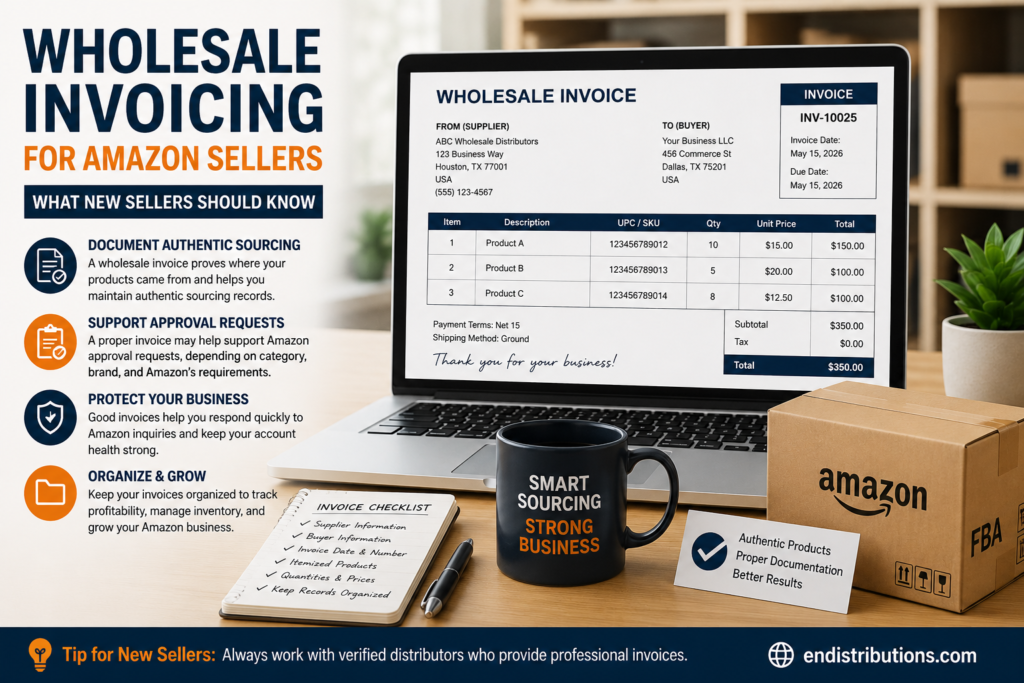
Starting an Amazon FBA wholesale business sounds simple from the outside: find products, buy them in bulk, send them to Amazon, and make sales. But once new sellers begin, they quickly realize that wholesale is not only about finding “profitable products.” It is about setting up the business correctly from the beginning. A weak setup can create problems later. You may struggle with supplier approvals, missing invoices, unclear product records, restricted categories, account health issues, or inventory that looks profitable but does not move as expected. That is why a proper wholesale business setup for Amazon FBA sellers matters. Before ordering inventory, sellers should understand the basics: business documents, supplier verification, invoice records, product research, category requirements, and account health protection. In the previous guide on how to read a wholesale stock list before ordering Amazon inventory, we discussed how sellers should review product titles, UPCs, case packs, wholesale costs, and Amazon restrictions before buying. This article connects with that topic by explaining what new sellers should set up before they even place their first serious wholesale order. EN Distributions’ earlier stock-list guide also explains that sellers should verify product details, restrictions, profit calculations, and invoice support before ordering inventory. Quick Answer A wholesale business setup for Amazon FBA means preparing your seller account, business documents, supplier relationships, invoice records, product research process, and inventory workflow before buying wholesale products. New sellers should work with reliable wholesale distributors, keep proper invoices, check Amazon restrictions, calculate landed costs, and organize records for account health. Wholesale invoices may help support approval requests depending on Amazon’s requirements, but approval is not guaranteed. What Is a Wholesale Business Setup for Amazon FBA? A wholesale business setup is the foundation that helps sellers buy branded products from suppliers or distributors and resell them through Amazon FBA in a more organized way. In a wholesale model, sellers usually do not create their own products. Instead, they source existing branded products from wholesale suppliers, distributors, or authorized sources. Then they list or sell those products on Amazon where allowed, send inventory to Amazon fulfillment centers, and let Amazon handle storage, packing, shipping, and customer service. A proper setup usually includes: This setup helps sellers avoid random buying and build a more professional wholesale sourcing system. Why Wholesale Business Setup Matters for Amazon FBA Sellers Wholesale FBA can be a strong model, but it also comes with responsibilities. Amazon sellers are expected to sell authentic products, follow category rules, provide accurate listings, and keep proper documentation. Amazon may request invoices from sellers to verify that products are sourced from legitimate suppliers. This is one reason new sellers should not treat documentation as an afterthought. If you wait until Amazon asks for proof, it may already be too late to fix weak sourcing records. A proper setup matters because it can help sellers: EN Distributions’ account health guide also explains that wholesale account health is closely connected to sourcing, invoices, supplier records, and how quickly sellers handle account issues. For beginners, this is especially important. Early mistakes can be expensive. Buying the wrong product, using an unclear supplier, or missing invoice details can create problems before the business has time to grow. Step-by-Step Practical Guide to Set Up a Wholesale FBA Business Step 1: Set Up a Professional Amazon Seller Account Before contacting wholesale distributors, make sure your Amazon seller account is properly created and verified. Most serious wholesale suppliers prefer working with sellers who look prepared and professional. Check that your account details are accurate, including: Your seller account information should match your business documents where possible. This can help reduce confusion when suppliers or Amazon review your information. Step 2: Prepare Your Business Documents Wholesale distributors may ask for business details before giving you access to pricing or stock lists. The exact requirements may vary by supplier, state, category, and marketplace. Common documents may include: On the Apply for Wholesale page, EN Distributions asks applicants for details such as name, email, phone number, product or service needed, payment method, taxpayer/employer ID, address, city, state, and country. Having this information ready makes the onboarding process smoother. Step 3: Choose the Right Wholesale Product Categories New sellers should not try to sell everything at once. It is better to focus on categories they understand and can manage carefully. Popular wholesale categories may include: EN Distributions’ website includes product category navigation for beauty and personal care, grocery and gourmet food, health and household, and pet supplies. Before choosing a category, check: Some categories may require extra approval or documentation. Requirements may vary by category and marketplace. Step 4: Find and Verify Wholesale Suppliers A supplier should not be selected only because they offer low prices. New sellers should verify whether the supplier is a real business and whether they can provide proper wholesale documentation. Check these points before ordering: EN Distributions describes itself as an Amazon FBA wholesale supplier and distributor in the USA, with sourcing from verified and authorized brands. This type of supplier verification can help sellers avoid risky sourcing decisions, but sellers should still do their own product and account checks before ordering. Step 5: Understand Wholesale Invoices Invoices are one of the most important parts of Amazon wholesale sourcing. A proper wholesale invoice can help show where products came from, when they were purchased, who supplied them, and how many units were bought. A good wholesale invoice should usually include: Wholesale invoices may help support approval requests or authenticity reviews depending on Amazon’s requirements. However, an invoice does not guarantee ungating, brand approval, or selling permission. Avoid relying on: Keep every invoice in a clean folder by supplier, date, and product category. Step 6: Build a Product Research Process A wholesale stock list is not a shopping list. It is a research starting point. Before buying any item, check: New sellers often make the mistake of calculating profit only from wholesale cost and Amazon selling price. Real profit should include shipping, prep, FBA fees, storage,
How to Read a Wholesale Stock List Before Ordering Amazon Inventory
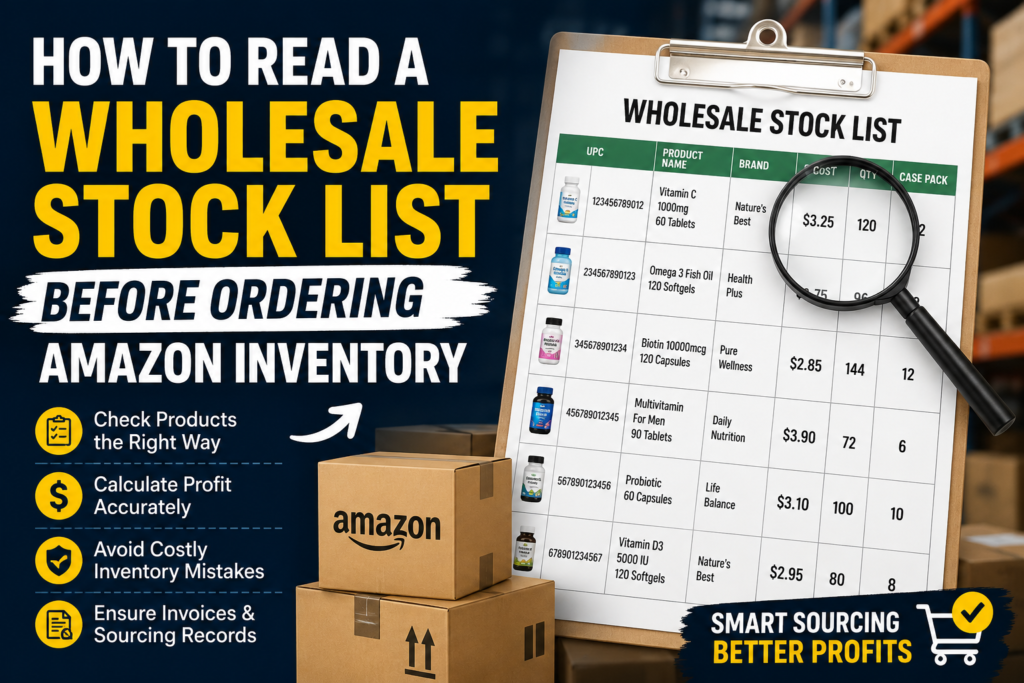
Ordering inventory is one of the biggest decisions an Amazon FBA seller makes. A stock list may look simple at first, but it can carry a lot of important information: product names, UPCs, SKUs, case packs, wholesale cost, available quantity, brand names, minimum order requirements, and sometimes invoice or authorization details. For beginner wholesale sellers, the problem is not only finding a supplier. The real challenge is knowing how to read the stock list before spending money. One wrong decision can lead to slow-moving inventory, restricted products, pricing issues, or sourcing records that do not support your Amazon business properly. In our previous guides, we discussed Amazon account health for wholesale FBA sellers, wholesale business setup for new Amazon sellers, and Amazon wholesale invoice requirements for FBA sellers. This article continues that conversation by explaining how to read a wholesale stock list before ordering Amazon inventory. Quick Answer A wholesale stock list for Amazon FBA should be reviewed by checking the product title, brand, UPC, SKU, wholesale cost, available quantity, case pack, minimum order quantity, Amazon restrictions, selling price, estimated fees, competition, sales rank, and invoice support. Sellers should not order inventory only because the price looks profitable. They should verify product authenticity, category requirements, and sourcing records before purchasing. What Is a Wholesale Stock List for Amazon FBA? A wholesale stock list is a product list shared by a distributor or supplier that shows available inventory for wholesale buyers. Amazon FBA sellers use this list to research products, compare prices, check demand, and decide what to order. A stock list may include: Not every supplier formats stock lists the same way. Some lists are simple spreadsheets. Others may include detailed product data. The key is knowing what each column means and how it affects your Amazon FBA decision. A good Amazon seller does not just scan the list for low prices. They study the full product details and compare them with Amazon marketplace data before placing an order. Why Reading a Stock List Correctly Matters for Amazon FBA Sellers A wholesale stock list is not just a buying sheet. It is a decision-making tool. If you read it correctly, it can help you avoid poor inventory choices and build a stronger sourcing process. It Helps You Avoid Bad Inventory Many sellers lose money because they order products without checking demand, fees, restrictions, or competition. A product may look profitable on the surface but become risky after Amazon fees, storage costs, price changes, or selling restrictions. Reading the stock list properly helps you filter products before spending money. It Supports Better Account Health Amazon may ask sellers for invoices or sourcing documents in certain situations. This may happen during approval requests, authenticity reviews, or category checks. Working with a reliable distributor and keeping clean records can help sellers manage sourcing documentation more professionally. A proper stock list, combined with clear wholesale invoices, can help sellers keep better sourcing records. However, Amazon requirements may vary by category, brand, and marketplace. It Helps With Smarter Product Research A stock list gives you the starting point. Amazon product research tells you whether the item is worth buying. When both are used together, sellers can make better decisions. You should compare supplier data with Amazon data such as: This helps you avoid emotional buying and focus on data-based sourcing. Step-by-Step Guide: How to Read a Wholesale Stock List Before Ordering Step 1: Start With the Product Name and Brand The first thing to check is the product name and brand. Make sure the product on the stock list matches the actual Amazon listing. Similar product names can cause confusion, especially with different sizes, bundles, flavors, colors, or pack counts. For example, a supplier may list a product as “Vitamin C Gummies 60 Count,” but the Amazon listing may be for a 2-pack, 90 count, or different flavor. If you match the wrong listing, your profit calculation and inventory plan will be incorrect. Check: Never assume two similar products are the same. Step 2: Check the UPC or EAN Carefully The UPC or EAN is one of the most important parts of a wholesale stock list. It helps you match the product to the correct Amazon listing. Before ordering, copy the UPC and search it on Amazon. If it matches the exact product, continue your research. If multiple listings appear, review them carefully. If no listing appears, the product may need deeper research. A UPC mismatch can create listing problems, wrong inventory decisions, or compliance issues. For Amazon sellers, accuracy is very important. Step 3: Understand Supplier SKU vs Amazon ASIN A supplier SKU is the distributor’s internal product code. An Amazon ASIN is Amazon’s product identifier. They are not the same thing. Many beginner sellers confuse supplier SKUs with Amazon ASINs. The supplier SKU helps the distributor manage inventory. The ASIN helps sellers find and analyze the product on Amazon. When reviewing a stock list, you should: This process helps prevent ordering the wrong item. Step 4: Review the Wholesale Cost The wholesale cost is the price you pay per unit before shipping, prep, taxes, or other expenses. Many sellers make the mistake of calculating profit using only the wholesale cost. Your real cost may include: A product that looks profitable at wholesale price may not be profitable after all costs are included. Always calculate landed cost before ordering. Step 5: Check Minimum Order Quantity and Case Pack Some distributors sell products in case packs. For example, a product may have a case pack of 12, 24, or 48 units. You may not be able to order just one unit. Check: If a product sells slowly and the minimum order quantity is high, it may not be a good first order. New sellers should be careful with large quantities until they understand demand and competition. Step 6: Check Available Quantity Available quantity tells you how much stock the distributor currently has. However, this number may change quickly, especially for popular products. Before placing
Amazon Account Health Guide for Wholesale FBA Sellers
Amazon FBA wholesale can be a strong business model, but it also comes with responsibilities. Many sellers focus on finding profitable products, winning the Buy Box, and sending inventory to FBA. But one area that should never be ignored is Amazon account health. For wholesale sellers, account health is closely connected to how products are sourced, how invoices are managed, how supplier records are stored, and how quickly seller issues are handled. If Amazon asks for proof of authenticity, supply chain details, or invoice documentation, sellers need to be ready with clear and reliable records. This guide explains how wholesale FBA sellers can protect their account health through verified sourcing, proper documentation, supplier checks, and better day-to-day account management. If you recently read our guide on Amazon wholesale invoice requirements for FBA sellers, this article continues that topic from an account health and risk-prevention angle. Quick Answer Amazon account health for wholesale FBA sellers means keeping your seller account in good standing by following Amazon policies, sourcing authentic products from reliable suppliers, maintaining proper wholesale invoices, responding to account issues quickly, and keeping organized documentation. A verified wholesale distributor may help sellers keep better sourcing records and may support approval or authenticity requests depending on Amazon’s requirements, category rules, and marketplace policies. What Is Amazon Account Health for Wholesale FBA Sellers? Amazon account health is the overall condition of your seller account based on policy compliance, customer experience, product authenticity, listing quality, order performance, and other seller responsibilities. Amazon’s Account Health Rating is a color-coded score from 0 to 1,000 that gives sellers a near real-time view of account status. For wholesale FBA sellers, this matters because sourcing problems can quickly turn into account health problems. For example, a seller may face issues if: Account health is not just about avoiding suspension. It is about building a safer, cleaner, and more professional wholesale operation. Why Amazon Account Health Matters for FBA Wholesale Sellers Wholesale sellers often work with branded products, restricted categories, and high-demand inventory. This can create more opportunities, but it also increases the need for clean sourcing records. Amazon may ask sellers to provide invoices, supplier contact information, or an appeal explaining what steps were taken to resolve product authenticity or quality concerns. That is why wholesale sellers should treat documentation as part of the business, not something to prepare only after a problem happens. A healthy Amazon account may help sellers: Account health also matters for beginner sellers because early mistakes can be expensive. Buying inventory from an unknown supplier, using weak invoices, or ignoring category rules can create problems before the business has time to grow. Step-by-Step Practical Guide to Protecting Account Health Step 1: Source Only from Reliable Wholesale Suppliers The first step in protecting account health is working with the right supplier. A low price is not enough. Sellers should check whether the supplier has a real business presence, clear contact details, proper invoice practices, and product categories that match the seller’s needs. Before placing an order, check: Amazon also advises sellers to review invoice documentation for supplier details, buyer details, issue dates, product descriptions, and purchase quantities when selecting reliable suppliers. For more supplier checking tips, you can read the previous guide on how to check if a wholesale supplier is legit. Step 2: Keep Proper Wholesale Invoices Invoices are one of the most important documents for wholesale FBA sellers. A proper wholesale invoice can help show where products came from, who supplied them, when they were purchased, and how many units were bought. A useful invoice should generally include: Amazon’s invoice guidance for policy violation appeals says invoices must include supplier contact information such as name, phone number, address, and website. Important note: A wholesale invoice may help support approval requests or authenticity reviews, but it does not guarantee Amazon approval. Requirements may vary by product, category, brand, seller account, and marketplace. Step 3: Check Category and Brand Restrictions Before Buying One common mistake wholesale sellers make is buying inventory before checking whether they are eligible to sell it. Before placing an order, check the product inside Seller Central. Some brands, categories, or ASINs may require approval. Some products may also have extra documentation requirements. Before buying, ask yourself: This step can help sellers avoid inventory that cannot be listed or sold from their account. Step 4: Organize Supplier and Product Records Account health protection depends on organization. If Amazon requests documents, sellers should not waste time searching through emails, screenshots, or random folders. Create a simple record system for every purchase. You can organize files by: Good record keeping can help sellers respond more calmly and professionally if Amazon asks for documents later. Step 5: Monitor Account Health Regularly Wholesale sellers should check the Account Health section inside Seller Central often. Do not wait until an issue becomes serious. Review: If Amazon sends a notice, read it carefully. Do not rush into a weak response. Gather the requested documents, review the issue, and respond with clear information. Step 6: Respond to Issues Quickly and Clearly When an account health issue appears, sellers should respond with facts, not emotions. Amazon usually wants clear documentation, a direct explanation, and corrective actions. A strong response may include: Avoid editing invoices, hiding supplier details, or submitting unclear images. Documents should be readable, authentic, and consistent. Step 7: Review Product Quality Before Sending to FBA FBA sellers should inspect products before sending them to Amazon. Even when products come from a wholesale distributor, sellers should check packaging, labels, expiration dates, seals, and product condition. This is especially important for categories like beauty, grocery, health, household, and pet supplies. Before shipping to FBA, check: Small checks before shipment can help reduce returns, complaints, and listing issues. Common Mistakes to Avoid Buying from Unknown or Unverified Suppliers Cheap inventory can become expensive if the supplier cannot provide proper documents or authentic products. Sellers should avoid random online sellers, unclear liquidators, and suppliers that refuse to provide business
Wholesale Business Setup for New Amazon FBA Sellers
Starting an Amazon FBA wholesale business can feel exciting, but it can also feel confusing when you are new. Many sellers begin by searching for profitable products, but they quickly realize that product research is only one part of the process. To build a serious wholesale business, you need proper sourcing, clean invoices, verified suppliers, product authenticity, brand authorization awareness, and good record keeping. Without these foundations, sellers may face listing issues, approval problems, or account health concerns later. This guide explains how new Amazon FBA sellers can set up a wholesale business step by step, source from reliable distributors, and prepare better documentation for long-term selling. If you recently read our guide on Amazon wholesale invoice requirements for FBA sellers in 2026, this article continues the same topic from a broader business setup angle. Quick Answer A wholesale business setup for Amazon FBA means creating a proper sourcing system where sellers buy authentic products from verified wholesale distributors, keep clear invoices, check category requirements, manage inventory records, and follow Amazon’s documentation expectations. A good setup may help sellers keep better sourcing records and may support approval requests depending on Amazon’s requirements, category rules, and marketplace policies. Amazon may ask sellers for itemized invoices from suppliers to verify product details and policy compliance. What Is a Wholesale Business Setup for Amazon FBA? A wholesale business setup is the complete system a seller uses to buy products from suppliers and resell them through Amazon FBA. It is not just about buying bulk inventory. It includes supplier verification, invoice management, product selection, brand research, category checking, and account health planning. For new Amazon sellers, wholesale can be a more structured model than random product buying because it focuses on sourcing from legitimate business suppliers. Instead of buying from retail stores or unknown online sellers, wholesale sellers usually work with distributors, brands, or authorized supply partners. A proper wholesale setup usually includes: Amazon may review sourcing documents in certain situations, especially for restricted categories, brand approvals, product authenticity concerns, or account health reviews. EN Distributions’ previous ungating guide also explains that wholesale invoices may help support approval requests, but they do not guarantee approval because Amazon makes the final decision. Why Wholesale Business Setup Matters for Amazon FBA Sellers Many new sellers make the mistake of thinking Amazon FBA is only about finding a profitable product. In reality, the supplier behind that product matters just as much. If your supplier is not reliable, your business can face problems such as missing invoices, unclear product details, poor packaging, counterfeit risk, delayed inventory, or difficulty proving where the products came from. These issues can become serious if Amazon asks for documentation. A strong wholesale setup matters because it helps sellers: Build Better Sourcing Records Good records make it easier to track where products came from, when they were purchased, how many units were bought, and which supplier issued the invoice. This can help sellers stay organized if Amazon requests documentation later. Reduce Supplier Risk Working with a verified distributor can reduce the risk of dealing with fake suppliers, unclear product sources, or unrealistic offers. As explained in the previous guide on how to check if a wholesale supplier is legit, sellers should review supplier details, business information, invoice quality, and product authenticity before buying. Support Approval Requests Some sellers may need approval to sell certain brands, categories, or product types. A proper wholesale invoice may help support approval requests depending on Amazon’s requirements, but it should never be treated as a guaranteed approval document. Protect Account Health Amazon sellers need to think beyond one sale. Poor sourcing can lead to complaints, authenticity concerns, returns, or documentation issues. A clean wholesale setup can help sellers manage their business more professionally and keep better records for future reviews. Step-by-Step Wholesale Business Setup for New Amazon FBA Sellers Setting up a wholesale business becomes easier when you follow a clear process. Here is a practical step-by-step guide for new sellers. Step 1: Understand Your Business Model Before contacting suppliers, decide what type of wholesale seller you want to become. Some sellers focus on grocery, beauty, health, household, pet supplies, or branded everyday products. Others prefer slower-moving but more stable items. Ask yourself: This step helps you avoid buying inventory blindly. Step 2: Check Amazon Category and Brand Requirements Before purchasing any product, check whether you are eligible to sell it on Amazon. Some categories, brands, and ASINs may require approval. Requirements may vary by marketplace, category, product type, and seller account. New sellers should always check listing eligibility inside Seller Central before placing a wholesale order. This reduces the risk of buying products that cannot be listed or sold from your account. Step 3: Work with a Verified Wholesale Distributor Your supplier is one of the most important parts of your wholesale setup. A verified wholesale distributor can provide product information, proper invoices, and clearer sourcing support. When reviewing a supplier, check: You can learn more about the company and its wholesale approach by visiting the About EN Distributions page. Step 4: Request Proper Wholesale Invoices Invoices are important for record keeping and may help support approval or account review requests depending on Amazon’s requirements. A useful wholesale invoice should generally include: Amazon’s invoice guidance states that invoices should be itemized and show complete transaction details, and documents that are not completed invoices, are self-issued, or appear digitally manipulated may not be accepted in certain review situations. Step 5: Keep Product and Supplier Records Organized Do not wait until there is a problem to organize your documents. Create a simple record system from day one. You can organize your files by: This makes it easier to respond if Amazon requests information later. Step 6: Start with Manageable Orders New sellers should avoid buying too much inventory too soon. Start with products and quantities that match your budget, experience, and account eligibility. Before scaling, review: Wholesale works better when sellers make careful purchasing decisions instead of chasing every
Amazon Wholesale Invoice Requirements for FBA Sellers in 2026
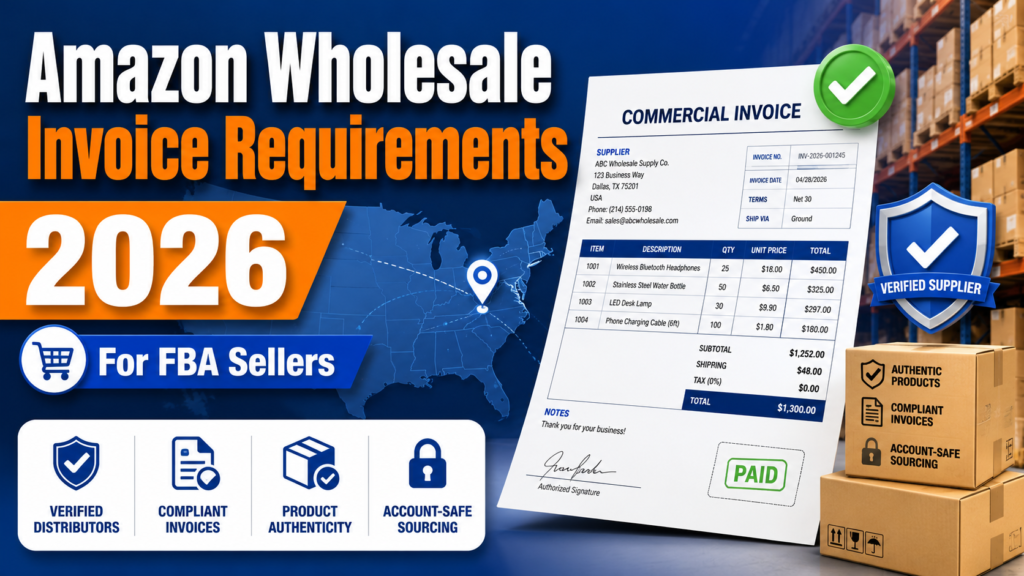
For Amazon FBA sellers, buying products is only one part of the business. The real challenge is proving that your products come from a reliable source when Amazon asks for documentation. Many new sellers focus only on product price, profit margin, and sales rank. Those things matter, but they are not enough. If your invoice is incomplete, unclear, or from a supplier Amazon cannot verify, it may create problems during approval requests, authenticity reviews, or account health checks. This is why understanding Amazon wholesale invoice requirements is important before you place your first wholesale order. A proper invoice may help support product approval or ungating requests, depending on Amazon’s requirements, but it should never be treated as a guaranteed approval document. In our previous guides, we explained how to check if a wholesale supplier is legit, how wholesale invoices can support approval requests, and the basics of FBA prep. This article connects those topics and explains what FBA sellers should look for in a wholesale invoice in 2026. An Amazon wholesale invoice should clearly show the supplier’s business name, supplier contact details, buyer business information, invoice date, invoice number, product details, quantities purchased, and transaction information. For some product approval requests, Amazon may ask for invoices issued within a recent time period and showing a minimum quantity purchased. Requirements may vary by category, brand, marketplace, and seller account. What Are Amazon Wholesale Invoice Requirements? Amazon wholesale invoice requirements refer to the details Amazon may review when a seller submits supplier documents for approval, ungating, authenticity verification, or compliance checks. A wholesale invoice is not the same as a retail receipt. A receipt usually proves that a consumer bought something from a store. A wholesale invoice shows a business-to-business purchase between a supplier and a reseller. For Amazon FBA sellers, a strong wholesale invoice usually includes: The goal is simple: Amazon should be able to understand who sold the products, who purchased them, when the purchase happened, and what products were included. Why Invoice Requirements Matter for Amazon FBA Sellers Amazon wants to protect customers, brands, and the marketplace. If a seller lists products from unclear sources, it can lead to authenticity complaints, restricted product issues, expired inventory problems, or poor customer experience. Wholesale invoices help sellers keep cleaner sourcing records. They may also help sellers respond more professionally when Amazon requests documentation. They May Support Ungating Requests Some categories, brands, or products require approval before sellers can list them. This is commonly called ungating. A wholesale invoice may help support an approval request because it shows that the seller purchased inventory from a business supplier. However, Amazon approval is not guaranteed. Amazon may accept, reject, or request more information depending on the category, marketplace, brand, seller history, and document quality. They Help With Product Authenticity Records If Amazon questions product authenticity, sellers may need to show where the products came from. A clear invoice from a verified distributor can help sellers maintain better records. This does not mean the invoice alone solves every account issue. Sellers should also check product condition, packaging, expiration dates, safety rules, and brand restrictions before buying. They Protect Better Business Organization Even outside Amazon approval requests, invoices are important for business records. They help you track purchase cost, inventory, reorder history, tax records, and supplier relationships. A serious wholesale seller should save every invoice, shipment record, supplier email, and product list in an organized folder. Step-by-Step Guide: How to Prepare a Strong Amazon Wholesale Invoice Step 1: Buy From a Verified Wholesale Distributor The first step is choosing the right supplier. If your supplier is not reliable, the invoice may not help much. Before buying, check whether the distributor has: You can learn more about EN Distributions and its wholesale sourcing focus on the About Us page. Step 2: Make Sure Your Business Details Match Your invoice should show your correct business information. If your Amazon seller account uses a business name and address, try to keep your wholesale account details consistent. Mismatched information can create confusion during document review. For example, if your Amazon account uses one business name but the invoice shows a completely different name, Amazon may ask questions or reject the document. Before placing an order, check: Accuracy matters more than sellers realize. Step 3: Check Supplier Information on the Invoice A strong invoice should clearly show the supplier’s business details. Amazon may need to understand who issued the invoice and whether the supplier is reachable. The supplier section should include: Avoid invoices that look incomplete, generic, edited, or unclear. Step 4: Review Product Details Carefully Product information should be easy to understand. The invoice should not be vague. Instead of a generic line like “mixed goods” or “health products,” it is better when the invoice shows clear product names, quantities, and descriptions. Good product details may include: For Amazon sellers, the invoice should help connect the purchased product to the product being reviewed or listed. Step 5: Understand Quantity Requirements For some approval requests, Amazon may ask for invoices showing a minimum number of units purchased. Sellers often hear about 10-unit requirements, but requirements may vary depending on category, brand, product type, or marketplace. Do not assume the same rule applies to every product. Always check the current approval request inside Seller Central before buying inventory. A safer approach is: This can help you avoid buying inventory that you cannot list. Step 6: Keep the Invoice Clean and Unedited Do not edit invoice details. Do not change product names, dates, addresses, quantities, or supplier information. Edited invoices can create serious account risks. If something is wrong on the invoice, ask the supplier to issue a corrected invoice instead. Sellers should also avoid using fake invoices, receipt generators, or documents from suppliers they did not actually buy from. This can harm account health and may lead to long-term problems. Step 7: Save Supporting Documents An invoice is important, but it should not be the only record you keep. Save: If
How to Check If a Wholesale Supplier Is Legit
Finding a wholesale supplier looks easy at first. A website promises branded products, low prices, fast shipping, and “high-profit” inventory. But for Amazon FBA sellers, choosing the wrong supplier can create serious problems. A weak or unverified supplier may lead to poor invoices, questionable product authenticity, delayed shipments, missing documentation, or even Amazon account health issues. For beginner wholesale sellers, this can be confusing because every supplier claims to be reliable. Before buying inventory, sellers need to know how to verify a supplier properly. This guide explains how to check if a wholesale supplier is legit, what documents to look for, which red flags to avoid, and how working with a verified wholesale distributor can help sellers build a cleaner sourcing process. If you recently read our guide on Amazon ungating and wholesale invoices, this article continues the same topic by focusing on supplier verification before you place an order. A wholesale supplier is more likely to be legit if they have verifiable business details, clear contact information, professional wholesale invoices, authentic product sourcing, realistic pricing, transparent order terms, and a business process for approved buyers. Amazon FBA sellers should always verify the supplier before purchasing inventory, especially when invoices may be needed for approval requests, authenticity reviews, or account health documentation. What Does It Mean for a Wholesale Supplier to Be Legit? A legit wholesale supplier is a real business that sources and sells products through proper wholesale channels. For Amazon sellers, this usually means the supplier can provide clear business information, product details, order records, and invoices that may help support sourcing documentation when needed. A legitimate supplier should not behave like a random marketplace seller. They should have a proper business identity, a professional communication process, clear pricing terms, and the ability to explain how wholesale orders are handled. For Amazon FBA sellers, legitimacy is not only about getting products at a good price. It is also about whether the supplier can support a clean sourcing trail. A legit supplier should usually have: A supplier can offer attractive pricing, but if they cannot provide proper documentation, the deal may not be worth the risk. Why Supplier Verification Matters for Amazon FBA Sellers Amazon FBA sellers operate in a marketplace where product authenticity, customer trust, and account health matter. If Amazon asks where your products came from, you need to be prepared with clean and organized sourcing records. This is why supplier verification matters before buying inventory. A verified supplier may help sellers keep better records for: This does not mean a supplier can guarantee Amazon approval. Approval requirements may vary by category, marketplace, brand, and seller account. However, buying from a more reliable source can help sellers stay better prepared if Amazon requests documents. In our related guide on Amazon account health for wholesale FBA sellers, we explained how clean records can help sellers manage future reviews more professionally. Supplier verification is one of the first steps in that process. Step-by-Step Guide: How to Check If a Wholesale Supplier Is Legit Step 1: Check the Supplier’s Business Identity Start with the basics. A legitimate wholesale supplier should have a clear business identity. Look for the company name, business address, phone number, email address, and website. Check whether the information is consistent across the website, invoices, email signatures, social profiles, and business listings. If the supplier uses multiple business names, different addresses, or unrelated email domains without explanation, that is a warning sign. A professional wholesale distributor should be easy to identify. For example, sellers can learn more about EN Distributions through the company’s About Us page, where the business explains its wholesale focus and distributor role. Step 2: Review the Website Carefully A supplier’s website can tell you a lot. It does not need to be perfect, but it should look professional, active, and relevant to wholesale buyers. Check for: Be careful with websites that only show generic claims like “best supplier,” “guaranteed profit,” or “Amazon approval guaranteed.” Legitimate wholesale businesses usually focus on products, process, documentation, and buyer requirements instead of making unrealistic promises. You can review the main EN Distributions website at endistributions.com to understand how a wholesale distributor presents categories, services, and buyer information. Step 3: Check If They Have a Wholesale Account Process Real wholesale distributors often do not give full access to pricing and stock lists to every visitor instantly. They may ask sellers to apply for a wholesale account first. This is normal in B2B wholesale because suppliers often need buyer details before sharing inventory, pricing, MOQ, or order terms. A proper wholesale application may ask for: If a supplier sells “wholesale” products without any business verification, it does not automatically mean they are fake, but sellers should be more careful. Sellers who are ready to source inventory can apply for a wholesale account and provide the required business information before requesting product availability. Step 4: Ask About Wholesale Invoices A wholesale invoice is one of the most important documents for Amazon sellers. It can help sellers keep better sourcing records and may help support approval requests depending on Amazon’s requirements. Before placing an order, ask the supplier what information appears on the invoice. A useful wholesale invoice should usually include: Avoid suppliers who only provide screenshots, retail receipts, edited documents, or vague order confirmations. A clean commercial invoice is usually stronger than an informal receipt. Step 5: Verify Product Authenticity For Amazon sellers, product authenticity is critical. Buying cheap inventory from an unknown source can become risky if the products are counterfeit, expired, damaged, repackaged, or sourced through unclear channels. Before buying, ask practical questions: For categories such as beauty, grocery, health, household, and pet supplies, sellers should be extra careful because packaging, expiration dates, condition, and authenticity can affect customer experience and Amazon account health. Step 6: Ask About Brand Authorization When Needed Some products may require more than a wholesale invoice. Amazon may ask for brand authorization or additional documentation depending on the brand, category, or marketplace.