
Amazon FBA wholesale can be a strong business model, but it also comes with responsibilities. Many sellers focus on finding profitable products, winning the Buy Box, and sending inventory to FBA. But one area that should never be ignored is Amazon account health.
For wholesale sellers, account health is closely connected to how products are sourced, how invoices are managed, how supplier records are stored, and how quickly seller issues are handled. If Amazon asks for proof of authenticity, supply chain details, or invoice documentation, sellers need to be ready with clear and reliable records.
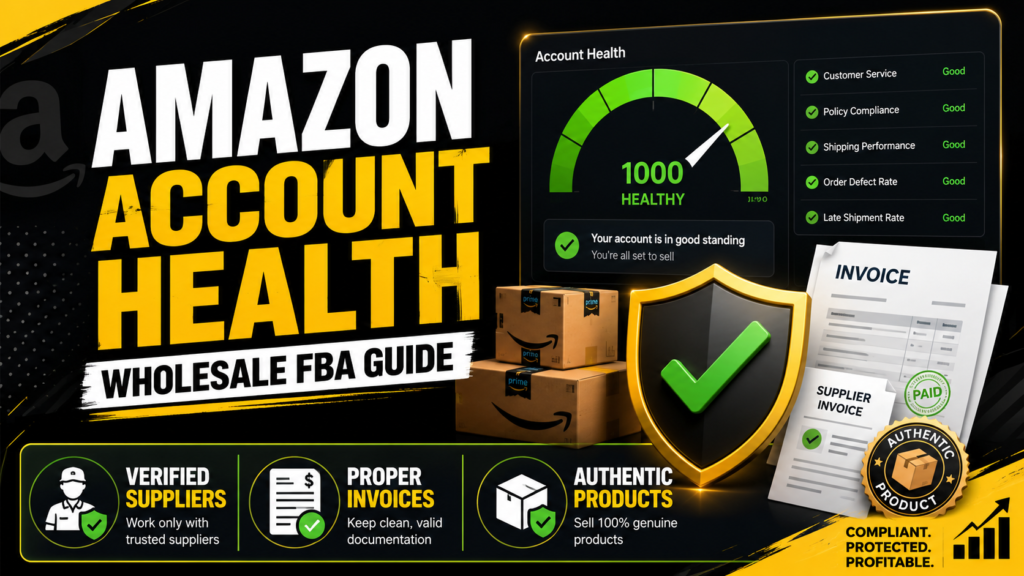
This guide explains how wholesale FBA sellers can protect their account health through verified sourcing, proper documentation, supplier checks, and better day-to-day account management.
If you recently read our guide on Amazon wholesale invoice requirements for FBA sellers, this article continues that topic from an account health and risk-prevention angle.
Quick Answer
Amazon account health for wholesale FBA sellers means keeping your seller account in good standing by following Amazon policies, sourcing authentic products from reliable suppliers, maintaining proper wholesale invoices, responding to account issues quickly, and keeping organized documentation. A verified wholesale distributor may help sellers keep better sourcing records and may support approval or authenticity requests depending on Amazon’s requirements, category rules, and marketplace policies.
What Is Amazon Account Health for Wholesale FBA Sellers?
Amazon account health is the overall condition of your seller account based on policy compliance, customer experience, product authenticity, listing quality, order performance, and other seller responsibilities.
Amazon’s Account Health Rating is a color-coded score from 0 to 1,000 that gives sellers a near real-time view of account status. For wholesale FBA sellers, this matters because sourcing problems can quickly turn into account health problems.
For example, a seller may face issues if:
- Products are not authentic
- Invoices are unclear or incomplete
- Supplier details cannot be verified
- Listings are inaccurate
- Product condition does not match the listing
- Restricted products are listed without proper approval
- Amazon requests documents and the seller cannot provide them
Account health is not just about avoiding suspension. It is about building a safer, cleaner, and more professional wholesale operation.
Why Amazon Account Health Matters for FBA Wholesale Sellers
Wholesale sellers often work with branded products, restricted categories, and high-demand inventory. This can create more opportunities, but it also increases the need for clean sourcing records.
Amazon may ask sellers to provide invoices, supplier contact information, or an appeal explaining what steps were taken to resolve product authenticity or quality concerns. That is why wholesale sellers should treat documentation as part of the business, not something to prepare only after a problem happens.
A healthy Amazon account may help sellers:
- Keep selling without unnecessary interruptions
- Respond faster to authenticity or listing issues
- Build a more organized sourcing process
- Reduce the risk of buying from unreliable suppliers
- Keep better records for future approval requests
- Make smarter inventory decisions before scaling
Account health also matters for beginner sellers because early mistakes can be expensive. Buying inventory from an unknown supplier, using weak invoices, or ignoring category rules can create problems before the business has time to grow.
Step-by-Step Practical Guide to Protecting Account Health
Step 1: Source Only from Reliable Wholesale Suppliers
The first step in protecting account health is working with the right supplier. A low price is not enough. Sellers should check whether the supplier has a real business presence, clear contact details, proper invoice practices, and product categories that match the seller’s needs.
Before placing an order, check:
- Supplier business name
- Business address and contact information
- Product categories offered
- Invoice format
- Brand or distributor relationship
- Communication quality
- Shipping process
- Product condition and packaging
Amazon also advises sellers to review invoice documentation for supplier details, buyer details, issue dates, product descriptions, and purchase quantities when selecting reliable suppliers.
For more supplier checking tips, you can read the previous guide on how to check if a wholesale supplier is legit.
Step 2: Keep Proper Wholesale Invoices
Invoices are one of the most important documents for wholesale FBA sellers. A proper wholesale invoice can help show where products came from, who supplied them, when they were purchased, and how many units were bought.
A useful invoice should generally include:
- Supplier name
- Supplier address and phone number
- Buyer business name
- Buyer address
- Invoice date
- Invoice number
- Product names or identifiers
- Quantity purchased
- Completed transaction details
- Clear and readable formatting
Amazon’s invoice guidance for policy violation appeals says invoices must include supplier contact information such as name, phone number, address, and website.
Important note: A wholesale invoice may help support approval requests or authenticity reviews, but it does not guarantee Amazon approval. Requirements may vary by product, category, brand, seller account, and marketplace.
Step 3: Check Category and Brand Restrictions Before Buying
One common mistake wholesale sellers make is buying inventory before checking whether they are eligible to sell it.
Before placing an order, check the product inside Seller Central. Some brands, categories, or ASINs may require approval. Some products may also have extra documentation requirements.
Before buying, ask yourself:
- Can my account list this product?
- Is the brand restricted?
- Is the category gated?
- Does Amazon require invoices or other documents?
- Is the product condition allowed?
- Are there expiration date rules?
- Is there any safety or compliance requirement?
This step can help sellers avoid inventory that cannot be listed or sold from their account.
Step 4: Organize Supplier and Product Records
Account health protection depends on organization. If Amazon requests documents, sellers should not waste time searching through emails, screenshots, or random folders.
Create a simple record system for every purchase. You can organize files by:
- Supplier name
- Invoice number
- Purchase date
- Brand name
- Product category
- ASIN or SKU
- Quantity purchased
- Shipment batch
- FBA shipment ID
Good record keeping can help sellers respond more calmly and professionally if Amazon asks for documents later.
Step 5: Monitor Account Health Regularly
Wholesale sellers should check the Account Health section inside Seller Central often. Do not wait until an issue becomes serious.
Review:
- Policy violations
- Product authenticity complaints
- Listing violations
- Intellectual property complaints
- Customer complaints
- Restricted product issues
- Voice of the Customer
- Performance notifications
If Amazon sends a notice, read it carefully. Do not rush into a weak response. Gather the requested documents, review the issue, and respond with clear information.
Step 6: Respond to Issues Quickly and Clearly
When an account health issue appears, sellers should respond with facts, not emotions. Amazon usually wants clear documentation, a direct explanation, and corrective actions.
A strong response may include:
- What happened
- Which product or ASIN is affected
- Where the product was sourced
- Invoice or supplier details if requested
- What action was taken
- How the issue will be prevented in the future
Avoid editing invoices, hiding supplier details, or submitting unclear images. Documents should be readable, authentic, and consistent.
Step 7: Review Product Quality Before Sending to FBA
FBA sellers should inspect products before sending them to Amazon. Even when products come from a wholesale distributor, sellers should check packaging, labels, expiration dates, seals, and product condition.
This is especially important for categories like beauty, grocery, health, household, and pet supplies.
Before shipping to FBA, check:
- Product packaging is not damaged
- Expiration dates are valid where applicable
- Product matches the Amazon listing
- Labels and barcodes are correct
- Units are not leaking, broken, or opened
- Quantity matches your invoice and shipment plan
Small checks before shipment can help reduce returns, complaints, and listing issues.
Common Mistakes to Avoid
Buying from Unknown or Unverified Suppliers
Cheap inventory can become expensive if the supplier cannot provide proper documents or authentic products. Sellers should avoid random online sellers, unclear liquidators, and suppliers that refuse to provide business details.
Depending on Retail Receipts
Retail receipts are not the same as wholesale invoices. Amazon may require supplier invoices or other documentation depending on the situation. Wholesale sellers should build their business around proper B2B sourcing records.
Believing in Guaranteed Approval Claims
No supplier, distributor, or service provider can guarantee Amazon approval. A proper invoice may help support an approval request, but Amazon makes the final decision based on its own requirements.
Ignoring Account Notifications
Some sellers see a warning and delay action. This can make the situation worse. Account health issues should be reviewed as soon as possible.
Mixing Products from Different Sources
If the same product is purchased from multiple suppliers, record keeping becomes more complicated. Sellers should keep invoices and product batches clearly separated.
How a Verified Wholesale Distributor Can Help
A verified wholesale distributor can support a more professional sourcing process for Amazon FBA sellers. While a distributor cannot control Amazon’s final decisions, working with a reliable supplier can help sellers maintain better documentation and product traceability.
A good distributor may help with:
- Access to wholesale product categories
- Clear wholesale invoices
- Product authenticity support
- Better supplier communication
- More organized sourcing records
- FBA-focused order planning
- Consistent inventory updates
EN Distributions works with Amazon FBA sellers and wholesale buyers who need reliable sourcing support. You can learn more about the company on the About EN Distributions page or visit the EN Distributions homepage to explore wholesale sourcing information.
If you are ready to start, you can apply for a wholesale account and share the product categories you are interested in. If you have questions before applying, you can contact the distributor for more information.
Final Thoughts
Amazon account health should be a priority for every wholesale FBA seller. It is not something to think about only when a warning appears. Strong account health starts with smart sourcing, verified suppliers, proper invoices, clean product records, and regular account monitoring.
For beginner sellers, the best approach is to move carefully. Check eligibility before buying, keep every invoice organized, avoid unrealistic approval promises, and work with suppliers who understand wholesale documentation.
A verified wholesale distributor may help sellers keep better sourcing records and may support approval or authenticity requests depending on Amazon’s requirements. However, Amazon’s rules can vary by category, product, marketplace, and seller account.
If you want to source authentic wholesale products for Amazon FBA, explore available categories, apply for a wholesale account, or contact EN Distributions to discuss your sourcing needs.
FAQs
1. What is Amazon account health for FBA sellers?
Amazon account health is the status of a seller account based on policy compliance, customer experience, product authenticity, listing issues, and performance metrics. Wholesale sellers should monitor it regularly to avoid serious selling problems.
2. Can wholesale invoices help with Amazon account health?
Wholesale invoices can help sellers keep better sourcing records and may support approval or authenticity requests depending on Amazon’s requirements. They do not guarantee approval or issue removal.
3. What documents should wholesale FBA sellers keep?
Wholesale sellers should keep invoices, supplier contact details, product records, purchase dates, quantities, shipment details, ASINs, SKUs, and any brand or authorization documents where applicable.
4. Can a distributor guarantee Amazon ungating?
No. A distributor cannot guarantee Amazon ungating or approval. Proper wholesale invoices may help support an application, but Amazon makes the final decision based on its own rules and verification process.
5. How can sellers avoid product authenticity complaints?
Sellers can reduce risk by sourcing from verified suppliers, keeping proper invoices, checking product condition, avoiding suspicious deals, matching products accurately to listings, and responding quickly if Amazon requests documents.