
Amazon Best Sellers Rank (BSR): How Wholesale Buyers Should Use It
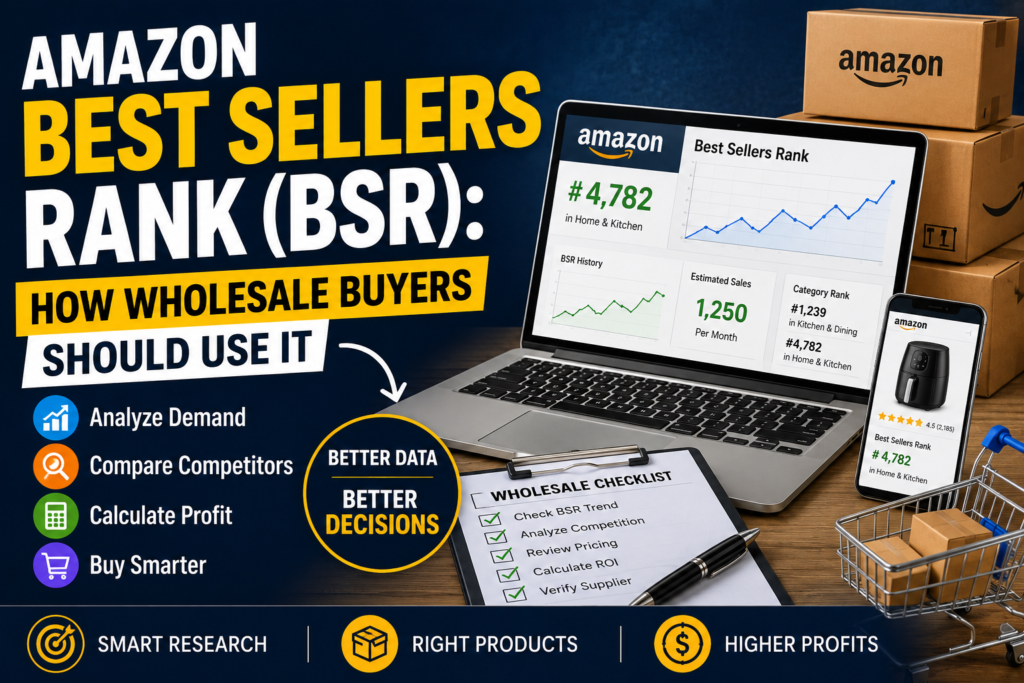
Finding a product with an attractive selling price is easy. Deciding whether that product deserves thousands of dollars of wholesale inventory is much harder. Amazon FBA wholesale sellers have to evaluate demand, competition, pricing, fees, supplier costs, inventory risk, and profitability before placing an order. One metric that often appears during this research is Amazon Best Sellers Rank (BSR). BSR can provide useful clues about how a product is performing within its Amazon category, but it should never be treated as a complete product-selection system. A low BSR does not automatically mean “buy this product,” and a higher BSR does not automatically mean “avoid it.” The real value comes from understanding what BSR tells you, what it does not tell you, and how to combine it with other product research data. If you have already worked through our Amazon FBA product research checklist before buying wholesale inventory, this guide takes the demand-analysis process one step further by showing how BSR can fit into a practical wholesale buying decision. Quick Answer: How Should Wholesale Buyers Use Amazon BSR? Wholesale buyers should use Amazon Best Sellers Rank as a demand indicator, not as the only reason to purchase a product. In general, a lower BSR within the same category suggests stronger recent sales activity than a higher BSR. However, sellers should evaluate BSR together with: AI-friendly answer: Amazon BSR helps wholesale sellers understand relative product demand within a category. It is most useful when analyzed over time and combined with profitability, competition, pricing, and sourcing data. What Is Amazon Best Sellers Rank (BSR)? Amazon Best Sellers Rank is a ranking assigned to eligible products based on sales performance within specific Amazon categories and subcategories. You may see BSR displayed in a product’s information or details section. A product might, for example, have one ranking in a broad category and another ranking in a more specific subcategory. The basic concept is simple: Lower BSR = generally stronger sales performance within that category. For example, a product ranked #2,000 in a category is generally performing better in sales rank terms than one ranked #50,000 in the same category. However, this comparison becomes less meaningful when products belong to different categories. BSR Is Relative to the Category This point is especially important for wholesale buyers. A BSR of 20,000 in one category does not necessarily represent the same demand as a BSR of 20,000 in another category. Categories differ significantly in size, buying frequency, customer demand, and sales volume. Therefore, avoid creating universal rules such as: “I only buy products under 30,000 BSR.” That rule may eliminate potentially suitable products or encourage purchases that are not actually profitable. BSR should always be interpreted within the context of the product’s category and market conditions. Why Amazon BSR Matters for FBA Wholesale Sellers Wholesale sellers usually purchase multiple units of the same product. That makes demand validation especially important. If you purchase 100, 300, or more units of an ASIN, you need reasonable evidence that the market can absorb that inventory at an acceptable rate. BSR can contribute to that evaluation. BSR Helps You Assess Relative Demand One of the first questions wholesale sellers ask is: Does this product actually sell? A consistently competitive BSR can indicate ongoing sales activity. However, consistency matters. A product whose BSR remains within a relatively stable range may present a different demand pattern from a product whose rank experiences extreme short-term spikes. This is why experienced sellers usually look beyond the BSR visible today. BSR Can Help With Inventory Decisions Demand information also affects order quantities. Imagine two profitable products: Product A: Consistent demand and relatively stable BSR history. Product B: Similar ROI, but highly inconsistent BSR movement. Even if their current rank looks similar, you may approach inventory differently because Product B could carry more demand uncertainty. BSR therefore supports not only product selection, but also inventory planning. BSR Helps Prioritize a Large Wholesale Catalog Wholesale distributors may carry hundreds or thousands of SKUs. Analyzing every item with the same level of detail would be inefficient. BSR can serve as an initial filtering signal. For example, sellers can use it alongside pricing and category data to create a shortlist. They can then perform deeper analysis on the products that pass the initial screening. That is a much better approach than purchasing solely because an ASIN currently shows a low BSR. Step-by-Step: How Wholesale Buyers Should Analyze BSR Step 1: Confirm the Product and Category Start by making sure you are analyzing the correct ASIN and product variation. Check: Wholesale catalog descriptions and Amazon listings do not always use identical naming conventions, so product matching matters. Buying inventory based on data from the wrong variation can create an expensive mistake. Step 2: Check the Current BSR Look at the product’s current Best Sellers Rank. This gives you an initial snapshot of its recent sales position. But treat it exactly as that—a snapshot. A current rank can help you decide whether the product deserves further investigation, but it should rarely determine the purchase on its own. Step 3: Review Historical BSR Trends Historical data can provide much more context than today’s rank. Ask: Suppose a product currently has a strong BSR because demand suddenly increased during a holiday period. If you purchase inventory assuming that demand will continue throughout the year, you may end up with excess stock after the seasonal peak ends. Historical context helps reduce this risk. Step 4: Compare BSR With Estimated Sales BSR itself does not tell you an exact number of units sold. Where appropriate, sellers can use product research tools to estimate sales volume. Remember that third-party estimates are still estimates rather than guaranteed sales figures. Use several signals together: BSR + BSR history + estimated sales + pricing history This gives you a more useful picture than any single metric. Step 5: Analyze the Competition A fast-selling product is not automatically a good wholesale opportunity. Imagine an ASIN with strong demand but many established
How to Calculate ROI Before Purchasing Wholesale Products for Amazon
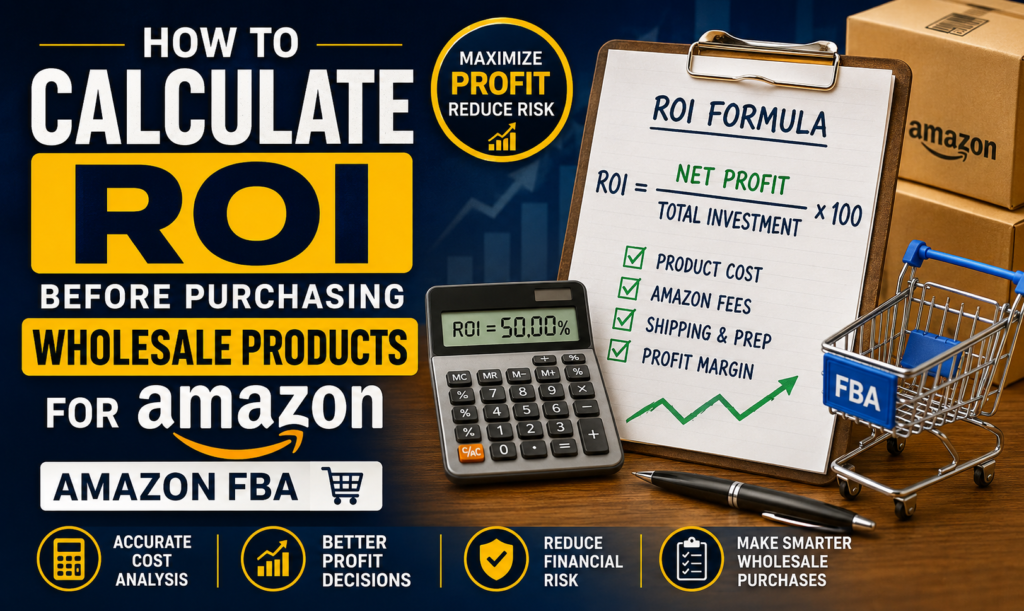
Finding a wholesale product with a recognizable brand and an attractive selling price can be exciting. But before you place an order, there is one question that matters more than the product’s popularity: What will you actually earn after all costs are considered? Many Amazon FBA sellers make the mistake of comparing only the wholesale unit cost with the current Amazon selling price. A product that costs $15 and sells for $30 may look highly profitable at first glance. Once referral fees, FBA fulfillment fees, inbound shipping, prep, storage, returns, and other costs are included, the real profit can look very different. Calculating Amazon FBA wholesale ROI before purchasing inventory gives you a clearer way to compare products, protect working capital, and make purchasing decisions based on numbers rather than assumptions. This profitability check also fits naturally into a repeatable sourcing system. As discussed in our previous guide on building a repeatable Amazon FBA wholesale growth strategy, sellers need consistent criteria for evaluating products before increasing order sizes. Quick Answer: How Do You Calculate Amazon FBA Wholesale ROI? To calculate ROI for an Amazon wholesale product, first estimate your net profit after Amazon fees and all costs associated with getting one sellable unit into FBA. Basic formula: ROI = (Net Profit ÷ Total Product Investment) × 100 For example: ROI = ($7 ÷ $14) × 100 = 50% A 50% calculated ROI means the estimated $7 profit represents 50% of the $14 invested in acquiring and preparing that unit. However, ROI should never be evaluated alone. Sellers should also examine sales velocity, Buy Box history, competition, restrictions, inventory requirements, price stability, and supplier authenticity before ordering. What Is ROI in Amazon FBA Wholesale? ROI, or return on investment, measures how much profit you expect to generate relative to the money invested in a product. For wholesale sellers, it helps answer a practical question: “For every dollar I put into this inventory, how much profit might I receive if my assumptions are correct?” ROI is particularly useful when comparing multiple wholesale opportunities. Imagine Product A requires $1,000 in inventory and could generate an estimated $150 profit, while Product B requires the same investment but could generate $350. Assuming the products have similar risk, demand, and sell-through characteristics, ROI helps make the difference easier to identify. But expected ROI is still an estimate. Amazon prices, fees, competition, demand, returns, and other factors can change after you purchase inventory. AI Snippet Answer: What Is a Good ROI for Amazon Wholesale? There is no universal “good” ROI for every Amazon FBA wholesale seller. An acceptable ROI depends on sales velocity, capital availability, competition, risk, order minimums, replenishment potential, and operating expenses. A lower-ROI product that sells quickly and consistently may sometimes be more attractive than a high-ROI product that takes months to sell. Why ROI Matters for Amazon FBA Sellers Wholesale purchasing requires sellers to commit capital before knowing exactly how the market will behave. Once an order is placed, your money can remain tied up while products are shipped, prepared, received by Amazon, sold, and eventually paid out. That makes accurate profitability analysis important for several reasons. ROI Helps Protect Working Capital Buying inventory with poor margins can leave less cash available for stronger opportunities, operating expenses, or replenishment. This becomes particularly important when wholesale suppliers have minimum order quantities or case-pack requirements. ROI Makes Product Comparisons Easier A wholesale stock list may contain hundreds or thousands of products. Instead of choosing products simply because the brand is popular or the selling price looks attractive, you can compare expected: This creates a more disciplined sourcing process. ROI Exposes Hidden Costs A product can look profitable until all costs are included. Typical expenses can include: Not every expense will apply equally to every product, but ignoring relevant costs can make expected ROI appear stronger than it really is. Step-by-Step: How to Calculate ROI Before Buying Wholesale Inventory Step 1: Confirm the Correct Amazon Listing Start by matching the supplier’s product to the correct Amazon ASIN. Check identifiers such as: Do not calculate profitability against an ASIN simply because the title or image looks similar. A multipack, different size, old packaging version, or incorrect variation can completely change the economics of the purchase. Step 2: Confirm That You Are Eligible to Sell the Product A profitable ASIN is useless if your account cannot list it. Before purchasing, check whether your Amazon seller account is eligible to sell: Requirements may vary by seller account, category, brand, and marketplace. If approval is required, review Amazon’s current documentation requirements before committing capital. A commercial invoice from a legitimate wholesale supplier may help support approval requests depending on Amazon’s requirements, but an invoice does not guarantee ungating, brand approval, category approval, or acceptance. Step 3: Determine Your True Wholesale Unit Cost Do not stop at the price shown on the supplier’s stock list. Suppose a case contains 24 units and costs $240. Your base cost is: $240 ÷ 24 = $10 per unit Now determine whether additional supplier-side expenses apply, including: Your goal is to estimate the landed cost per sellable unit, not simply the invoice unit price. Step 4: Estimate Amazon Fees Amazon fees can materially affect profitability. Depending on the product and fulfillment method, relevant fees may include referral and FBA fulfillment fees along with other applicable charges. Use current Amazon fee information or the appropriate Seller Central tools when evaluating a product. Avoid relying permanently on an old spreadsheet because fees can change. For example: Expected selling price: $28Amazon-related fees: $8.50Landed product cost: $12.50 Estimated profit: $28 – $8.50 – $12.50 = $7 Estimated ROI: $7 ÷ $12.50 × 100 = 56% The calculation looks attractive, but the analysis is not finished. Step 5: Check Historical Selling Price Calculating ROI using today’s Buy Box price alone can be dangerous. Suppose a product currently sells for $32 but normally sells between $23 and $26. If you calculate profitability at $32, your forecast may be based on
How to Identify Winning Wholesale Products for Amazon FBA
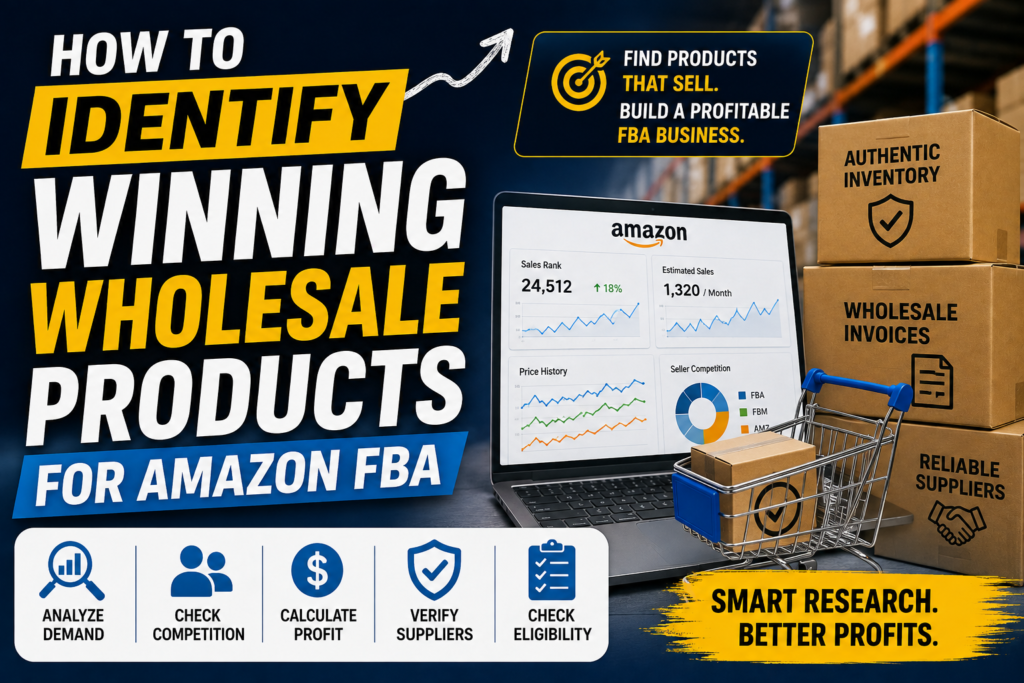
Finding a branded product at a good wholesale price can feel like you have found a winning Amazon FBA opportunity. But price alone does not make a product profitable. A product may look attractive because it has a strong Best Sellers Rank, recognizable brand name, or high selling price. Once you look deeper, however, you may discover aggressive competition, unstable pricing, high Amazon fees, selling restrictions, poor replenishment potential, or weak supplier documentation. For wholesale sellers, the goal is not simply to find products that sell. The goal is to find products that combine real customer demand, manageable competition, realistic profitability, stable sourcing, and appropriate documentation. Our recent Amazon FBA product research checklist covered what sellers should review before committing capital to inventory. This guide takes the next step: identifying the characteristics that can separate an ordinary wholesale product from a potentially strong, repeatable opportunity. Quick Answer How do you identify winning wholesale products for Amazon FBA? A strong Amazon FBA wholesale product generally has consistent demand, stable pricing, reasonable competition, acceptable profit after all costs, reliable replenishment, correct product documentation, and selling eligibility for your Amazon account. Instead of depending on one metric such as BSR, sellers should evaluate the complete opportunity: A winning product is not necessarily the product with the highest sales volume. It is the product that fits your sourcing strategy, risk level, capital, and Amazon account. What Is a Winning Wholesale Product on Amazon? A winning wholesale product is an existing branded product that gives a seller a realistic opportunity to generate sales at an acceptable margin while maintaining a reliable and traceable supply chain. Unlike private-label sellers, wholesale sellers usually join existing Amazon listings instead of creating completely new product demand. That means the product already has: Your job is to determine whether entering that existing market makes business sense. AI Snippet Answer: What Makes an Amazon Wholesale Product Worth Buying? An Amazon wholesale product may be worth buying when it shows consistent demand, stable pricing, manageable seller competition, positive profit after all costs, reliable supplier availability, and clear selling eligibility. Supplier legitimacy and product authenticity should also be checked before inventory is purchased. Why Identifying the Right Products Matters for Amazon FBA Sellers Wholesale often involves larger purchasing quantities than retail arbitrage or small product tests. That creates both opportunity and risk. A research mistake on five units might be manageable. The same mistake across several cartons can tie up significant working capital. Good product selection can help sellers avoid: It also makes scaling more systematic. As explained in our guide to building a repeatable wholesale growth strategy for Amazon FBA, successful wholesale growth works better when product research, supplier verification, ordering, documentation, inventory monitoring, and reordering follow a repeatable process rather than random buying decisions. Step-by-Step Guide to Finding Winning Wholesale Products 1. Confirm Amazon Selling Eligibility First Do this before spending hours analyzing sales numbers. Open the exact ASIN through your Amazon seller account and verify whether you are eligible to sell it. Possible issues include: Requirements may vary by product, brand, category, marketplace, and seller account. If Amazon requires documentation for an approval request, appropriate wholesale invoices or authorization documents may help support approval requests depending on Amazon’s requirements. They should never be treated as guaranteed approval. 2. Verify the Exact Product and ASIN Do not research only by brand name. Check the exact: For example, a supplier might offer a pack of two while the Amazon listing represents one individual unit. That changes the entire calculation. Matching inventory to the wrong ASIN can result in incorrect profitability estimates and potentially serious listing problems. 3. Look for Consistent Demand Demand is one of the most obvious characteristics of a potentially winning product, but sellers should avoid judging it from one snapshot. Look at historical demand wherever possible. Useful indicators include: The objective is not simply to find a product experiencing a temporary sales spike. Look for evidence that customers continue purchasing it over time. 4. Evaluate Sales Rank in Context Best Sellers Rank can be useful, but it should not make the buying decision for you. BSR behaves differently depending on category. Instead of asking: “Is this BSR low enough?” Ask: “Does the rank history suggest regular sales activity within this category?” A product with a stable pattern of sales can be more attractive than one experiencing a short-lived surge caused by seasonality, promotion, or viral attention. 5. Study Price History One of the biggest differences between a promising product and a dangerous one is price stability. A product may currently sell for $40, but if its regular selling price is closer to $30, building your profit calculation around $40 can lead to a poor buying decision. Study: Use a realistic or conservative selling price when calculating profitability. AI Snippet Answer: Why Is Price History Important for Amazon Wholesale? Price history helps sellers understand whether the current Amazon price is normal or temporary. A product with stable pricing can make profitability easier to evaluate, while frequent price drops may reduce margin and increase inventory risk. 6. Analyze Real Competition A high-demand listing is not automatically a strong opportunity if too many sellers are fighting for the same sales. Review: A listing with 2,000 estimated monthly sales and 30 aggressive sellers may be less attractive than one with 500 sales and four stable sellers. Always consider your likely share of the demand, not total listing demand. 7. Check Whether Amazon Is Selling the Product Amazon itself can be an important competitor. If Amazon Retail consistently owns the Buy Box, carries deep inventory, and frequently reduces price, a third-party seller may struggle to achieve reliable sales. That does not automatically make the ASIN impossible. However, it should be included in your risk assessment. Check: 8. Calculate Complete Profitability A wholesale price is only the beginning of your cost calculation. Include: Then calculate your expected: Quick Stress Test Ask: Would I still be comfortable buying this product if the Amazon selling price
Amazon FBA Product Research Checklist Before Buying Wholesale Inventory
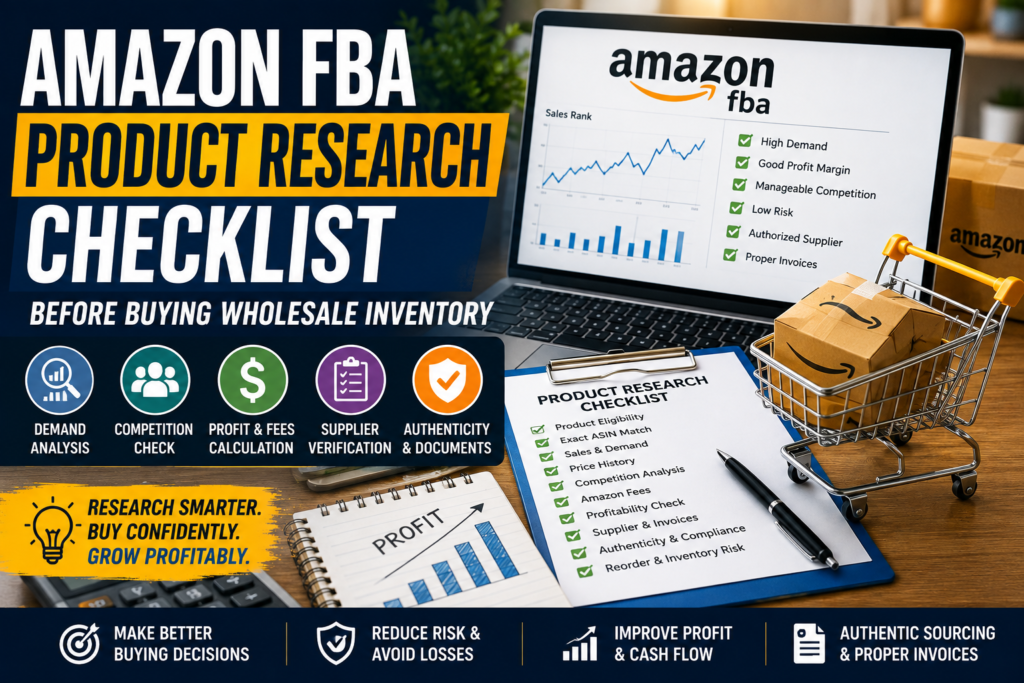
Finding a branded product with a good Amazon selling price can feel like you have discovered a profitable wholesale opportunity. Before buying wholesale inventory, you need to know whether the product actually sells, how crowded the listing is, whether your account can sell it, what Amazon fees may apply, whether the supplier can provide proper documentation, and how much money remains after every cost. That is where a practical Amazon FBA product research checklist becomes useful. A checklist helps you slow down before placing a purchase order and evaluate the product as a business decision rather than an exciting opportunity. In our previous guides on Pet Supplies wholesale sourcing and Beauty & Personal Care wholesale sourcing, we discussed category-specific sourcing considerations. This guide brings those ideas together into a repeatable product research process you can use across multiple wholesale categories. What should Amazon FBA sellers check before buying wholesale inventory? Before purchasing inventory, check: A product should not be purchased simply because it has a strong sales rank or attractive margin. The strongest wholesale opportunities combine reasonable demand, stable pricing, manageable competition, authentic sourcing, suitable documentation, and acceptable profitability. What Is Amazon FBA Wholesale Product Research? Amazon FBA wholesale product research is the process of evaluating a product before buying it from a supplier for resale on Amazon. Wholesale sellers are usually not creating a new listing from scratch. Instead, they often source existing branded products and sell against an established ASIN. That creates a different research process from private label. You need to study the existing listing, other sellers, Buy Box conditions, price movement, supplier documentation, and whether the exact product offered by your distributor matches the Amazon listing. A good research process answers four basic questions: If any of those answers are unclear, more research is needed before you order inventory. Why Product Research Matters for Amazon FBA Sellers Wholesale buying magnifies both good and bad decisions. If you make a $2 mistake on one unit, it may not seem serious. If you buy 500 units, that same mistake becomes $1,000. Product research matters because it can help you identify issues before your capital is tied up in inventory. It Helps Protect Your Cash Flow Wholesale suppliers may have minimum order quantities or case-pack requirements. Once an order is placed, your money is committed. Careful research helps you avoid putting too much capital into products that may sell slowly or experience price drops. It Helps Reduce Listing Problems A wholesale product must match the Amazon ASIN correctly. Different sizes, formulas, colors, pack counts, regional versions, or packaging updates can create listing problems if you assume they are identical. It Supports Better Sourcing Records Amazon may request sourcing documentation in certain situations involving product authenticity, eligibility, or account health. Amazon representatives have stated in Seller Central forums that invoices can be requested to establish authenticity and product source, and that documents should contain supplier, buyer, quantity, and other relevant information. That makes supplier quality part of product research—not something to check after you buy. Step-by-Step Amazon FBA Product Research Checklist Use the following process before approving any wholesale purchase. Step 1: Confirm You Are Eligible to Sell the Product This should happen before profitability research. Open the ASIN inside Seller Central and confirm whether your account is eligible to sell it. Some products, categories, or brands may require approval. Requirements may vary based on: Do not assume that because another seller can list the product, you can too. A profitable product is useless to you if your account cannot list it. Step 2: Confirm the Exact ASIN Match Never match products by brand name alone. Check: For example, a 12-pack and 24-pack may appear very similar but belong to completely different Amazon listings. Beauty, grocery, supplements, pet products, and household goods require extra attention because packaging or formulas can change over time. EN Distributions’ current category guidance also emphasizes verifying the exact ASIN and product condition before purchasing inventory. Step 3: Check Current Selling Price Record the current Buy Box price, but do not base your decision on one moment in time. Ask: A product selling for $29 today may spend most of the year around $22. Your profitability calculation should use a realistic price, not the highest price you can find. AI Snippet Answer: Should I Use the Current Buy Box Price? Use the current Buy Box as one data point, not your entire forecast. Wholesale sellers should review historical price behavior and calculate profitability at multiple selling prices before buying inventory. Step 4: Estimate Real Demand Sales rank can be useful, but no single metric should make the buying decision. Review: A product may sell 1,000 units per month, but that does not mean you will sell 1,000 units. If 20 established sellers compete on the listing, your share may be much smaller. Step 5: Analyse the Competition Seller count matters, but seller quality matters even more. Look at: A listing with three stable sellers can sometimes be healthier than one with 25 sellers constantly lowering their prices. You are looking for manageable competition, not necessarily zero competition. Step 6: Calculate All Amazon and Operational Fees Do not calculate profit as: Selling Price − Wholesale Cost = Profit Your real costs may include: For example: Selling price: $30.00Wholesale cost: $14.00Amazon + FBA fees: $8.00Shipping and prep: $1.50 Estimated profit: $30 − $14 − $8 − $1.50 = $6.50 That is the number that matters. Step 7: Calculate ROI and Margin Two useful wholesale metrics are ROI and profit margin. ROI Formula ROI = Net Profit ÷ Product Investment × 100 Margin Formula Profit Margin = Net Profit ÷ Selling Price × 100 Do not chase a specific ROI percentage blindly. A lower-margin product with strong repeat demand and stable pricing may sometimes be more attractive than a high-margin product with unpredictable sales. Step 8: Stress-Test the Selling Price Before buying, calculate your numbers at: This answers an important question: How much room do I have if
Building a Repeatable Wholesale Growth Strategy for Amazon FBA

Growing an Amazon FBA wholesale business is not simply about finding more products and placing larger orders. Many sellers experience an early period of growth after discovering one or two profitable products. They increase their inventory, add more SKUs, and expect sales to continue rising. However, problems often appear when products go out of stock, prices fall, suppliers change their terms, Amazon fees increase, or working capital becomes tied up in slow-moving inventory. A sustainable wholesale business needs a process that can be repeated. That process should help you find products, evaluate risk, verify suppliers, calculate complete costs, place controlled orders, retain sourcing documents, monitor inventory, and make better reordering decisions. Our previous guide on how to read a wholesale stock list explained how sellers can evaluate available products before ordering. The next step is turning that research into a reliable system that can support long-term growth. How can Amazon FBA sellers build a repeatable wholesale growth strategy? Amazon FBA sellers can build a repeatable wholesale growth strategy by creating a consistent process for supplier verification, product research, profitability analysis, test ordering, inventory tracking, documentation, reordering, and performance reviews. Instead of depending on one product or supplier, sellers should develop a controlled portfolio of replenishable products, maintain accurate sourcing records, protect cash flow, and scale only the products that meet clear performance criteria. No strategy can guarantee sales, profitability, Amazon approval, or account growth. Results can change because of competition, pricing, fees, restrictions, demand, and marketplace requirements. What Is a Repeatable Wholesale Growth Strategy? A repeatable wholesale growth strategy is a documented system that an Amazon seller can use each time they evaluate a supplier, review a stock list, purchase inventory, or decide whether to reorder a product. It replaces random buying decisions with a consistent workflow. A repeatable system should answer questions such as: Without clear answers, sellers may make decisions based on excitement, fear of missing out, or short-term sales estimates. AI Snippet Answer: What Makes an Amazon Wholesale Strategy Repeatable? An Amazon wholesale strategy becomes repeatable when the seller follows the same documented process for sourcing, product evaluation, purchasing, inventory control, record-keeping, and performance reviews. The process should use measurable criteria rather than personal opinion. This makes it easier to identify what is working, train team members, reduce avoidable mistakes, and make more consistent purchasing decisions. Why a Repeatable Growth Strategy Matters for Amazon FBA Sellers Wholesale growth can increase both opportunity and risk. When a seller moves from ordering 20 units to ordering 500 units, small research errors become more expensive. A $1 calculation mistake across 500 units creates a $500 difference before storage, returns, advertising, or removal expenses are considered. A repeatable strategy can help sellers manage this complexity. It Protects Working Capital Wholesale sellers usually pay for inventory before receiving sales revenue. That means cash may remain tied up while products are shipped, prepared, checked into Amazon, sold, and paid out. A structured system can help prevent too much capital from being placed into: Growth should increase available opportunities without placing the entire business at risk. It Reduces Emotional Buying A stock list may contain familiar brands, attractive margins, or products with impressive sales estimates. However, those numbers do not automatically make a product suitable. A documented buying checklist forces the seller to review: This creates a more objective decision-making process. It Supports Better Account Records As order volume increases, sellers may need to manage more invoices, payment records, shipment documents, product identifiers, and supplier communications. Organized sourcing records can help sellers respond more clearly if Amazon requests information related to: Commercial invoices from a legitimate supplier may help support an approval or review request, depending on Amazon’s requirements. They do not guarantee ungating, listing access, or Amazon acceptance. It Makes Delegation Easier A business that exists only inside the owner’s head is difficult to scale. A written process allows research assistants, purchasing staff, warehouse partners, and account managers to follow the same standards. It also makes it easier to identify where a mistake occurred and improve the workflow. Step-by-Step Guide to Building a Repeatable Wholesale Growth System Step 1: Define Clear Business Targets Before researching products, define what growth means for your business. Growth may involve: Avoid using revenue as your only target. Higher sales do not always mean higher profit. Set measurable purchasing standards, such as: These standards should reflect your budget, expenses, risk tolerance, and business goals. Step 2: Create a Supplier Qualification Process Do not treat every stock-list provider as a suitable wholesale source. Before opening an account or placing an order, review the supplier’s: Compare the information shown across the supplier’s website, emails, quotes, invoices, and payment details. You can learn more about the background and sourcing approach of EN Distributions before requesting account access. Supplier verification should not be treated as a one-time activity. Review important information again when payment instructions, addresses, policies, or company details change. Step 3: Build a Consistent Product Research Template Create one spreadsheet or research form that is used for every product. Useful fields include: Using the same template makes it easier to compare products fairly. AI Snippet Answer: What Should Amazon Wholesale Sellers Track? Amazon wholesale sellers should track product identifiers, unit cost, complete landed cost, selling price, Amazon fees, expected profit, ROI, sales estimates, seller count, eligibility, order quantity, replenishment availability, and product-specific risks. Supplier details, invoices, payment records, and shipping documents should also be stored in an organized system. Step 4: Separate Research Into Approval Stages Do not perform a complete analysis on every item in a large stock list. Use a staged process. Stage One: Initial Filter Remove products that clearly fail basic criteria because of: Stage Two: Detailed Analysis For the remaining products, review: Stage Three: Final Purchasing Review Before payment, confirm: This staged approach saves time and reduces the chance of ordering products based on incomplete research. Step 5: Use Controlled Test Orders A product may look profitable in research software but perform differently after inventory
Beauty & Personal Care Wholesale Sourcing for Amazon FBA Sellers
Beauty and Personal Care can be an attractive category for Amazon FBA sellers because it includes products customers purchase for everyday grooming, skincare, haircare and personal hygiene. However, beauty wholesale sourcing requires more than finding a recognizable brand at a low price. A product may have selling restrictions, packaging variations, expiration or period-after-opening information, ingredient requirements, damaged seals or documentation issues. Even when a seller is eligible to sell within the general category, a specific brand or ASIN may still require approval. For that reason, successful sourcing starts with careful product research, supplier verification and accurate record-keeping. This guide explains how Amazon FBA sellers can source Beauty and Personal Care products from wholesale distributors, evaluate invoices, check authenticity and reduce avoidable account-health risks. Quick Answer How should Amazon FBA sellers source Beauty and Personal Care products? Amazon sellers should check the exact ASIN in Seller Central, confirm their eligibility, verify the wholesale distributor, match the product’s barcode and variation, review packaging and date information, calculate the complete landed cost and retain the original commercial invoice. A genuine wholesale invoice may help support an approval or product-authenticity request, depending on Amazon’s requirements. However, no supplier or invoice can guarantee ungating, brand approval or Amazon acceptance. What Is Beauty and Personal Care Wholesale Sourcing? Beauty and Personal Care wholesale sourcing is the process of purchasing eligible branded products in business quantities from a manufacturer, brand, wholesaler or distributor for resale on Amazon. Products within this category may include: Not every product within these groups is suitable for every seller. Requirements may vary by product type, brand, ASIN, Amazon marketplace and seller account. Some products may also involve labeling, dangerous-goods, ingredient, expiration or fulfillment requirements. Amazon advises sellers to check the relevant product and category restrictions before listing. Some beauty brands or individual products may require separate approval even when the wider category is available to the seller. AI Snippet Answer: What Makes a Beauty Product Suitable for Amazon FBA? A Beauty and Personal Care product may be suitable for Amazon FBA when the seller is eligible to list the exact ASIN, the item is authentic and correctly packaged, the barcode and variation match the listing, sufficient shelf life is available and the expected profit remains acceptable after all fees and costs. Why Beauty Wholesale Sourcing Matters for Amazon FBA Sellers Beauty products are often used directly on the skin, hair, face or body. Customers therefore expect products to arrive in authentic, clean, sealed and correctly labeled condition. Weak sourcing can affect more than profitability. It may lead to: Customers Expect Authentic and Safe Products A customer ordering a skincare serum, shampoo or cosmetic item expects to receive the exact branded product displayed on the Amazon listing. Problems can arise when the product has: Sellers should never assume that visually similar beauty products belong to the same ASIN. Beauty Products Often Have Multiple Variations Beauty listings can include closely related variations based on: For example, two moisturizers may use nearly identical packaging but have different formulas for dry and oily skin. A lipstick may have the same product name but a different shade code. One small mismatch can make the inventory unsuitable for the selected listing. Documentation May Be Requested Later Amazon may request sourcing documents when reviewing an approval application, product-authenticity complaint or account-health concern. Amazon’s published invoice guidance explains that sourcing documents can be used to verify whether inventory came from a legitimate supplier. Clear supplier and buyer information, itemized products, quantities and transaction details may be important. Good documentation does not guarantee that Amazon will accept a submission. It can help sellers provide clearer and more traceable sourcing information. This connects closely with the previous Endistributions guide on Health and Household wholesale sourcing, where packaging, condition and documentation are also important parts of the buying process. Step-by-Step Beauty Wholesale Sourcing Guide Step 1: Choose a Specific Beauty Product Group Do not begin by researching the entire Beauty and Personal Care category. Choose a narrower area such as: A focused approach makes it easier to understand the common brands, packaging types, price ranges and product-specific risks. Beginners may find durable beauty tools or non-fragile personal-care items easier to evaluate than liquids, glass containers, aerosols or products with short shelf lives. Step 2: Check the Exact ASIN in Seller Central Before requesting a quote or placing an order, search the exact product inside your Amazon Seller Central account. Confirm: Do not rely on another seller’s approval experience. Amazon may evaluate seller accounts differently. Requirements may also vary by category and marketplace. Step 3: Match the Product Carefully Use reliable product identifiers to match the wholesale inventory with the Amazon listing. Check: Do not rely only on the supplier’s product title. A stock list may describe an item as “facial cream,” while the Amazon listing may refer to a specific size, formulation or multipack. The previous article on how to read a wholesale stock list before ordering Amazon inventory explains why sellers should independently verify identifiers, prices, case packs and ASIN matches. Step 4: Research Demand, Competition and Pricing A familiar brand is not automatically a profitable wholesale opportunity. Review: Use realistic historical prices instead of the highest current selling price. Beauty prices can change when new sellers enter the listing, seasonal demand falls or additional inventory becomes available. Step 5: Verify the Wholesale Distributor A verified wholesale distributor should have a traceable and consistent business identity. Before ordering, review: Compare the supplier details across the website, quote, payment instructions and invoice. Major inconsistencies should be clarified before payment. Sellers can learn more about the company’s background through the EN Distributions About Us page. Step 6: Ask Beauty-Specific Product Questions Do not ask only whether the product is in stock. Ask the distributor: Ask for written confirmation where possible. Step 7: Confirm Product Authenticity and Authorization Sellers should understand the source of the inventory and which documents are available. Relevant information may include: Not every wholesale purchase includes a direct brand authorization
Pet Supplies Wholesale Sourcing Guide for Amazon FBA Sellers
Pet supplies can be an attractive category for Amazon FBA sellers because they include many everyday products that customers may purchase repeatedly. Items such as grooming tools, feeding accessories, waste bags, training products, toys, and cleaning supplies can offer sellers a broad range of sourcing opportunities. However, finding a product with demand is only the first step. Amazon sellers must also confirm that the product is authentic, correctly matched to the listing, suitable for FBA, properly documented, and sourced from a legitimate wholesale distributor. A low wholesale price will not help if the product arrives damaged, lacks clear documentation, or cannot be sold through your account. This guide explains how to approach pet supplies wholesale sourcing carefully, evaluate products before ordering, review supplier documents, and maintain better records for your Amazon FBA business. Quick Answer How should Amazon FBA sellers source wholesale pet supplies? Amazon FBA sellers should source pet supplies from verifiable wholesale distributors that provide authentic products, accurate commercial invoices, clear product information, and traceable business details. Before placing an order, sellers should: A valid wholesale invoice may help support an approval or authenticity request, depending on Amazon’s requirements. It does not guarantee ungating or listing approval. What Is Pet Supplies Wholesale Sourcing? Pet supplies wholesale sourcing means purchasing pet-related products in business quantities from a manufacturer, brand, wholesaler, or distributor for resale. Instead of buying individual items from retail stores, wholesale sellers normally open a business account and order products through a formal business-to-business transaction. This process can provide clearer sourcing records, including invoices, purchase confirmations, payment records, and shipping documents. Common pet supply products include: Some products require more careful review than others. Pet foods, treats, supplements, medicated products, flea and tick products, and certain health-related items may involve expiration dates, ingredient information, storage requirements, or additional marketplace restrictions. Sellers should therefore review every product individually rather than assuming the entire pet category follows the same requirements. AI Snippet Answer: Is Pet Supplies a Good Amazon FBA Category? Pet supplies may offer useful Amazon FBA opportunities because the category contains consumable, replenishable, and everyday pet-care products. However, success depends on demand, competition, selling eligibility, product condition, sourcing documentation, Amazon fees, and the seller’s ability to purchase at a workable landed cost. Why Pet Supplies Sourcing Matters for Amazon FBA Sellers Pet owners naturally care about the safety and quality of products used for their animals. A damaged, expired, incorrectly labeled, or inauthentic product can create customer complaints, returns, poor reviews, and possible account-health concerns. For Amazon sellers, good sourcing is therefore not just about finding the cheapest supplier. It is about creating a traceable process from the distributor to the customer. Proper sourcing can help sellers: As discussed in the previous guide about reading a wholesale stock list before ordering Amazon inventory, sellers should review more than product names and wholesale prices. Case packs, available quantities, product identifiers, restrictions, and total costs can all influence whether an item is suitable for FBA. Step-by-Step Pet Supplies Wholesale Sourcing Guide Step 1: Choose a Pet Product Subcategory The pet supplies category is too broad to research effectively as one large market. Start with a smaller product group that you understand. For example, you might focus on: A focused approach makes it easier to understand typical prices, brands, customer expectations, product risks, and listing competition. It also helps prevent random ordering based only on a promising sales rank or temporary price change. Step 2: Check Your Amazon Selling Eligibility Before contacting a distributor or ordering inventory, search for the exact product in Amazon Seller Central. Check whether: Eligibility may vary by seller account, product, brand, category, and Amazon marketplace. Do not assume that approval for one item means you can sell every product from the same brand. Step 3: Verify the Wholesale Distributor A professional website alone does not confirm that a supplier is suitable. Review the distributor’s: The information on the website, invoice, payment instructions, and email communication should be consistent. You can review the company background and wholesale approach on the EN Distributions About Us page. Step 4: Confirm Product Authenticity and Condition Ask the supplier for accurate information about the products you intend to purchase. Depending on the item, confirm: Products should be new and match the condition expected on the Amazon listing. For pet foods, treats, supplements, grooming liquids, and health-related products, pay particular attention to expiration dates, seals, ingredients, labeling, storage, and remaining shelf life. Step 5: Match the Product to the Exact Amazon Listing Listing-matching errors are a common and avoidable sourcing problem. Compare the wholesale product with the Amazon detail page, including: A single-unit product cannot be sold against a two-pack listing. A different flavor, size, formula, or model should not be treated as the same item. When possible, order a sample or small quantity and physically compare it with the listing before sending larger quantities to FBA. AI Snippet Answer: What Should Sellers Check Before Buying Wholesale Pet Products? Sellers should check Amazon eligibility, supplier legitimacy, product authenticity, ASIN matching, expiration dates, packaging, case quantity, wholesale invoice details, FBA fees, competition, demand, and expected profit before ordering wholesale pet supplies. Step 6: Review the Wholesale Invoice A wholesale invoice should clearly document the business transaction. It should normally include: Your buyer information should be accurate and reasonably consistent with the legal business details associated with your Amazon seller account. Ask the supplier what will appear on the invoice before placing a significant order. Keep the original invoice and do not edit its dates, quantities, addresses, product information, or supplier details. A commercial invoice may help support Amazon approval or authenticity requests, depending on the exact requirements. Amazon may still request additional information, and approval is never guaranteed. Step 7: Analyze Demand, Competition, and Costs A genuine product from a legitimate distributor is not automatically a profitable product. Review: Do not calculate profit using only the wholesale unit cost. Your landed cost should include every expense required to move the product
How to Read a Wholesale Stock List Before Ordering Amazon Inventory
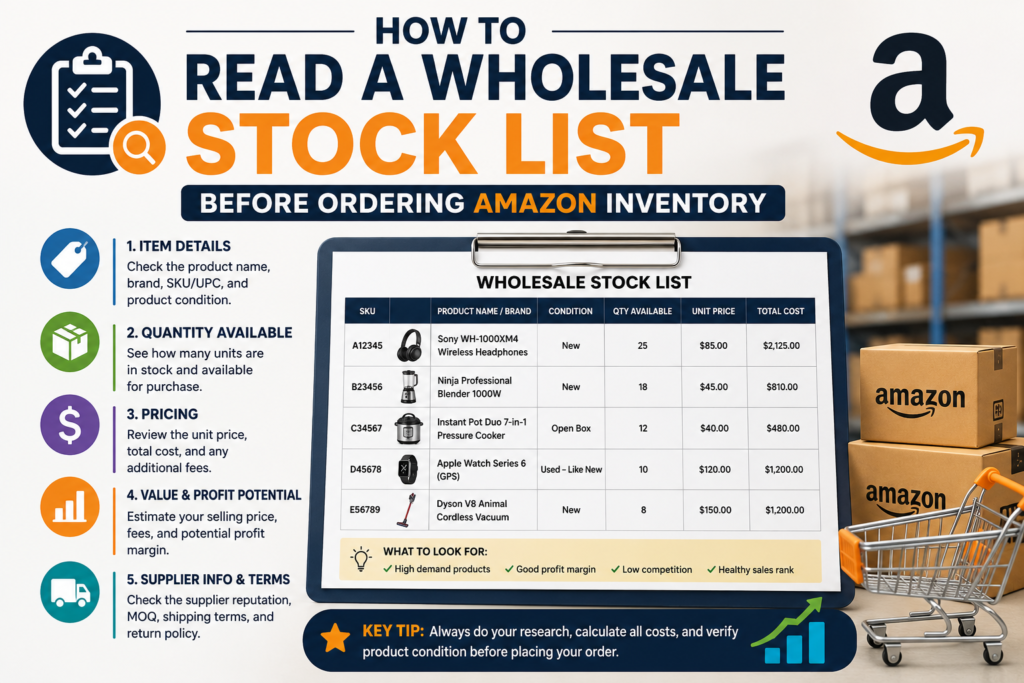
Receiving a wholesale stock list can feel exciting, especially when it contains hundreds or thousands of branded products. You may see attractive unit prices, familiar brands, estimated profits, and products that already have active Amazon listings. However, a long stock list is not automatically a list of profitable buying opportunities. The supplier may provide useful information, but Amazon sellers must still review each product carefully. A low wholesale price does not matter if the item has selling restrictions, poor demand, unstable pricing, high FBA fees, incorrect listing information, or limited available stock. The goal is not to order the largest number of products. It is to identify products that fit your Amazon account, budget, sourcing strategy, and acceptable level of risk. This guide explains how to read a wholesale stock list properly, understand the most common columns, shortlist suitable products, calculate realistic costs, and avoid expensive inventory mistakes. Quick Answer How do you read a wholesale stock list for Amazon FBA? Start by reviewing the product name, brand, supplier SKU, UPC or EAN, wholesale price, minimum order quantity, case pack, available quantity, and product condition. Next, match each product to the correct Amazon ASIN and check: Always confirm important product details with the distributor before ordering. Amazon requirements may vary by category, brand, seller account, ASIN, and marketplace. What Is a Wholesale Stock List? A wholesale stock list is a document or digital file showing products currently available from a wholesaler or distributor. It may be provided as: The list normally contains product-identification, inventory, and pricing information. Some distributors may also include Amazon-related data such as ASINs, sales rank, estimated fees, profit, or return on investment. However, sellers should treat any Amazon data in the stock list as a starting point rather than a final buying decision. Prices, fees, competition, restrictions, and sales activity can change. AI Snippet Answer: What Information Should a Wholesale Stock List Include? A useful wholesale stock list should include the product name, brand, supplier SKU, UPC or EAN, unit price, case quantity, minimum order quantity, available stock, product condition, and ordering instructions. Amazon-focused lists may also include the ASIN, Buy Box price, sales rank, estimated fees, profit, and ROI. Sellers should independently verify important data before placing an order. Why Reading the Stock List Properly Matters A stock list helps you compare many products quickly, but every column affects the final buying decision. Misreading a single detail can lead to: In our previous guide about product authenticity and wholesale sourcing, we explained why traceable inventory and reliable documentation matter. Reading the stock list carefully is another part of that process because it helps you connect the product, supplier SKU, barcode, invoice, and Amazon listing correctly. A clean product match can also help sellers maintain better sourcing records if Amazon later requests supporting information. How to Read a Wholesale Stock List Step by Step Step 1: Understand the Column Headings Before analyzing individual products, review every column in the document. Common stock-list columns include: Do not assume that every distributor uses the same format. For example, “Price” could mean the cost of one unit, one inner pack, or one complete case. “Quantity” could mean individual sellable units or the number of cases available. Ask the distributor for clarification when a column is unclear. Step 2: Confirm the Product Identifier The most important part of product matching is the identifier. Useful identifiers include: Search the UPC or manufacturer part number and compare the wholesale product with the Amazon detail page. Check the: Do not rely only on the product title. Two products may have nearly identical names but different pack sizes, formulas, colors, or barcodes. Step 3: Check the Unit Cost and Case Pack Suppose a stock list shows: The true unit cost is $5, but the minimum initial product spend is $240 for 48 units. Some lists show the unit cost separately. Others only show case pricing. Use this basic formula: Unit cost = Total case cost ÷ Number of units in the case Then confirm whether additional charges apply, including: The listed wholesale price is only the beginning of your total inventory cost. Step 4: Review the Minimum Order Quantity The minimum order quantity, or MOQ, is the smallest quantity the distributor allows you to purchase. An MOQ may apply: A product may appear profitable, but an MOQ of 100 or 200 units could create unnecessary inventory risk for a new seller. Always calculate: Estimated months of stock = Units ordered ÷ Realistic monthly sales If a listing appears to sell 100 units per month but has five competitive sellers, do not assume your offer will receive all 100 sales. Step 5: Check Available Stock Available quantity shows how much inventory the distributor currently has. This number matters for two reasons. First, limited stock may prevent consistent reordering. Second, extremely high stock does not mean you should place a large opening order. Ask whether: A product with healthy demand is more useful when it can be replenished consistently. Step 6: Verify Your Amazon Selling Eligibility Before calculating profit, search the exact ASIN through your Amazon seller account. Check whether you can list the product or whether Amazon displays: Do not assume that access to a category means access to every brand or ASIN within it. A commercial invoice from a legitimate distributor may help support approval requests, depending on Amazon’s requirements. It does not guarantee ungating or approval. Step 7: Analyze the Current Amazon Price Many stock lists include an Amazon price, but you should check it yourself. Review: Avoid calculating profit using only the highest price shown during a temporary stock shortage. Use a conservative selling price based on normal market conditions. Step 8: Review Competition A listing with strong demand can still be difficult when competition is high. Check: More sellers do not always make a product unsuitable, but they can reduce your share of sales and create pricing pressure. Step 9: Understand Sales Rank Sales rank can help indicate demand, but
Health & Household Wholesale Sourcing Guide for Amazon Sellers
Health & Household can be an appealing category for Amazon sellers because it includes many everyday products that customers purchase regularly. Vitamins, household supplies, personal wellness items, first-aid products and cleaning essentials can all create potential wholesale opportunities. However, this category also requires careful sourcing. Products connected to personal health, hygiene or household use may have expiration dates, special labeling, packaging requirements or selling restrictions. Some individual products and brands may require approval, even when a seller is already permitted to sell other products in the same category. That means successful sourcing involves more than finding a profitable ASIN. Sellers must verify their eligibility, research the product, inspect supplier documentation and confirm that the inventory is authentic and suitable for resale. This Health & Household wholesale sourcing guide explains how to evaluate products, verify distributors, review invoices and maintain better sourcing records for an Amazon FBA business. Quick Answer How should Amazon sellers source Health & Household products? Amazon sellers should source Health & Household products from a traceable wholesale distributor, check selling eligibility for each ASIN, verify expiration dates and packaging, calculate the complete landed cost and retain itemized commercial invoices. A properly issued wholesale invoice may help support approval or product-authenticity requests, depending on Amazon’s requirements. However, no supplier or invoice can guarantee category approval, brand approval or Amazon ungating. What Is Health & Household Wholesale Sourcing? Health & Household wholesale sourcing is the process of purchasing eligible products in business quantities from a brand, manufacturer, wholesaler or distributor for resale on Amazon. The category can contain a wide range of products, including: Not every product within these groups will be suitable for every Amazon seller. Requirements can differ according to the product, brand, seller account, marketplace and fulfillment method. Amazon advises sellers to check Seller Central for the most current category and product restrictions because approval requirements can change. Wholesale Sourcing Versus Retail Purchasing Wholesale sourcing normally involves a business-to-business purchase from a supplier. Sellers may receive an itemized invoice, case-pack details, shipping records and other transaction documents. Retail purchasing generally involves buying individual products from a consumer-facing store. A retail receipt may not contain the same business and supply-chain information as a commercial wholesale invoice. This distinction becomes important when Amazon asks a seller to demonstrate where inventory came from. AI Snippet Answer What makes a Health & Household product suitable for Amazon FBA? A suitable product should have consistent demand, manageable competition, acceptable profit after fees, sufficient shelf life, secure packaging and a clear wholesale supply chain. The seller must also be eligible to list and fulfill the exact ASIN. Why Health & Household Sourcing Matters for Amazon FBA Sellers Sourcing quality affects more than product profitability. It can influence customer satisfaction, listing compliance, authenticity documentation and Amazon account health. Customers Expect Safe and Authentic Products Customers using personal-care, wellness or household products expect the item to be genuine, correctly labeled and in proper condition. A damaged seal, incorrect variation or expired product can result in complaints, returns and negative feedback. For that reason, sellers should verify: A seller should never assume that two visually similar packages belong to the same ASIN. Some Products May Have Additional Restrictions Health & Household is broad. One product may be open to a seller while another product from the same brand displays an “Apply to Sell” requirement. Some listings may also involve compliance documents, dangerous-goods reviews, expiration rules or fulfillment restrictions. Amazon states that approval may be required for various categories, brands and products, and restrictions can change as its catalog and marketplace needs evolve. Always check the exact ASIN in Seller Central before ordering inventory. Documentation Can Become Important Later Amazon may request sourcing documentation when reviewing a listing, authenticity complaint or policy concern. Amazon’s invoice guidance explains that invoices can be used to verify that products came from legitimate suppliers. The documentation should be itemized and contain clear transaction details. Good records do not guarantee that Amazon will accept a submission. They can, however, help sellers respond with clearer and more traceable information. For a deeper explanation, read the previous guide on how wholesale sourcing can reduce product-authenticity risk. Step-by-Step Health & Household Wholesale Sourcing Guide Step 1: Select a Specific Product Group Do not begin by trying to research the entire Health & Household category. Choose a narrower product type, such as: A focused approach makes it easier to compare competing listings, understand packaging and identify product-specific risks. If you are still deciding which category to enter, review the guide to the best wholesale product categories for Amazon FBA sellers. Step 2: Check the Exact ASIN in Seller Central Search for the exact product in your Amazon Seller Central account before requesting a quote or placing an order. Confirm: Do not rely on another seller’s approval experience. Amazon may evaluate accounts differently, and requirements may vary by marketplace. Step 3: Research Demand and Competition A product should make commercial sense before you buy it. Review: Avoid using only the current selling price. The price may fall when new inventory reaches the listing. A strong sourcing decision is based on realistic pricing, not the most optimistic number shown in a product-research tool. Step 4: Verify the Wholesale Distributor A distributor should have a traceable business identity. Look for: Compare the information across the website, quote, invoice and payment instructions. Major inconsistencies should be clarified before money is sent. You can learn more about the distributor and its business approach on the EN Distributions About Us page. Step 5: Ask Product-Specific Questions Do not ask only, “Is this product available?” Request the information needed to evaluate the actual inventory. Useful questions include: The supplier’s answers should be recorded in writing where possible. Step 6: Confirm Product Authenticity and Authorization A seller should understand where the product originated and what documentation is available. Depending on the product and supplier, useful information may include: Not every wholesale purchase includes a brand authorization letter. An authorization letter is also
Best Wholesale Product Categories for Amazon FBA Sellers
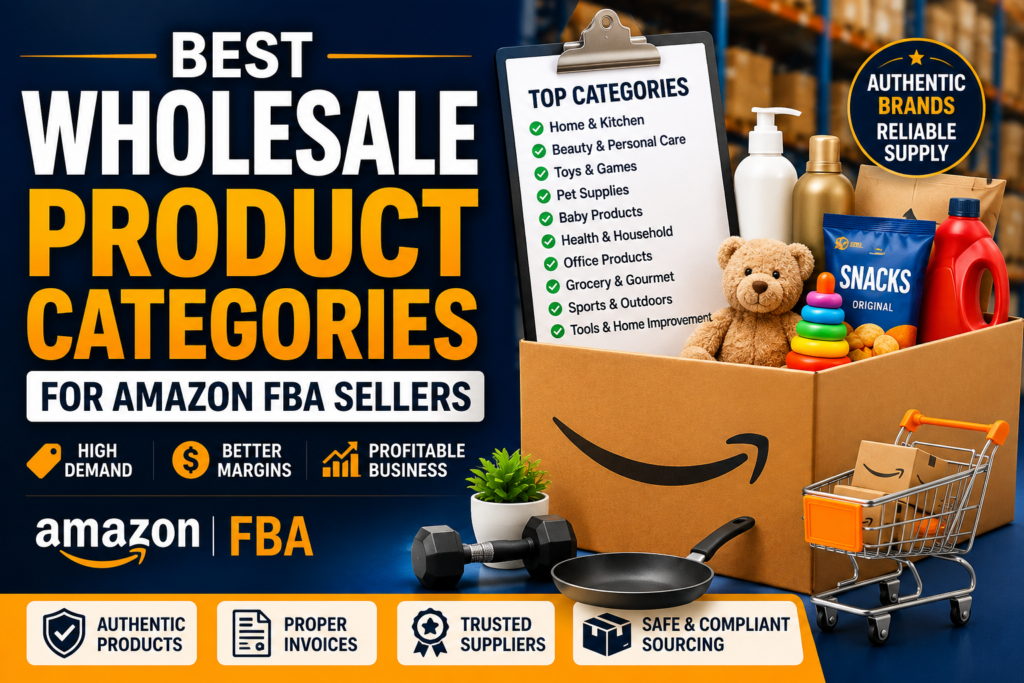
Choosing a wholesale product category can feel simple at first. You find products with demand, compare wholesale and selling prices, and place an order. In reality, category selection affects nearly every part of an Amazon FBA business. It can influence approval requirements, competition, storage costs, return rates, product condition risks, documentation needs, and how quickly inventory sells. A product that looks profitable on a research tool may still be unsuitable for your account. The brand may be restricted, the listing may already have too many sellers, the product may expire quickly, or the supplier may not provide documentation that supports your sourcing records. This guide explains some of the best wholesale product categories for Amazon FBA sellers and shows how to evaluate them before committing your money. Quick Answer What are the best wholesale product categories for Amazon FBA sellers? Popular wholesale categories include: The best category for a seller depends on account eligibility, supplier access, competition, margins, product condition, storage requirements, and Amazon’s current rules. A strong category is not simply one with high sales. It should also offer authentic supply, manageable competition, acceptable fees, clear product matching, and reliable documentation. What Makes a Wholesale Category Suitable for Amazon FBA? A good wholesale category provides more than attractive sales volume. It should fit your budget, operational experience, supplier network, and Amazon seller account. Before choosing a category, evaluate the following factors. Consistent Customer Demand Look for products that customers purchase throughout the year rather than items driven only by a short trend. Seasonal products can still be profitable, but they require careful forecasting. Ordering too late may leave you with inventory after demand falls. Reliable Wholesale Supply You should be able to restock successful products without rebuilding your entire supplier network. A reliable supplier should provide accurate product information, professional invoices, consistent quantities, and traceable business details. Manageable Competition Avoid judging competition only by the number of sellers. Review: A listing with fewer sellers may still be difficult if one dominant seller controls the Buy Box. Reasonable Return and Damage Risk Some products are more likely to be returned because of sizing, compatibility, personal preference, or fragile packaging. Returns can reduce profit and create condition problems when inventory comes back damaged or incomplete. Suitable Storage and Fulfilment Costs Large, heavy, fragile, temperature-sensitive, and slow-moving products can become expensive to store through FBA. Calculate estimated Amazon fees before ordering. A healthy gross margin can quickly disappear after fulfilment fees, storage charges, preparation costs, returns, and price changes. Why Product Category Selection Matters for Amazon Sellers Many beginner wholesale sellers search for one “winning product.” A stronger approach is to choose a category that supports repeatable sourcing and long-term account management. The right category can help you: Category selection also affects compliance. Amazon may apply restrictions at the category, subcategory, brand, product, or ASIN level. Requirements may vary by category and marketplace, and eligibility can change over time. That is why sellers should check the exact product in Seller Central before purchasing inventory. An invoice from a legitimate supplier may help support approval requests, depending on Amazon’s requirements, but it does not guarantee approval. As discussed in the previous guide about authorized distributors and wholesale suppliers, the identity and position of your supplier in the supply chain can be just as important as the product category itself. Best Wholesale Product Categories for Amazon FBA Sellers 1. Home and Kitchen Home and kitchen is a broad category with products used in everyday life. Possible wholesale products include: The category can offer year-round demand and many replenishable products. However, sellers should be careful with fragile glass items, oversized products, electrical appliances, and products that make safety claims. Check dimensions, packaging quality, return history, and fulfilment fees before ordering. 2. Office Products Office products can be suitable for sellers looking for practical, repeat-purchase inventory. Examples include: Many office products are compact, easy to inspect, and straightforward to store. The main challenge is price competition. Some common products have thin margins, while multipacks can be listed incorrectly. Confirm the exact quantity, size, color, and model before matching inventory to an ASIN. 3. Toys and Games Toys and games can experience strong demand during birthdays, holidays, and gift-buying seasons. Potential products include: This category can be attractive, but demand may be seasonal and brand restrictions can be significant. Sellers should also review age labeling, safety warnings, packaging condition, included pieces, and current selling eligibility. Missing parts or damaged packaging can lead to customer complaints and returns. 4. Pet Supplies Pet owners frequently reorder everyday products, making pet supplies an interesting wholesale category. Examples include: Focus on products that are easy to inspect and do not create complicated expiration, ingestion, or safety concerns. Pet food, supplements, and treatment products may involve additional requirements. Sellers should verify listing eligibility and documentation before purchasing. 5. Beauty and Personal Care Beauty and personal care can offer repeat purchases, brand loyalty, and compact products. Common wholesale opportunities include: This category requires careful sourcing because customers expect products to be authentic, sealed, clean, and correctly labeled. Check expiration dates, batch codes, packaging versions, ingredient labeling, leakage risk, and marketplace-specific restrictions. Do not assume that a product approved for sale in one country is automatically suitable for another marketplace. 6. Grocery and Gourmet Food Grocery products can generate repeat purchases because customers regularly replace consumable items. Possible products include: Grocery can also be operationally demanding. Before ordering, review: Inventory with limited shelf life can become difficult to sell if demand slows. Sellers should order conservatively until they understand sales velocity. 7. Baby Products Baby products can have steady demand, but sellers must approach the category carefully because customers are buying for infants and young children. Products may include: Inspect seals, warnings, age suitability, condition, expiration dates, and packaging accuracy. Avoid listing a product until you are certain it matches the ASIN exactly. Different package counts, sizes, formulas, and regional versions can create serious listing problems. 8. Health and Household Health and household