
Finding products to sell on Amazon is often easier than finding a trustworthy source for those products.
A supplier may offer competitive prices, popular brands, attractive stock lists, and large quantities. However, Amazon FBA sellers must look beyond price and availability. They also need to understand where the inventory comes from, whether the supplier has a legitimate relationship with the brand, and whether proper sourcing records will be available after the purchase.
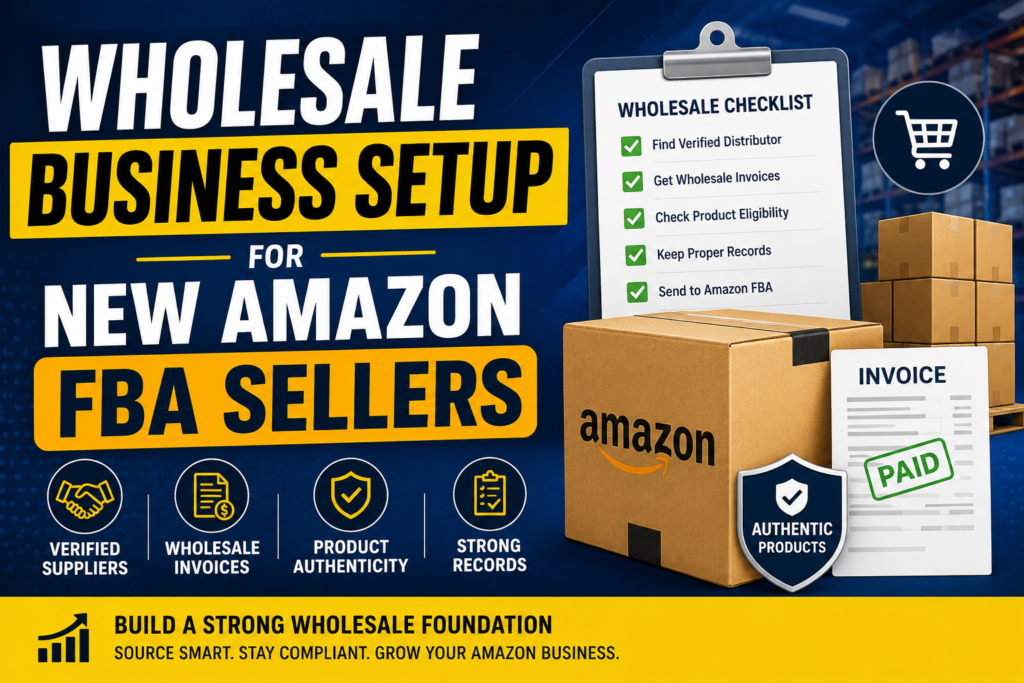
This is where the difference between an authorized distributor and a general wholesale supplier becomes important.
Both may sell products in bulk, but they do not always have the same brand relationship, documentation, product traceability, or level of verification. Understanding this difference can help Amazon sellers make more informed sourcing decisions and avoid preventable documentation problems.
As explained in our previous guide on how to verify a wholesale distributor before buying inventory, supplier verification should happen before payment—not after Amazon requests sourcing documents.
Quick Answer
What is the difference between an authorized distributor and a wholesale supplier?
An authorized distributor has a recognized or documented distribution relationship with a manufacturer or brand. A wholesale supplier is a broader term for any business that sells products in bulk, but it may or may not be directly authorized by the brand.
For Amazon sellers, an authorized distributor may provide stronger product traceability and clearer sourcing documentation. However, buying from an authorized distributor does not automatically guarantee category approval, brand approval, ungating, or permission to sell a particular ASIN.
Requirements may vary by brand, category, seller account, marketplace, and Amazon’s current review instructions.
What Is an Authorized Distributor?
An authorized distributor is a business that has permission from a manufacturer or brand owner to distribute its products within a specific market, territory, sales channel, or customer group.
That authorization may be supported by:
- A distribution agreement
- A direct purchasing relationship
- Brand-issued documentation
- Official distributor listings
- Verifiable communication with the manufacturer
- A recognized supply-chain relationship
An authorized distributor generally purchases products directly from the brand, manufacturer, or another approved source within the brand’s distribution network.
This does not necessarily mean the distributor can authorize every reseller to sell the products on Amazon. Brand authorization, marketplace selling permission, and distributor status are related concepts, but they are not always the same thing.
What an Authorized Distributor May Provide
Depending on its relationship with the brand, an authorized distributor may be able to provide:
- Authentic branded inventory
- Commercial wholesale invoices
- Clear product identifiers
- Manufacturer or brand details
- Consistent inventory records
- Product traceability
- Category-based stock lists
- Supporting business information for verification
These records can help sellers maintain a clearer sourcing history. They may also help support an approval request or authenticity review depending on Amazon’s requirements.
However, sellers should never assume that the words “authorized distributor” automatically make every invoice acceptable. Amazon may review the complete document, supplier details, quantities, product identifiers, transaction history, and the seller’s account information.
What Is a Wholesale Supplier?
A wholesale supplier is any business that sells products in bulk to retailers, resellers, ecommerce businesses, or other commercial buyers.
The term covers several types of businesses, including:
- Manufacturers
- Authorized distributors
- Regional distributors
- Importers
- Exporters
- Liquidators
- Closeout suppliers
- Wholesalers
- Trading companies
- Business-to-business resellers
This means every authorized distributor may operate as a wholesale supplier, but not every wholesale supplier is necessarily authorized by the original brand.
A general supplier may obtain inventory through another distributor, excess stock, closeout channels, imports, secondary markets, or other legitimate sources. The products may still be genuine, but the supply chain could be longer or more difficult to verify.
For an ordinary retail business, that may not always create a problem. For an Amazon seller who could be asked to provide detailed sourcing documentation, the difference can be significant.
Authorized Distributor vs Wholesale Supplier: Main Differences
The following comparison explains the practical differences Amazon sellers should understand.
Brand Relationship
An authorized distributor usually has a direct or officially recognized relationship with the manufacturer or brand.
A general wholesale supplier may purchase from a distributor, importer, liquidator, or another wholesale business without having a direct relationship with the brand.
Product Traceability
Authorized distributors often have a shorter and clearer supply chain.
A wholesale supplier may still sell authentic products, but the seller may need to verify how the supplier obtained the inventory and whether that sourcing path can be documented.
Documentation
Both businesses may provide invoices, but the strength and detail of those invoices can vary.
A useful wholesale invoice should clearly identify:
- The supplier
- The buyer
- The products
- The quantities
- The transaction date
- Relevant product identifiers
- Supplier contact information
Amazon has stated that invoices used for certain policy appeals should be itemized, authentic, unaltered, connected to a completed transaction, and include identifiable products and supplier contact details. Amazon may also contact a supplier to verify the information.
Brand Support
An authorized distributor may be in a better position to confirm its relationship with a brand.
A regular wholesale supplier may not be able to provide brand relationship details, even when the products are genuine.
Amazon Approval Support
Documents from a traceable distributor may help support certain applications or reviews, depending on Amazon’s requirements.
However, neither an authorized distributor nor a wholesale supplier can promise:
- Guaranteed ungating
- Guaranteed category approval
- Guaranteed brand approval
- Guaranteed ASIN approval
- Guaranteed acceptance of an invoice
- Guaranteed protection from account health issues
Amazon makes its own decisions based on the specific request, documents, account history, product, category, and marketplace.
Why the Difference Matters for Amazon FBA Sellers
Amazon sellers operate in a marketplace where product authenticity and sourcing records can directly affect listing access and account health.
The supplier you choose may influence how easily you can answer questions such as:
- Where did the inventory come from?
- Is the supplier a real and reachable business?
- Does the invoice match the seller account?
- Can the products be identified from the invoice?
- Does the purchased quantity support the number of units sold?
- Can the supplier verify the completed transaction?
- Is the product connected to a legitimate supply chain?
A low price does not answer any of these questions.
It Can Affect Product Authenticity Reviews
A customer complaint, rights-owner complaint, product condition issue, or authenticity concern may lead to a request for invoices or sourcing records.
A clear invoice from a traceable source can help sellers respond more professionally. Poor documentation, edited files, unclear product descriptions, or an unreachable supplier may make the review more difficult.
It May Affect Approval Requests
Some brands, categories, and products require sellers to apply before listing.
Amazon may ask for invoices, product images, brand documentation, compliance documents, or other records. The exact request should be followed carefully because requirements may vary by category and marketplace.
An invoice from a recognized distributor may help support the request, but it should never be presented as a guarantee of approval.
It Supports Better Account Records
Supplier verification is not only useful when Amazon contacts you.
Working with a professional source can help sellers maintain:
- Organized purchase records
- Accurate cost information
- Product-level order history
- Payment evidence
- Shipping records
- Restock information
- Supplier communication
- Returns and damage documentation
These records make it easier to manage inventory and respond if questions arise later.
Step-by-Step Guide to Evaluate a Distributor or Supplier
Amazon sellers should complete basic due diligence before placing a serious wholesale order.
Step 1: Confirm the Legal Business Identity
Ask for the supplier’s full legal business name and compare it with:
- Its website
- Invoice details
- Business email
- Payment instructions
- Shipping address
- Tax or registration information, where appropriate
Be careful when the company name changes across documents without a clear explanation.
Step 2: Ask About the Source of the Products
Do not simply ask, “Are the products authentic?”
Ask more useful questions:
- Do you purchase directly from the brand?
- Are you an authorized distributor?
- Do you purchase through another distributor?
- Can your brand relationship be verified?
- Are these products closeout or liquidation inventory?
- Are there restrictions on where the products may be resold?
A professional supplier should be able to explain its business model clearly.
Step 3: Request a Sample Invoice
Before placing a large order, ask for a sample invoice with sensitive customer and pricing information removed.
Review whether it normally includes:
- Supplier name and address
- Supplier phone number or website
- Buyer’s legal business name
- Buyer’s billing address
- Invoice number
- Invoice date
- Product descriptions
- UPCs, model numbers, or SKUs
- Quantities
- Completed transaction details
Do not ask the supplier to create false, backdated, or altered documentation.
Step 4: Verify Product Information
Compare the supplier’s stock list with the Amazon listing.
Check:
- Brand name
- Product title
- UPC or EAN
- Model number
- Size
- Color
- Pack count
- Variation
- Expiration date, where applicable
- Amazon ASIN
Our guide on how to read a wholesale stock list before ordering Amazon inventory explains how sellers can review product identifiers, case packs, pricing, available quantities, fees, and restrictions before buying.
Step 5: Check Your Amazon Selling Eligibility
Before sending payment, search the product in Seller Central and confirm whether your account is allowed to sell it.
A supplier may be authorized to distribute the product while your Amazon account is still restricted from selling it.
Check for:
- Brand restrictions
- Category approval
- Product-level restrictions
- Condition restrictions
- Compliance requirements
- Hazmat requirements
- Expiration-date rules
- Marketplace-specific limitations
Never assume that access to inventory equals permission to list it.
Step 6: Review the Complete Landed Cost
An authorized source is not automatically a profitable source.
Calculate:
- Unit cost
- Shipping
- Prep charges
- Labeling
- Bundling
- FBA inbound shipping
- Referral fees
- Fulfillment fees
- Storage costs
- Expected returns
- Price changes
- Minimum order quantities
The previous guide on wholesale business setup for new Amazon FBA sellers also explains why documents, product research, inventory planning, and account health processes should be prepared before purchasing inventory.
Step 7: Start With a Manageable Order
A smaller first order can help you evaluate:
- Product quality
- Supplier communication
- Invoice accuracy
- Shipping speed
- Packaging condition
- Product matching
- Prep requirements
- Restock reliability
Do not increase order size only because the supplier offers a larger discount.
Step 8: Save Every Sourcing Record
Create a folder for each supplier and keep:
- Original invoices
- Purchase orders
- Payment confirmations
- Shipping documents
- Tracking information
- Receiving reports
- Stock lists
- Product photos
- Supplier emails
- Authorization documents, when provided
Clean sourcing records can help sellers manage their businesses more effectively and may support future Amazon requests.
Common Mistakes Amazon Sellers Should Avoid
Assuming Every Wholesaler Is Authorized
A professional website or large inventory list does not prove direct brand authorization.
Ask specific questions and verify the relationship where possible.
Believing Authentic Products Are Enough
A product may be genuine, but Amazon may still request documentation showing where it came from.
Product authenticity and document acceptability are connected but separate issues.
Buying Before Checking Restrictions
A profitable product is not useful when your account cannot list it.
Always check selling eligibility before ordering.
Accepting Vague Invoices
Descriptions such as “assorted merchandise,” “health products,” or “general goods” may not clearly connect the order to a specific ASIN.
Ask for identifiable product information.
Editing an Invoice
Do not change names, dates, quantities, addresses, or product information. Amazon states that documents used for invoice reviews should be authentic and unaltered, and that manipulated or editable documents may not be accepted.
Expecting Guaranteed Ungating
No responsible distributor should promise that an invoice will definitely unlock a brand, category, or product.
The safest wording is that proper documentation may help support approval requests depending on Amazon’s requirements.
How a Verified Wholesale Distributor Can Help
A verified distributor can make sourcing more organized by providing clear product information, commercial invoices, professional communication, and consistent order records.
The EN Distributions website includes wholesale categories such as Beauty and Personal Care, Grocery and Gourmet Food, Health and Household, and Pet Supplies.
Sellers can also review the company’s wholesale services, which include order fulfillment, seller support, FBA preparation, labeling, bundling, and quality-focused sourcing processes.
Before working with any distributor, sellers should still complete their own checks. Verify each product, review restrictions, calculate profitability, and read Amazon’s current requirements before ordering.
To learn more about the company’s sourcing approach, visit the About EN Distributions page.
Final Thoughts
The main difference between an authorized distributor and a wholesale supplier is the relationship with the original brand.
An authorized distributor normally operates within a recognized brand or manufacturer distribution network. A wholesale supplier may obtain products through several legitimate channels but may not have a direct brand relationship.
For Amazon FBA sellers, the better option is not always the company with the lowest unit price. It is the source that offers the right combination of:
- Authentic inventory
- Clear invoices
- Verifiable business information
- Accurate product details
- Professional communication
- Reasonable pricing
- Reliable fulfillment
- Traceable sourcing records
Even strong documentation does not guarantee Amazon approval. Sellers should follow the exact instructions provided in Seller Central and remember that requirements may vary by brand, category, ASIN, marketplace, and account.
Ready to explore wholesale inventory? Visit the available product categories on EN Distributions, review the company’s sourcing and fulfillment services, or apply for a wholesale account.
For questions about products, invoices, account registration, or ordering, sellers can also contact the wholesale team.
Frequently Asked Questions
1. Is an authorized distributor the same as a wholesale supplier?
No. An authorized distributor is a type of wholesale supplier with a recognized relationship with a brand or manufacturer. A general wholesale supplier may source products through other distributors, importers, closeouts, or secondary wholesale channels.
2. Do Amazon sellers need to buy only from authorized distributors?
Not every Amazon transaction has the same requirements. However, sellers should use legitimate and traceable sources that can provide appropriate documentation. The requirements may vary depending on the brand, category, product, marketplace, and Amazon request.
3. Does an authorized distributor invoice guarantee Amazon ungating?
No. A distributor invoice may help support an approval request, but it does not guarantee ungating or selling approval. Amazon independently reviews the seller, supplier, invoice, product, quantity, and other requested documentation.
4. How can I check whether a distributor is authorized?
Ask the supplier about its brand relationship, check the brand’s official distributor information where available, review business records, and contact the brand when necessary. Do not rely only on an “authorized” badge displayed on a supplier’s website.
5. Can a regular wholesale supplier sell authentic products?
Yes. A wholesale supplier may sell authentic products without being a direct authorized distributor. However, Amazon sellers should verify the supply chain, invoice quality, product identifiers, and supplier information before buying.