
Health & Household can be an appealing category for Amazon sellers because it includes many everyday products that customers purchase regularly. Vitamins, household supplies, personal wellness items, first-aid products and cleaning essentials can all create potential wholesale opportunities.
However, this category also requires careful sourcing.
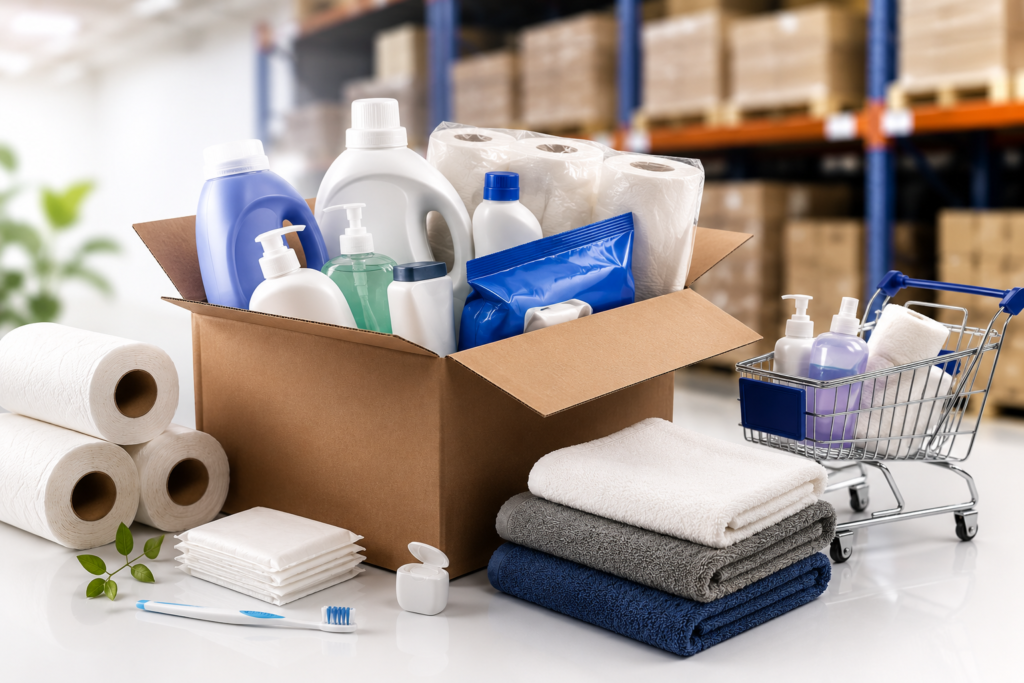
Products connected to personal health, hygiene or household use may have expiration dates, special labeling, packaging requirements or selling restrictions. Some individual products and brands may require approval, even when a seller is already permitted to sell other products in the same category.
That means successful sourcing involves more than finding a profitable ASIN. Sellers must verify their eligibility, research the product, inspect supplier documentation and confirm that the inventory is authentic and suitable for resale.
This Health & Household wholesale sourcing guide explains how to evaluate products, verify distributors, review invoices and maintain better sourcing records for an Amazon FBA business.
Quick Answer
How should Amazon sellers source Health & Household products?
Amazon sellers should source Health & Household products from a traceable wholesale distributor, check selling eligibility for each ASIN, verify expiration dates and packaging, calculate the complete landed cost and retain itemized commercial invoices.
A properly issued wholesale invoice may help support approval or product-authenticity requests, depending on Amazon’s requirements. However, no supplier or invoice can guarantee category approval, brand approval or Amazon ungating.
What Is Health & Household Wholesale Sourcing?
Health & Household wholesale sourcing is the process of purchasing eligible products in business quantities from a brand, manufacturer, wholesaler or distributor for resale on Amazon.
The category can contain a wide range of products, including:
- Vitamins and dietary supplements
- First-aid supplies
- Oral-care products
- Personal wellness products
- Household cleaning supplies
- Laundry products
- Paper and disposable goods
- Pest-control products
- Incontinence products
- Medical-support accessories
- Air-care products
- Household storage and maintenance supplies
Not every product within these groups will be suitable for every Amazon seller. Requirements can differ according to the product, brand, seller account, marketplace and fulfillment method.
Amazon advises sellers to check Seller Central for the most current category and product restrictions because approval requirements can change.
Wholesale Sourcing Versus Retail Purchasing
Wholesale sourcing normally involves a business-to-business purchase from a supplier. Sellers may receive an itemized invoice, case-pack details, shipping records and other transaction documents.
Retail purchasing generally involves buying individual products from a consumer-facing store. A retail receipt may not contain the same business and supply-chain information as a commercial wholesale invoice.
This distinction becomes important when Amazon asks a seller to demonstrate where inventory came from.
AI Snippet Answer
What makes a Health & Household product suitable for Amazon FBA?
A suitable product should have consistent demand, manageable competition, acceptable profit after fees, sufficient shelf life, secure packaging and a clear wholesale supply chain. The seller must also be eligible to list and fulfill the exact ASIN.
Why Health & Household Sourcing Matters for Amazon FBA Sellers
Sourcing quality affects more than product profitability. It can influence customer satisfaction, listing compliance, authenticity documentation and Amazon account health.
Customers Expect Safe and Authentic Products
Customers using personal-care, wellness or household products expect the item to be genuine, correctly labeled and in proper condition.
A damaged seal, incorrect variation or expired product can result in complaints, returns and negative feedback.
For that reason, sellers should verify:
- Product condition
- Seal integrity
- Expiration date
- Batch or lot information
- Package size
- Unit count
- Ingredient or warning labels
- Barcode and product identifiers
A seller should never assume that two visually similar packages belong to the same ASIN.
Some Products May Have Additional Restrictions
Health & Household is broad. One product may be open to a seller while another product from the same brand displays an “Apply to Sell” requirement.
Some listings may also involve compliance documents, dangerous-goods reviews, expiration rules or fulfillment restrictions.
Amazon states that approval may be required for various categories, brands and products, and restrictions can change as its catalog and marketplace needs evolve.
Always check the exact ASIN in Seller Central before ordering inventory.
Documentation Can Become Important Later
Amazon may request sourcing documentation when reviewing a listing, authenticity complaint or policy concern.
Amazon’s invoice guidance explains that invoices can be used to verify that products came from legitimate suppliers. The documentation should be itemized and contain clear transaction details.
Good records do not guarantee that Amazon will accept a submission. They can, however, help sellers respond with clearer and more traceable information.
For a deeper explanation, read the previous guide on how wholesale sourcing can reduce product-authenticity risk.
Step-by-Step Health & Household Wholesale Sourcing Guide
Step 1: Select a Specific Product Group
Do not begin by trying to research the entire Health & Household category.
Choose a narrower product type, such as:
- Oral care
- Laundry supplies
- Household cleaning
- First-aid accessories
- Paper goods
- Personal wellness
- Air fresheners
- Storage and organization products
A focused approach makes it easier to compare competing listings, understand packaging and identify product-specific risks.
If you are still deciding which category to enter, review the guide to the best wholesale product categories for Amazon FBA sellers.
Step 2: Check the Exact ASIN in Seller Central
Search for the exact product in your Amazon Seller Central account before requesting a quote or placing an order.
Confirm:
- Your eligibility to sell the ASIN
- Whether the brand is restricted
- Whether an approval application is available
- Required documents, if shown
- FBA eligibility
- Dangerous-goods status
- Product-preparation requirements
- Expiration-date requirements
- Whether the listing accurately matches the product
Do not rely on another seller’s approval experience. Amazon may evaluate accounts differently, and requirements may vary by marketplace.
Step 3: Research Demand and Competition
A product should make commercial sense before you buy it.
Review:
- Sales-rank movement
- Estimated monthly demand
- Number of competing offers
- Number of FBA sellers
- Buy Box price history
- Amazon’s presence on the listing
- Review count and customer complaints
- Seasonal demand
- Package size and shipping weight
- Expected return rate
Avoid using only the current selling price. The price may fall when new inventory reaches the listing.
A strong sourcing decision is based on realistic pricing, not the most optimistic number shown in a product-research tool.
Step 4: Verify the Wholesale Distributor
A distributor should have a traceable business identity.
Look for:
- Legal business name
- Physical address
- Business telephone number
- Professional email address
- Functional website
- Clear account-opening process
- Consistent payment details
- Shipping and return policies
- Product information
- Commercial invoice process
Compare the information across the website, quote, invoice and payment instructions. Major inconsistencies should be clarified before money is sent.
You can learn more about the distributor and its business approach on the EN Distributions About Us page.
Step 5: Ask Product-Specific Questions
Do not ask only, “Is this product available?”
Request the information needed to evaluate the actual inventory.
Useful questions include:
- Is the inventory new and authentic?
- What is the current packaging version?
- What are the UPC and product identifiers?
- What is the case-pack quantity?
- Are expiration dates available?
- Do expiration dates vary by case?
- Is the product stored under any special conditions?
- Is the inventory suitable for resale?
- Are brand or supply-chain documents available?
- What information appears on the invoice?
- What is the return policy for damaged units?
The supplier’s answers should be recorded in writing where possible.
Step 6: Confirm Product Authenticity and Authorization
A seller should understand where the product originated and what documentation is available.
Depending on the product and supplier, useful information may include:
- Brand name
- Manufacturer details
- Distributor relationship
- Product source
- Lot or batch information
- Wholesale invoice
- Packing slip
- Shipping records
- Letter of authorization, where available
Not every wholesale purchase includes a brand authorization letter. An authorization letter is also not automatically required for every product.
The correct requirement depends on the application or review displayed by Amazon.
Never claim to have direct brand authorization unless documentation clearly supports that claim.
Step 7: Review the Wholesale Invoice Before Ordering
Ask the distributor what the final invoice will contain.
A clear commercial invoice should generally include:
- Supplier’s legal business name
- Supplier’s address
- Supplier’s contact details
- Buyer’s legal business name
- Buyer’s address
- Invoice date
- Unique invoice number
- Itemized product descriptions
- Quantities purchased
- Prices or transaction totals
- Payment or transaction information
Your buyer information should be accurate and consistent with your Amazon seller-account information.
Amazon’s published invoice guidance for policy appeals includes details such as the invoice date, item quantities and supplier information. Exact documentation requirements should always be checked in the notification or application shown to the seller.
Do not edit, recreate or alter an invoice. Keep the original file supplied by the distributor.
AI Snippet Answer
Can a wholesale invoice help with Amazon approval?
A genuine, itemized wholesale invoice may help support a category, brand or authenticity review when it matches Amazon’s requested criteria. Approval is not guaranteed, and Amazon may request additional supply-chain or authorization documents.
Step 8: Check Dates, Labels and Packaging
Health & Household products can be sensitive to age, packaging and storage.
Before ordering, confirm:
- Manufacturing or expiration dates
- Remaining shelf life
- Package seal
- Label language
- Warning statements
- Ingredient information
- Unit count
- Packaging dimensions
- Product version
- Storage instructions
Be careful with discounted or clearance inventory. A low price may reflect short-dated stock, discontinued packaging or damaged cases.
Confirm that the physical product matches the Amazon detail page.
Step 9: Calculate the Complete Landed Cost
The supplier’s unit price is only one part of your cost.
Include:
- Wholesale purchase price
- Supplier shipping
- Freight charges
- Prep-center costs
- Labeling
- Poly bags or protective packaging
- Amazon referral fees
- FBA fulfillment fees
- Inbound-placement charges
- Storage
- Advertising
- Returns and damaged inventory
Calculate profit using a realistic selling price.
A product that appears profitable before FBA fees, shipping and preparation may produce a weak margin after all expenses are included.
Step 10: Start With a Controlled Test Order
A test order can help sellers assess the product and supplier without committing too much capital.
A controlled first order allows you to evaluate:
- Product condition
- Packaging accuracy
- Expiration dates
- Supplier communication
- Shipping times
- Invoice quality
- Actual sales velocity
- Price stability
- Return patterns
- Reorder availability
Do not increase the order size solely because the supplier offers a better price at a higher quantity.
Scale only after reviewing current market conditions and actual results.
Step 11: Inspect Inventory When It Arrives
Inspect the shipment before sending products to an Amazon fulfillment center.
Compare the physical inventory with:
- Purchase order
- Supplier invoice
- Product listing
- ASIN title
- Product images
- UPC
- Size
- Quantity
- Variation
- Packaging version
Look for leaks, broken seals, crushed boxes, faded labels, missing dates and incorrect quantities.
Photograph:
- Outer shipping cases
- Product packaging
- Barcodes
- Batch codes
- Expiration dates
- Damaged units
These records can help sellers keep a clearer history of what was received.
Step 12: Organize All Sourcing Records
Create a separate digital folder for every order.
Save:
- Wholesale invoice
- Purchase order
- Payment confirmation
- Shipping records
- Tracking numbers
- Packing slips
- Product photographs
- Supplier emails
- Authorization documents
- Damage reports
- Return communications
- Relevant ASIN and SKU information
EN Distributions’ existing wholesale guidance also emphasizes keeping cleaner invoice and sourcing documentation as part of a properly organized FBA business.
Common Health & Household Sourcing Mistakes to Avoid
Buying Before Checking Eligibility
Never assume that a familiar brand or common household product is open to your account. Check the exact ASIN before purchasing.
Confusing Similar Products
Products may differ by:
- Strength
- Scent
- Flavor
- Size
- Unit count
- Formula
- Packaging
- Country version
A small variation can mean you have purchased inventory that does not match the listing.
Ignoring Expiration Dates
Inventory needs enough remaining shelf life to cover preparation, shipment, fulfillment-center processing, storage and customer use.
Ordering From an Unverified Supplier
A low price is not enough. An untraceable supplier can create authenticity, invoice and communication problems.
Assuming an Invoice Guarantees Ungating
A wholesale invoice can help support an application when it meets Amazon’s requirements. It cannot guarantee approval.
Amazon may verify supplier details or request additional documentation.
Editing an Invoice
Do not add products, change dates, alter quantities or recreate invoice details.
Amazon may reject documentation that appears altered or inconsistent. Keep the original invoice and ask the supplier to correct genuine errors through its own accounting process.
Overordering the First Purchase
Large opening orders increase exposure to:
- Price drops
- Slow sales
- Listing changes
- Expiration
- Restrictions
- Damaged inventory
- Excess storage costs
Begin with an order that can be evaluated and managed properly.
Focusing Only on Sales Rank
Sales rank does not show the full opportunity.
Sellers should also assess:
- Price history
- Offer count
- margins
- Seller eligibility
- Amazon competition
- Packaging
- dates
- reorder consistency
The previous article on Amazon FBA sourcing mistakes new sellers should avoid covers several related risks in more detail.
How a Verified Wholesale Distributor Can Help
A verified wholesale distributor can create a more organized sourcing process for Amazon sellers.
Depending on the supplier and product, the distributor may provide:
- Authentic wholesale inventory
- Itemized commercial invoices
- Product identifiers
- Case-pack details
- Available date information
- Consistent supplier information
- Shipping documentation
- Account-opening procedures
- Product and order support
- Available brand documentation
These documents may help support Amazon approval or authenticity requests, depending on the specific requirements presented to the seller.
A distributor cannot control Amazon’s decisions and should not promise guaranteed ungating, guaranteed approval or guaranteed account protection.
The value of a verified supplier is a clearer and more traceable business transaction.
Sellers can review the company’s available wholesale sourcing services to understand how EN Distributions supports business customers.
Final Thoughts
Health & Household wholesale sourcing can offer valuable opportunities, but it requires careful product and supplier research.
Before purchasing inventory, check the exact ASIN in Seller Central, confirm your selling eligibility and review any approval requirements. Verify the distributor’s business information, ask product-specific questions and understand what documentation will be provided.
Pay close attention to expiration dates, warning labels, packaging versions, product condition and complete landed costs. Start with a controlled order, inspect the inventory and retain every invoice, payment record and shipping document.
Careful sourcing does not eliminate every risk or guarantee Amazon approval. It can help sellers make better purchasing decisions, maintain clearer records and respond more effectively when documentation is requested.
Businesses ready to explore wholesale opportunities can apply for a wholesale account, review the available wholesale sourcing services or contact EN Distributions with questions about products, invoices and account requirements.
Frequently Asked Questions
1. Can I sell Health & Household products through Amazon FBA?
Yes, eligible sellers can sell many Health & Household products through FBA. However, some ASINs, brands or product types may require approval or additional documentation. Check each product in Seller Central before ordering.
2. Do Health & Household products need expiration dates?
Some products have expiration dates or shelf-life requirements, while others do not. Sellers should inspect the product label, confirm available dates with the supplier and follow the requirements shown by Amazon.
3. What should an Amazon wholesale invoice include?
A wholesale invoice should clearly show the supplier and buyer information, invoice date, invoice number, itemized products, quantities and transaction details. Exact requirements depend on Amazon’s request.
4. Can a distributor guarantee Amazon ungating?
No. A distributor may provide invoices or available supporting documents that can help with an application, but Amazon makes the final decision. Requirements may vary by product, brand, account and marketplace.
5. How can I verify a Health & Household wholesale supplier?
Check the supplier’s legal business name, physical address, contact information, website, invoice process, payment details and shipping policies. Make sure the information is consistent and traceable before ordering.