
How Wholesale Distributor Support Helps Amazon FBA Sellers Find Profitable Products

Selling through Amazon FBA involves much more than choosing an attractive product and sending inventory to a fulfillment center. Sellers must evaluate demand, compare competition, calculate margins, confirm supply consistency, prepare compliant inventory and reorder before stock runs out. Without reliable wholesale distributor support, these responsibilities can quickly become expensive and difficult to manage. A professional wholesale distributor gives Amazon sellers access to established products, bulk purchasing opportunities and a more organized sourcing process. Instead of dealing with several uncertain suppliers, sellers can work with a distributor that understands inventory requirements and supports long-term purchasing decisions. EN Distributions provides wholesale products across multiple categories for online retailers and Amazon FBA sellers. Its catalog includes health and personal care products, pet supplies, household essentials, beverages and other consumer goods. Sellers interested in opening an account can complete the Apply for Wholesale form to discuss availability and purchasing requirements. What Is Wholesale Distributor Support? Wholesale distributor support includes the services, information and supply assistance a distributor provides before and after a bulk purchase. It is not limited to selling inventory. Effective support helps retailers understand available products, ordering requirements, pack sizes and restocking opportunities. Depending on the product and account, wholesale support may include: This support is particularly valuable for Amazon FBA sellers because inventory mistakes can affect cash flow, account performance and profitability. A product may appear profitable at first, but storage fees, competition, shipping expenses and slow sales can reduce the actual return. Why Amazon FBA Sellers Need a Reliable Wholesale Distributor Amazon sellers operate in a competitive environment where price, availability and customer demand can change quickly. Working with a reliable Amazon FBA wholesale distributor can make sourcing more structured and reduce unnecessary guesswork. 1. Access to Established Consumer Products Wholesale distributors often carry products that customers already understand and purchase. This allows sellers to evaluate existing demand instead of building awareness for an entirely unknown item. For example, EN Distributions lists consumer products such as Red Bull Iced Vanilla Berry Energy Drink, Pack of 24, Tyler Glam Wash Laundry Detergent Diva and several health and pet-care products. These categories can help sellers research different demand patterns and select inventory suited to their business model. Product availability can change, so sellers should always confirm current quantities and purchasing terms before making a decision. 2. More Efficient Product Research A distributor catalog gives sellers a practical starting point for product research. Rather than searching randomly across the internet, sellers can analyze products that are available through a potential supply channel. Before purchasing, sellers should review: Wholesale distributor support does not replace independent research. Instead, it improves the process by connecting product analysis with real supply availability. 3. Better Inventory Planning Running out of stock can reduce sales momentum, while buying too much inventory can tie up capital and increase storage costs. A responsive wholesale supplier can help sellers obtain current availability information and plan reorders more carefully. Inventory planning is especially important for frequently purchased products and consumables. Sellers should calculate average daily sales, supplier lead time and a reasonable safety-stock level. Reordering before inventory reaches a critical point can help reduce disruptions. 4. Opportunities Across Multiple Categories A multi-category wholesale catalog allows sellers to compare different product types without opening a separate supplier relationship for every category. EN Distributions currently features products in personal care, pet care, household, beverage and related consumer categories. Examples include: These examples show the variety available for research; they are not a guarantee that every item will be suitable or unrestricted for every Amazon account. How to Identify Profitable Wholesale Products for Amazon FBA The most useful wholesale support still needs to be combined with disciplined product analysis. Sellers should avoid choosing inventory based only on a recognizable brand or a high selling price. Calculate the Complete Landed Cost The landed cost includes more than the wholesale unit price. It may include inbound shipping, preparation, labeling, packaging, taxes and other handling expenses. Amazon referral fees, FBA fulfillment fees, storage fees and expected returns should also be included when calculating potential profit. A simple starting formula is: Estimated profit = Selling price − Amazon fees − Landed product cost − Other operating costs Sellers should also calculate return on investment and test how profit changes if the selling price drops. Review Competition and Buy Box Conditions A listing with strong demand may still be unsuitable if it has too many established sellers or unstable pricing. Check the number of FBA sellers, historical pricing, Buy Box behavior and whether Amazon itself sells the product. Price wars can quickly reduce margins. A sustainable opportunity normally needs enough demand and sufficient room between the landed cost and a realistic selling price. Check Restrictions Before Ordering Amazon may require approval for certain brands, categories or product conditions. Health products, supplements, topical products, food, beverages and items with expiration dates may have additional requirements. Before placing a bulk order, confirm that your seller account is eligible to list the exact product. Review Amazon’s current policies and request relevant product or supplier documentation when necessary. Start With a Controlled Quantity Large orders can offer a lower unit cost, but they also increase risk. New sellers should consider testing a manageable quantity when possible. After confirming sales velocity, pricing stability and operational requirements, they can make a better-informed reorder decision. Questions to Ask a Wholesale Distributor Good communication helps sellers avoid misunderstandings. Before purchasing, ask questions such as: A seller should receive and review the applicable terms before committing significant capital. How EN Distributions Supports Wholesale Buyers EN Distributions gives wholesale buyers access to products across several consumer categories from one website. Amazon sellers can browse individual product pages, compare possible opportunities and then contact the company regarding wholesale availability. The process begins with research. Sellers should identify products that match their budget, category experience and Amazon account eligibility. They can then submit the wholesale application with accurate business and contact information. When applying, include useful details such as your business
Questions Every Amazon Seller Should Ask Before Placing a Wholesale Order

Placing a wholesale order can feel like a major step forward for an Amazon seller. You find a product with potential, receive an attractive price, and start calculating possible profit. However, a profitable-looking deal can become an expensive mistake when important questions are left unanswered. Is the supplier legitimate? Is the product authentic? Will the invoice contain the information Amazon may request? Can you sell the brand or category from your account? How quickly can the inventory realistically sell? These questions matter because wholesale sourcing is not simply about buying products at a low price. It is about protecting your capital, maintaining clear sourcing records, managing inventory responsibly, and supporting the long-term health of your Amazon business. Quick Answer Before placing an Amazon wholesale order, sellers should verify the distributor, confirm product authenticity, check their eligibility to sell the brand or category, review the invoice format, calculate the complete landed cost, assess demand, and understand order and return terms. A professional invoice and legitimate sourcing records may help support approval requests, depending on Amazon’s requirements. However, no distributor or invoice can guarantee ungating or Amazon approval. What Should You Check Before Placing an Amazon Wholesale Order? An Amazon wholesale order should pass three basic checks before you commit your money: These checks may sound simple, but each one requires careful research. A product can be authentic but unprofitable. A supplier can be legitimate, while the brand is restricted on your particular account. A listing can show strong demand today but become highly competitive before your inventory reaches Amazon. The objective is not to eliminate every possible risk. That is rarely possible in ecommerce. The objective is to identify avoidable risks before they turn into account, inventory, or cash-flow problems. Why These Questions Matter for Amazon FBA Sellers Amazon wholesale sellers often commit more capital per purchase than retail or online arbitrage sellers. Products may be sold in cases, and suppliers may have minimum order values or minimum quantity requirements. That makes each sourcing decision important. Asking the right questions can help you: This process connects closely with inventory management. Our previous guide on managing overstock and stockouts explains why purchasing quantity should be based on sales velocity, lead time, and available capital—not excitement about a low wholesale price. Step-by-Step Questions to Ask Before Ordering 1. Is the Wholesale Distributor a Legitimate Business? Your first question should be about the supplier, not the product. Review the distributor’s business name, physical or registered address, contact information, website, ordering process, and payment details. Make sure the company information is consistent across its documents and communication. Ask the distributor: You can learn more about EN Distributions and its wholesale focus through the company’s About Us page. Be cautious when a supplier avoids basic questions, accepts payment only through unusual methods, or offers branded products at prices that appear unrealistic. 2. Are the Products Authentic and Properly Sourced? Product authenticity is essential for Amazon account health and customer trust. Do not assume a product is authentic simply because its packaging looks correct or the supplier uses the word “wholesale.” Ask where the inventory comes from and whether it can be traced through legitimate commercial channels. When relevant, ask whether the supplier works directly with brands, manufacturers, importers, or authorized distribution partners. Useful questions include: Brand authorization and invoice requirements can differ. A distributor invoice does not automatically mean that a seller has permission to use brand-owned images, create a new branded listing, or represent themselves as an authorized seller. 3. Am I Eligible to Sell This Brand or Category? Always check your Amazon Seller Central account before ordering. Restrictions can vary between sellers. One account may be eligible to sell a product while another account may need approval. Requirements may also vary by category, brand, ASIN, condition, and marketplace. Search the product or ASIN in Seller Central and confirm whether you can list it. If approval is required, review the documents Amazon currently requests before buying inventory. Ask yourself: Do not purchase a large quantity based only on another seller’s approval experience. Amazon makes eligibility and approval decisions according to its own policies and account-level factors. 4. Will the Invoice Contain the Required Information? A proper wholesale invoice can help sellers keep better sourcing records and may help support approval requests, depending on Amazon’s requirements. Before ordering, ask what information will appear on the invoice. It should accurately reflect the transaction and typically include: The name and address used for your wholesale account should be consistent with your actual business information. Never edit an invoice or ask a supplier to add products that were not purchased. Keep invoices, order confirmations, payment records, shipping information, and distributor correspondence together. Organized records can be useful if Amazon requests sourcing documentation later. 5. What Is the Complete Landed Cost? The wholesale unit price is only one part of the cost. Calculate the landed cost—the total amount required to get one unit ready and available for sale. This may include: Our guide to the Amazon FBA fee breakdown provides additional context on the costs sellers should review. A product with an attractive purchase price may offer little room for profit after all expenses are included. Calculate profitability at several possible selling prices rather than relying only on the current Buy Box price. 6. Is Demand Strong and Consistent Enough? A high sales rank or a few strong sales days do not automatically prove stable demand. Review the product’s sales history, price movement, competition, listing quality, seasonality, and seller count. Look for patterns instead of depending on a single data point. Ask: Your analysis should also consider whether you can sell the inventory within a reasonable period. The purpose is not merely to find a product that sells; it is to find one that fits your capital, risk tolerance, and operating model. 7. How Much Inventory Should I Order? New sellers often overorder because a larger purchase offers a lower per-unit price. However, the cheapest unit is not always
Amazon FBA Fee Breakdown Every Wholesale Seller Should Understand
Amazon wholesale can look profitable on a product spreadsheet until Amazon fees, storage charges, prep costs, and returns enter the picture. A product may sell regularly, but that does not automatically make it a good FBA buy. Sellers need to understand the full cost behind every unit before placing a wholesale order. This guide breaks down the main Amazon FBA fees wholesale sellers should understand, how they fit into a practical profit calculation, and what to check before you commit capital to inventory. The goal is not to memorise every possible charge. It is to build a repeatable method for judging whether a product still leaves enough margin after real operating costs. Quick Answer: Amazon FBA wholesale sellers generally need to account for the referral fee, FBA fulfilment fee, storage costs, inbound shipping, product cost, preparation or labelling costs, and potential return or removal costs. Calculate estimated profit by subtracting all expected costs from the selling price, then review the margin before buying inventory. Amazon’s charges and requirements may vary by category, marketplace, product size, and season, so verify current figures in Seller Central. What Is Included in an Amazon FBA Fee Breakdown? An Amazon FBA fee breakdown is a unit-by-unit view of the costs that affect a product’s profitability. It starts with the customer selling price and subtracts every predictable cost connected with acquiring, preparing, storing, and fulfilling that unit. For a wholesale product, the core formula is: Estimated profit = Selling price − Amazon fees − wholesale cost − shipping/prep costs − expected operating costs The calculation is simple in principle, but the detail matters. If you only subtract the wholesale purchase price and one Amazon fee, you may overlook costs that slowly erode your margin. This is why our earlier article on hidden costs that reduce Amazon wholesale profits is a helpful next read: it looks at the expenses sellers often forget after the initial product calculation. The main cost areas to review What fees do Amazon FBA wholesale sellers pay?Amazon FBA wholesale sellers commonly pay referral fees, fulfilment fees, storage fees, inbound shipping and product-preparation costs. The exact charges depend on the product, category, size, marketplace, and Amazon’s current fee schedule. Why Amazon FBA Fees Matter for Wholesale Sellers Wholesale buying often involves case packs and larger purchase quantities. That can improve unit cost, but it also increases the impact of a poor buying decision. If your fee estimate is off by even a small amount per unit, the total impact can become significant across a larger order. Understanding fees helps you decide whether to: Fee awareness also supports better inventory planning. Overstock can lead to extended storage exposure, while stockouts can interrupt sales momentum. For a deeper look at this balance, see overstock versus stockout in Amazon wholesale inventory. Step-by-Step Guide to Calculating Your Amazon FBA Costs Step 1: Start with the realistic selling price Do not base your calculation on the highest price you have seen on an Amazon listing. Use a realistic price based on the current offer landscape, your product condition, and the competition you expect to face. If the price is volatile, build your calculation around a conservative figure rather than a best-case scenario. For example, if a product has recently sold between $24 and $30, planning around $30 may make the opportunity look better than it really is. A cautious price assumption gives you more room for market changes. Step 2: Add the referral fee Amazon generally charges a referral fee for each sale. The rate can depend on the product category and marketplace. Treat it as a percentage of the sale price unless Amazon’s current fee details state otherwise for your product. Check the exact category before you buy. A product that appears similar to another item may be placed in a different category, which can affect the estimate. When possible, use Amazon’s current revenue calculator or Seller Central fee tools for the actual ASIN. What is an Amazon referral fee?An Amazon referral fee is a selling fee charged by Amazon when an item is sold. It is commonly calculated as a percentage of the sale price, but the amount can vary by category and marketplace. Step 3: Estimate the FBA fulfilment fee The FBA fulfilment fee covers Amazon’s pick, pack, shipping, customer-service, and return-handling processes for eligible FBA orders. It is typically influenced by factors such as the product’s size tier and shipping weight. This is why accurate dimensions matter. A small difference in packed size or weight can move an item into a different fee tier. Use the dimensions of the final sellable unit, including any bagging, boxing, or bundle packaging you will add. Do not estimate from an unprepared product alone. If you sell a bundle, calculate the fee based on the completed bundle, not on the fee of one component. Step 4: Include monthly storage costs FBA storage costs apply while inventory is held in Amazon fulfilment centres. These charges can vary based on inventory size, time of year, and current Amazon policies. They are easy to overlook because they may seem small per unit, but slow-moving cases can change the economics of a wholesale purchase. Estimate how long the inventory is likely to sit. A fast-moving product and a product expected to remain in storage for several months should not be evaluated in the same way. Review historical sales pace where you can, and buy quantities that match your cash flow and replenishment ability. Step 5: Calculate your true landed product cost Your landed cost is more than the supplier’s unit price. It should include the wholesale cost plus the share of shipping, delivery, handling, prep-centre charges, labels, protective packaging, and any other expense needed to make the item FBA-ready. A clear formula is: Landed cost per unit = Product cost + supplier shipping share + prep cost + label cost + inbound shipping share Suppose a supplier charges $10 per unit, shipping to your prep location adds $0.60 per unit, labelling and
Amazon FBA Inventory Planning for Wholesale Businesses

For Amazon FBA wholesale sellers, buying inventory is easy compared with planning it properly. Many sellers find a product with potential, place an order, and send it to Amazon—only to discover that they ordered too much, ran out too quickly, or tied up too much cash in slow-moving stock. These issues are common, especially when you are building a wholesale business and managing several products at once. Good inventory planning helps you make purchasing decisions with more control. It allows you to balance product demand, supplier lead times, Amazon fees, storage capacity, cash flow, and the risk of stockouts. The goal is not to predict every sale perfectly. The goal is to create a repeatable process that helps you order more thoughtfully, stay in stock where possible, and avoid holding inventory you cannot move. Quick Answer Amazon FBA inventory planning for wholesale businesses means estimating product demand, tracking sales speed, considering supplier and shipping lead times, setting reorder points, and avoiding overbuying. Sellers should review inventory regularly, use accurate wholesale invoices, and source through verified distributors to keep purchasing records organized. Results and Amazon requirements may vary by category and marketplace. What Is Amazon FBA Inventory Planning? Amazon FBA inventory planning is the process of deciding what to order, when to reorder, and how much inventory to send to Amazon fulfillment centers. For wholesale sellers, this process starts before products are purchased. You need to consider whether the item is suitable for your account, whether demand appears stable, how quickly the distributor can fulfill an order, and whether your business has enough capital to hold the inventory. A simple inventory plan usually includes: The best inventory plan is not necessarily complex. A spreadsheet, inventory software, or structured replenishment routine can work well if the information is accurate and reviewed regularly. Why Inventory Planning Matters for Amazon FBA Sellers Inventory planning affects almost every part of an Amazon wholesale business. When you run out of stock, your listing may lose sales momentum. You may also miss an opportunity to sell during a busy period. When you overstock, your cash is tied up in inventory, and storage-related costs can become harder to manage. For a wholesale seller, poor planning can also lead to rushed sourcing decisions. This may cause someone to buy from an unfamiliar supplier simply because the original product is out of stock. That can create unnecessary risk around documentation, product authenticity, and account health. Strong planning helps sellers: This article also connects with our guides on seasonal inventory planning for Amazon wholesale sellers, hidden costs that reduce Amazon wholesale profits, and managing overstock vs. stockouts efficiently. Each topic supports the same goal: making inventory decisions based on practical business information rather than impulse. Step-by-Step Guide to Planning Wholesale Inventory for Amazon FBA Start With Demand, Not Just Product Price A low wholesale price does not automatically make an item a good inventory choice. Before ordering, look at how the product fits your business model. Review factors such as: A product may look profitable on paper but become less attractive once you account for inbound shipping, prep, storage, returns, and price competition. Start with a realistic order size, particularly when testing a new product. This gives you a chance to understand demand without committing too much capital at once. Calculate Your Average Sales Pace Your sales pace tells you how quickly a product is selling over a specific period. For example, if you sell 60 units in 30 days, your average sales pace is around two units per day. This is not a guarantee that future sales will remain the same, but it gives you a useful starting point for planning. Use a consistent review period, such as the last 30, 60, or 90 days. Shorter periods can be useful for fast-moving products, while longer periods may provide a steadier picture for slower items. When reviewing sales pace, also ask: Do not base every reorder on one strong week. Look for patterns before making larger commitments. Understand Supplier and Delivery Lead Times Lead time is the total time between placing an order and having inventory available for sale on Amazon. For a wholesale FBA seller, this may include: If your average sales pace is two units a day and the full lead time is 20 days, you may need at least 40 units to cover that period. You may also need extra safety stock in case of delays. Lead times can change due to product availability, shipping volume, carrier issues, or Amazon receiving delays. Review them regularly instead of assuming every order will arrive on the same schedule. Set a Clear Reorder Point A reorder point is the inventory level that signals it is time to place another order. A simple formula is: Reorder Point = Average Daily Sales × Lead Time + Safety Stock For example: Your reorder point would be: 2 × 20 + 15 = 55 units This means you may consider reordering when your total available and incoming inventory reaches around 55 units. Your safety stock does not need to be excessive. It is simply a buffer for normal uncertainty, such as slightly faster sales or slower delivery. The right amount depends on your budget, product volatility, seasonality, and supplier reliability. Plan for More Than Amazon’s Current Stock Level Do not only look at the units currently marked as available on Amazon. Your inventory view should include all relevant locations and stages. Track: This broader picture helps prevent duplicate orders or unnecessary stockouts. A seller may think an item is low when another shipment is already inbound, or assume enough inventory is available when most units are reserved. Review Landed Cost Before Reordering Landed cost is the total cost of getting a product ready for sale, not just the wholesale price. It may include: Review these costs before scaling an order. If a product’s selling price has fallen or fees have increased, the same order quantity may no longer make sense. Keeping an updated landed-cost
Overstock vs Stockout: Managing Amazon Wholesale Inventory Efficiently
Amazon wholesale inventory management is a balancing act. Order too much stock, and your cash can become tied up in slow-moving products, storage exposure, and unwanted fees. Order too little, and you may run out of stock just when a product is gaining momentum. Both overstock and stockouts can reduce the efficiency of an Amazon FBA business. The answer is not to keep the warehouse full at all times, nor is it to place very small orders out of fear. Instead, successful wholesale sellers use demand signals, lead times, case quantities, and supplier availability to make smarter replenishment decisions. This guide explains how to manage the overstock vs stockout challenge in a practical way, especially when sourcing authentic products from wholesale distributors. Quick Answer Overstock happens when you hold more inventory than you can sell within a reasonable period. A stockout happens when inventory runs out before you can replenish it. Amazon FBA wholesale sellers can reduce both problems by tracking sales velocity, calculating reorder points, considering supplier lead times, checking available case quantities, and avoiding purchases based only on a low unit price. The goal is to keep enough inventory to support sales without carrying more than your business can manage. What Is the Difference Between Overstock and a Stockout? Overstock and stockouts are opposite inventory problems, but both can affect profitability and account performance. What Is Overstock? Overstock means you have purchased more units than your current sales rate can support. The stock may remain at Amazon, a prep center, your warehouse, or another storage location longer than expected. Common signs of overstock include: Overstock is not always caused by poor sourcing. A product may slow down due to seasonality, new competition, price changes, listing changes, or a drop in customer demand. What Is a Stockout? A stockout occurs when you run out of a product before the next shipment is received and made available for sale. For Amazon sellers, a stockout can mean missed sales opportunities. It may also interrupt your sales history and make it harder to maintain consistent momentum when the product returns in stock. A stockout may happen because of: The right inventory strategy considers both risks at the same time. Why Overstock vs Stockout Matters for Amazon FBA Sellers Inventory is one of the biggest uses of capital in a wholesale business. Every case you purchase represents money that cannot be used for other profitable opportunities until the products sell. At the same time, staying in stock on a proven product can be important. When a listing runs out, you may lose sales during the gap and need time to rebuild your sales pace after replenishment. Cash Flow Is Directly Connected to Inventory Wholesale sellers often focus heavily on profit per unit. That matters, but inventory speed matters too. For example, a product with a strong margin may still be a poor choice if it takes many months to sell. Another product with a slightly lower margin may be healthier for the business if it sells consistently and allows you to reinvest capital faster. Before reordering, ask: For a deeper foundation, review our guide on inventory forecasting tips for Amazon wholesale sellers. Forecasting is not about predicting the future perfectly. It is about using real data to make better decisions before money is committed. Stockouts Can Affect More Than Sales A stockout is not simply an empty inventory count. It can affect your planning, advertising decisions, pricing position, and customer momentum. If you know a product takes several weeks to arrive from a supplier and Amazon receives shipments slowly during a busy period, placing your reorder only when inventory is almost gone is risky. The key is to create a reorder point before your inventory reaches zero. Overstock Can Create Hidden Costs Overstock is often expensive in ways sellers do not see immediately. The purchase invoice may look manageable, but the long-term impact can include storage, handling, discounting, and lost reinvestment opportunities. It is also helpful to consider costs beyond the product price, such as prep, inbound shipping, storage, returns, and price changes. Our article on hidden costs that reduce Amazon wholesale profits explains why a product should be evaluated using its full landed cost, not only its wholesale cost. A Step-by-Step Guide to Managing Amazon Wholesale Inventory Step 1: Track Your Average Sales Velocity Sales velocity is the number of units you sell during a defined period, usually per day or per week. For example, if you sell 40 units in 28 days: Use a meaningful period. A seven-day view may be too volatile for some products, while a 90-day average may hide recent changes. Many sellers compare 30-day and 60-day sales data to see whether demand is rising, falling, or remaining stable. Do not rely only on a single strong week. Look for consistency. Step 2: Calculate Your Days of Supply Days of supply tells you how long current inventory may last at the current sales rate. Simple formula: Current sellable units ÷ average daily unit sales = estimated days of supply For example: This gives you a practical picture of when you need to reorder. Step 3: Understand Your Total Lead Time Lead time is not only the time a distributor takes to ship your order. For Amazon FBA, total lead time can include: If the full process takes 21 days, you should not wait until only a few days of stock remain. Always build a reasonable buffer because delays can happen, particularly during peak periods or seasonal demand changes. Step 4: Set a Reorder Point A reorder point is the inventory level that tells you it is time to place another order. A basic formula is: Average daily sales × total lead time + safety stock = reorder point For example: 2 × 21 = 42 units42 + 15 = 57 units In this example, you should consider reordering when inventory reaches around 57 units, not when it reaches zero. Your safety stock should reflect the product’s risk
Hidden Costs That Reduce Amazon Wholesale Profits
A product can look profitable when you first compare the wholesale price with its Amazon selling price. But once the order is placed, the real numbers often begin to change. Amazon referral fees, FBA fulfillment fees, prep costs, storage charges, inbound shipping, returns, and slow-moving inventory can all reduce the profit you expected to make. These costs do not always appear in one place, which is why many new wholesale sellers feel surprised when a “good” product produces only a small return—or no meaningful profit at all. The good news is that most of these costs can be planned for. You do not need to predict every possible expense perfectly. You simply need a consistent process for calculating your true landed cost before you place a wholesale order. This guide explains the hidden costs in Amazon wholesale and how to account for them before they affect your margins. Quick Answer Hidden costs in Amazon wholesale often include Amazon referral and FBA fees, inbound shipping, prep and labeling, storage, returns, price changes, damaged inventory, and the cost of money tied up in slow-selling products. To protect profit, calculate your total landed cost per unit—not just the supplier price. Your landed cost should include the product cost, shipping, prep, labels, taxes where applicable, and a realistic allowance for returns or unexpected issues. Always review current fees in Seller Central because requirements may vary by category and marketplace. What Are Hidden Costs in Amazon Wholesale? Hidden costs are expenses that are easy to overlook when evaluating a wholesale product for Amazon FBA. They are not always “hidden” by Amazon or your supplier; rather, they may be missed because sellers focus mainly on purchase cost and selling price. For example, a seller might buy a product for $12 and see it selling on Amazon for $28. At first glance, the deal seems attractive. But after subtracting Amazon fees, shipping to the fulfillment center, prep materials, returns, and price competition, the actual profit may be far lower. A more realistic profit calculation looks like this: Selling Price – Amazon Fees – Product Cost – Inbound Shipping – Prep Costs – Storage Allowance – Return Allowance = Estimated Net Profit This does not mean every product needs a complicated spreadsheet. It means sellers should evaluate the complete cost of getting one sellable unit from a verified supplier into a customer’s hands. Why Hidden Costs Matter for Amazon FBA Sellers Wholesale is often built on repeatability. You find products that meet your criteria, place orders, send inventory to Amazon, monitor performance, and reorder when the numbers continue to make sense. If your calculations ignore important costs, you may reorder products that are not truly profitable. Over time, this can affect cash flow and make it harder to invest in better opportunities. Understanding your real costs can help you: This connects directly with inventory planning. If you have read our articles about how often Amazon sellers should reorder wholesale inventory, inventory forecasting for Amazon wholesale sellers, or seasonal inventory planning, you already know that timing matters. However, the amount you reorder should also reflect the full cost of carrying that inventory. Step-by-Step Guide to Finding Your True Amazon Wholesale Cost 1. Start With the Wholesale Product Cost The first number is the supplier’s unit price. This may include case pricing, minimum order quantities, quantity discounts, or shipping terms that affect the final amount you pay. Do not only look at the lowest advertised unit cost. Ask practical questions: A low purchase price is helpful, but it does not automatically create a profitable Amazon listing. 2. Add Amazon Referral and FBA Fulfillment Fees Amazon generally charges a referral fee when an item sells. For FBA products, there is also a fulfillment fee that covers services such as picking, packing, shipping, customer service, and returns processing. Fees can depend on the product category, selling price, size tier, and shipping weight. This is why sellers should check the current fee estimate in Seller Central or Amazon’s revenue calculator before purchasing inventory. Do not rely on an old calculation from a similar product. Small differences in dimensions or weight can change the expected FBA fee. 3. Include Inbound Shipping to Amazon Inbound shipping is the cost of moving inventory from your supplier, warehouse, prep center, or office to Amazon’s assigned fulfillment center. This cost may include: For smaller orders, inbound shipping per unit can be much higher than expected. Divide the total shipping expense by the number of units shipped to understand its real effect on each product. 4. Account for Prep, Labels, and Packaging Amazon FBA preparation costs are usually manageable per unit, but they add up when you handle many products. Some inventory may only need a label, while other products need poly bags, bubble wrap, seal stickers, multipack labels, or special handling. Your prep cost may include: Even if you prepare inventory yourself, your time has value. You do not need to assign a high labor cost to every unit, but it is useful to track how long larger shipments take. This helps you decide whether self-prep remains efficient as your wholesale business grows. 5. Consider Storage and Inventory-Age Risk FBA storage fees are a normal part of selling through Amazon, but slow-moving inventory can become expensive. Products that remain in fulfillment centers for longer periods may affect your cash flow and create additional charges depending on Amazon’s current policies. Storage risk is especially important when: This is why forecasting should be based on actual sales data, not only on a single strong month. A product that sells consistently at a moderate pace can sometimes be safer than a product with a high sales rank but unstable pricing. 6. Build in a Return and Damage Allowance Not every unit you send to Amazon will create a perfect sale. Customers may return products, items may arrive damaged, or inventory may become unsellable. You cannot always know the exact return rate in advance, but you can include a modest allowance
Seasonal Inventory Planning for Amazon Wholesale Sellers
Seasonal demand can create some of the best sales opportunities for Amazon wholesale sellers, but it can also expose weaknesses in an inventory plan. Order too late, and your products may arrive after demand has peaked. Order too much, and you may be left paying storage costs on inventory that is difficult to sell once the season ends. Even when the product itself is profitable, poor timing can reduce the return on your purchase. Effective seasonal inventory planning is therefore not about buying the largest possible quantity. It is about understanding when demand may change, calculating how long replenishment actually takes, and ordering an amount your business can sell and finance responsibly. This guide explains how Amazon FBA wholesale sellers can build a practical seasonal inventory plan without relying on guesswork or unrealistic forecasts. Quick Answer: How Should Amazon Sellers Plan Seasonal Inventory? Amazon sellers should plan seasonal inventory by reviewing historical sales, identifying the expected demand window, calculating total supplier-to-Amazon lead time, setting product-specific reorder points, and maintaining an appropriate safety-stock buffer. A practical seasonal inventory plan should include: The best order quantity depends on the product, marketplace, available capital, supplier terms, and the reliability of the available sales data. What Is Seasonal Inventory Planning? Seasonal inventory planning is the process of forecasting demand and scheduling inventory purchases around predictable changes in customer buying behavior. These changes may be connected to: Some products have an obvious season. Winter accessories, outdoor products, school supplies, and holiday gift items are common examples. Other products experience less visible demand changes that may still affect sales. For example, a product may sell throughout the year but experience a significant increase during a particular month. That makes it seasonally influenced even if it is not strictly a seasonal item. The purpose of seasonal planning is to have enough sellable inventory available when demand increases while limiting the amount left after demand returns to normal. Seasonal Inventory vs Regular Inventory Regular inventory planning often uses relatively stable sales averages. Seasonal planning must account for temporary increases and decreases. A regular forecast may ask: How many units do we normally sell each week? A seasonal forecast asks: How many units may sell before, during, and after this specific demand period? That difference matters because using an annual average can hide important demand changes. A product averaging 100 monthly sales may sell far more during one season and much less during the rest of the year. Why Seasonal Inventory Planning Matters for Amazon FBA Sellers Seasonal opportunities operate within a limited time. Sellers who miss the demand window cannot always recover those sales by restocking later. It Helps Reduce Stockout Risk A seasonal stockout can be more difficult to recover from than a regular stockout because the strongest demand may last only a few weeks. If the replacement shipment reaches Amazon after the peak, the seller may miss the main opportunity and still be left with inventory during a slower period. Planning early provides more time for: It Protects Working Capital Buying deeply into a seasonal product may tie up money that is needed for regular inventory. If the seasonal units sell slowly, the seller may be unable to reorder consistent year-round products. A strong inventory plan evaluates the complete cash commitment rather than looking only at the wholesale price per unit. It Can Reduce Excess Inventory Seasonal products may lose demand quickly. They can also face increased competition as multiple sellers reduce prices to clear remaining stock. Planning an exit strategy before purchasing helps sellers decide: It Supports Better Advertising Decisions Advertising and inventory planning should work together. Increasing PPC activity when stock is limited may cause the product to sell out too early. Continuing aggressive advertising after seasonal demand weakens may reduce margins unnecessarily. Inventory data can help sellers decide when to increase, maintain, or reduce advertising activity. It Encourages More Organized Sourcing Seasonal urgency can push sellers toward unfamiliar suppliers. However, product authenticity and sourcing documentation should not be sacrificed simply to obtain stock quickly. Purchasing through a legitimate wholesale source can help sellers keep better sourcing records. Commercial invoices may help support approval requests depending on Amazon’s requirements, but they do not guarantee ungating, approval, or acceptance. Requirements may vary by product, category, marketplace, and seller account. Step-by-Step Seasonal Inventory Planning Guide 1. Build a Seasonal Calendar Start by listing the demand periods relevant to your products. Your calendar may include: Do not focus only on the date of the event. Work backwards from the point when inventory needs to be available for sale. If customer demand normally begins four weeks before a holiday, your inventory should be sellable before that four-week window starts—not delivered to Amazon on the holiday itself. 2. Review Historical Sales Data Examine how the product performed during the same period in previous years, if that data is available. Review: Historical data is useful, but it should not be copied blindly. Last year’s results may have been affected by pricing, advertising, competition, stock availability, or changing consumer interest. Sellers should compare historical performance with current demand and competition. The guide to product demand vs competition for Amazon FBA provides additional context for evaluating both factors before committing to inventory. 3. Calculate Current Sales Velocity Sales velocity shows how quickly a product is currently selling. Average daily sales = Units sold during a period ÷ Number of days If a product sold 210 units during the previous 30 days: 210 ÷ 30 = 7 units per day Compare several periods: Recent data shows current momentum, while longer timeframes help determine whether that momentum is stable. 4. Estimate Seasonal Demand Conservatively Use historical performance, recent sales, and known seasonal changes to create a reasonable forecast. Instead of relying on one number, create three scenarios: This approach helps sellers understand the possible range of outcomes. A forecast should guide a decision, not create false confidence. No calculation can predict competitor pricing, sudden trends, supplier delays, or unexpected changes in customer demand
Inventory Forecasting Tips for Amazon Wholesale Sellers
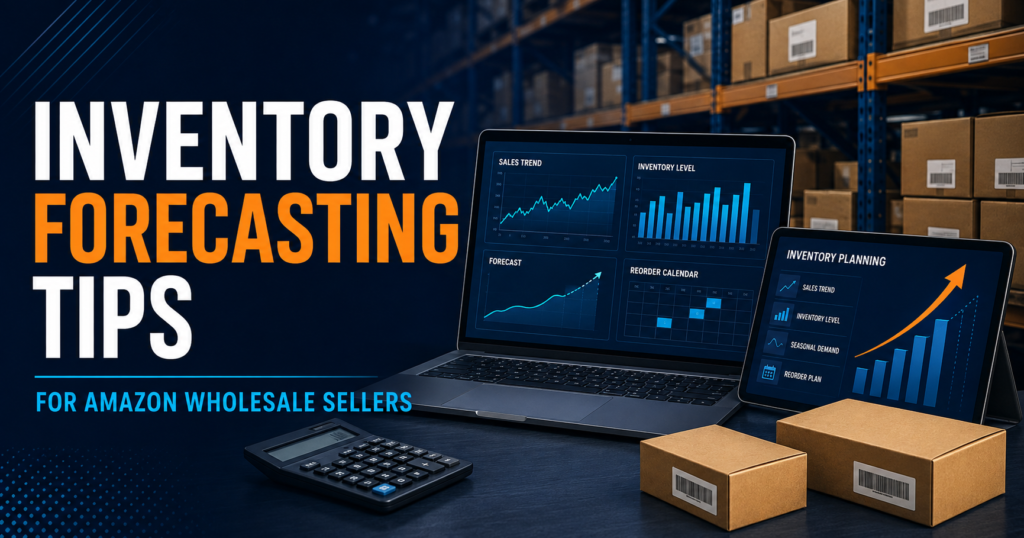
Managing Amazon inventory often feels like trying to hit a moving target. Sales can rise unexpectedly, supplier lead times can change, and a product that performed well last month may slow down after a price change or new competition enters the listing. For wholesale sellers, these uncertainties make purchasing decisions especially important. Ordering too little can increase the risk of a stockout, while ordering too much can tie up working capital and create additional storage pressure. Inventory forecasting helps bring structure to these decisions. By combining actual sales data with lead times, safety stock, seasonality, and supplier information, sellers can plan wholesale orders more carefully instead of relying on assumptions. Quick Answer Inventory forecasting for Amazon wholesale sellers is the process of estimating future unit demand and deciding when and how much inventory to reorder. A simple forecasting process includes: A basic reorder-point formula is: Reorder Point = Average Daily Sales × Total Lead-Time Days + Safety Stock For example, if an ASIN sells eight units per day, takes 25 days to replenish, and needs 80 units of safety stock, its reorder point would be: (8 × 25) + 80 = 280 units When the usable inventory position approaches 280 units, the seller should review whether it is time to place another order. What Is Inventory Forecasting for Amazon Wholesale Sellers? Inventory forecasting uses historical and current sales information to estimate how many units customers may purchase during a future period. The goal is not to predict sales with complete certainty. No forecast can account for every competitor action, price change, shipment delay, or shift in consumer demand. Instead, forecasting gives sellers a practical purchasing range based on measurable information. A useful Amazon FBA forecast usually considers: Wholesale sellers should forecast at the individual SKU or ASIN level. Two products from the same brand can have very different sales rates, competition levels, margins, and lead times. Inventory Forecasting Is More Than Checking Sales A product may have sold 300 units during the last 30 days, but that number alone does not tell you how many units to reorder. You also need to know: Forecasting connects these details to create a more realistic inventory plan. Why Inventory Forecasting Matters for Amazon FBA Sellers It Can Reduce Stockout Risk When an FBA product goes out of stock, the seller can lose potential sales while waiting for replenishment. Advertising may also become less efficient if campaigns must be paused, and the product may lose recent sales momentum. Forecasting helps sellers start the reorder process before stock reaches a critical level. As discussed in our previous guide on how often Amazon sellers should reorder wholesale inventory, sellers should generally use a calculated reorder point instead of following a fixed weekly or monthly schedule. It Helps Protect Working Capital Excess inventory can be just as damaging as insufficient inventory. Money invested in slow-moving stock is unavailable for stronger products, advertising, operating expenses, or new sourcing opportunities. A forecast helps wholesale buyers match purchase quantities with expected demand. This does not remove investment risk, but it can make buying decisions more disciplined. It Supports Better Supplier Planning Placing orders at the last minute can create unnecessary pressure. The product may be unavailable, supplier processing may take longer than expected, or shipping costs may increase if the order becomes urgent. A documented inventory plan gives sellers more time to: It Improves Product Selection Decisions Forecasting is not only useful after a product has been purchased. It can also improve future sourcing decisions. Demand should be reviewed together with competition, pricing stability, and profit potential. Our comparison of product demand versus competition for Amazon FBA explains why sellers should avoid evaluating any single metric in isolation. Step-by-Step Inventory Forecasting Guide Step 1: Collect Sales Data for Multiple Periods Start by gathering unit sales for the last 30, 60, and 90 days. Looking at several periods helps separate recent changes from longer-term demand. For every ASIN, record: Do not forecast from revenue alone. A price change can increase or reduce revenue even if the number of units sold remains similar. Unit sales are generally more useful for inventory planning. Step 2: Remove Distortions From the Sales History Raw sales data may not represent normal demand. Before calculating an average, identify events that influenced performance. Possible distortions include: Suppose an ASIN normally sells six units per day but sold 15 units per day during a one-week promotion. Using 15 units as the future daily average could result in excess inventory after the promotion ends. You do not need to remove every unusual sale. You need to understand why sales changed and whether that change is likely to continue. Step 3: Calculate Average Daily Sales Use the following formula: Average Daily Sales = Units Sold ÷ In-Stock Days If a product sold 240 units during 30 in-stock days: 240 ÷ 30 = 8 units per day If the product was unavailable for six days, do not divide sales by the full calendar period. Including out-of-stock days would make normal demand appear lower than it was. Compare different periods: If the averages are similar, demand may be relatively stable. If they differ significantly, investigate what changed before choosing a forecast rate. Step 4: Calculate the Complete Lead Time Lead time should include every stage between deciding to reorder and the units becoming available for sale. Include: For example: Total estimated lead time: 25 days Use information from previous orders whenever possible. Forecasting with the fastest delivery you have ever received may create an unrealistic plan. Step 5: Set Safety Stock Safety stock is additional inventory used to cover unexpected demand or replenishment delays. A simple method is: Safety Stock = Average Daily Sales × Buffer Days If the product sells eight units per day and you want a 10-day buffer: 8 × 10 = 80 units of safety stock The correct buffer depends on the product. Consider: A consistent product with a dependable domestic supply chain may require a smaller buffer
How Often Should Amazon Sellers Reorder Wholesale Inventory?
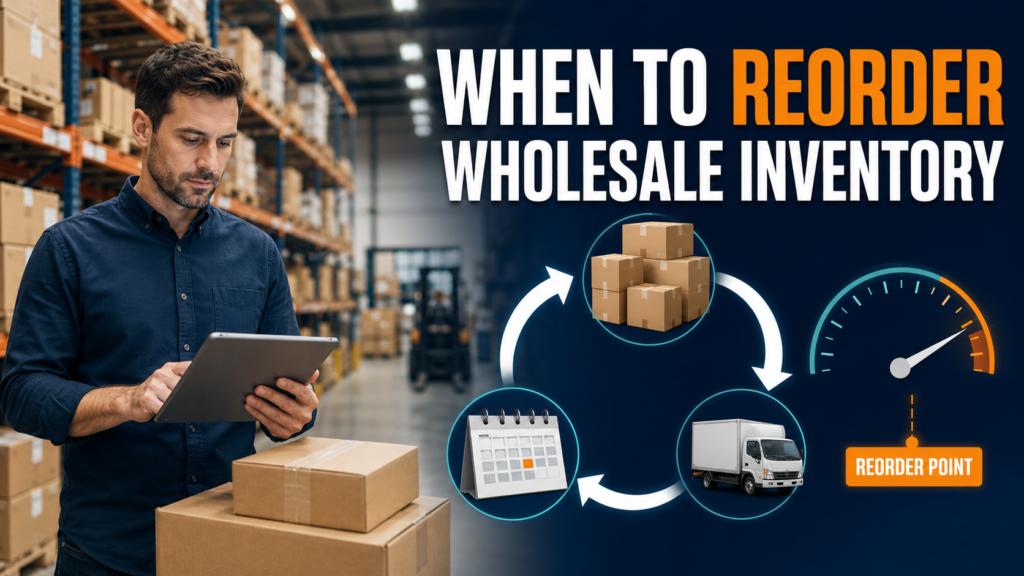
Reordering wholesale inventory sounds simple until several products begin selling at different speeds. One SKU may need restocking every two weeks, another every six weeks, while a seasonal product may require one carefully planned order before its peak period. Reorder too late, and you risk running out of stock while your shipment is still being processed. Reorder too early, and too much of your working capital may become tied up in inventory that takes months to sell. There is no universal reorder schedule that works for every Amazon FBA product. The right frequency depends on sales velocity, supplier lead time, safety stock, demand patterns, cash flow and Amazon’s receiving time. The objective is not to order as frequently as possible. It is to build a repeatable system that keeps profitable products available without creating unnecessary overstock. Quick Answer: How Often Should Amazon Sellers Reorder Inventory? Amazon sellers should reorder wholesale inventory when available stock reaches a calculated reorder point—not simply every week or month. Use this formula: Reorder point = Average daily sales × Total replenishment lead time + Safety stock For example, if a product sells 10 units per day, requires 20 days to replenish and needs 50 units of safety stock, the reorder point would be: 10 × 20 + 50 = 250 units In this example, the seller should consider placing the next wholesale order when available inventory approaches 250 units. The calculation should be reviewed regularly because sales velocity, supplier availability and receiving times can change. What Determines Wholesale Inventory Reorder Frequency? The correct reorder frequency is different for each product. It depends on how quickly the inventory sells and how long it takes to make replacement units available. The most important factors include: A fast-selling product with a long lead time may need frequent, carefully scheduled orders. A slower product with a short lead time may only need occasional replenishment. That is why sellers should manage reordering at the SKU level rather than applying one schedule to their entire catalog. Why Reorder Timing Matters for Amazon FBA Sellers Effective reorder timing helps sellers balance two major risks: running out of stock and holding too much inventory. Stockouts Can Interrupt Sales When a product becomes unavailable, customers may purchase from another seller. A stockout can also interrupt advertising, sales momentum and the cash flow the product was generating. Restocking does not always restore previous performance immediately. Preventing avoidable stockouts is generally easier than rebuilding momentum after inventory returns. Overstock Can Restrict Cash Flow Ordering too many units may protect against a stockout, but it can create another problem. Cash held in slow-moving inventory cannot be used to restock stronger products, test new opportunities or pay other business expenses. Overstock may also increase storage exposure and create greater risk if the selling price drops or demand changes. Supplier Lead Times Can Change A supplier who normally processes an order quickly may need additional time during holidays, promotional periods or sudden demand increases. Product availability may also change between receiving a stock list and placing an order. Amazon Receiving Is Not Always Immediate Inventory delivered to Amazon may still need to be checked, received and transferred before it becomes available for customers. Your reorder plan should account for the complete replenishment journey, not only supplier shipping. If you previously reviewed how BSR can support product research, remember that Amazon Best Sellers Rank is a research signal—not a substitute for your own sales velocity and inventory data. Step-by-Step Guide to Reordering Wholesale Inventory 1. Calculate Average Daily Sales Start by measuring how many units the product sells during a selected period. Use this formula: Average daily sales = Units sold ÷ Number of days If a product sold 180 units during the previous 30 days: 180 ÷ 30 = 6 units per day Compare multiple time periods rather than relying on one short window: Short-term data reveals current momentum, while longer periods help show whether the increase or decrease is part of a broader pattern. 2. Calculate Your Total Replenishment Lead Time Lead time is the number of days between placing a wholesale order and having sellable units available through FBA. Include every relevant stage: Do not calculate lead time using only the fastest order you have received. Use a realistic average and allow for normal variation. If replenishment has taken between 15 and 24 days, planning around 15 days could leave too little protection. Your reorder calculation should reflect the likely complete timeline. 3. Choose an Appropriate Safety-Stock Level Safety stock is the additional inventory kept to cover demand changes and unexpected delays. It may protect the business when: There is no fixed safety-stock amount for every product. Products with stable demand and short lead times may need a smaller buffer. Fast-moving or seasonal products with longer lead times may require more protection. However, safety stock should remain financially sensible. Excessive buffer inventory can create cash-flow and storage problems. 4. Calculate the Reorder Point Once you know average daily sales, total lead time and safety stock, calculate the reorder point. Reorder point = Average daily sales × Lead time + Safety stock Example: 7 × 18 + 35 = 161 units The seller should begin the reorder process when usable inventory approaches 161 units. If sales velocity or lead time changes, update the calculation rather than continuing to use an outdated number. 5. Review Inventory Position, Not Just Available Units Your total inventory position should include stock across every stage of the replenishment process. Track: Avoid counting the same inventory twice. For example, inbound units should not also be recorded as immediately available stock. A purchase order is not sellable inventory. Continue monitoring the shipment until Amazon confirms that the units are available. 6. Calculate Weeks of Cover Weeks of cover estimates how long inventory will last at the current sales rate. Use this formula: Weeks of cover = Available inventory ÷ Average weekly sales If you have 360 units and sell 90 units per week: 360
Product Demand vs Competition: Which Matters More for Amazon FBA?

Finding a product with strong demand can feel like discovering the perfect Amazon FBA opportunity. Customers are already buying it, the listing has an active sales history, and inventory appears to move consistently. Then you examine the competition. The listing may have several established FBA sellers, frequent price changes, limited Buy Box access, or Amazon Retail competing directly. Suddenly, that high-demand product no longer looks as attractive. The opposite situation can be equally confusing. A product may have very few sellers, but that does not automatically make it a good opportunity. Sometimes low competition exists because customer demand is also weak. Successful wholesale sourcing requires sellers to evaluate demand and competition together. Neither factor should be used alone. The right product usually has enough demand to support sales and a competitive environment your business can realistically enter. Quick Answer: Does Demand or Competition Matter More for Amazon FBA? Product demand usually comes first because a product needs active customer interest before it can generate consistent sales. However, demand alone is not enough. Amazon FBA sellers must also confirm that competition, pricing, Buy Box conditions, fees, and expected profit leave room for another seller. A practical wholesale opportunity usually has: In simple terms, demand shows whether customers want the product, while competition helps determine whether you can sell it profitably. Understanding Product Demand and Competition Product demand refers to the level and consistency of customer interest in a product. On Amazon, sellers may estimate demand by reviewing sales rank, historical rank movement, sales estimates, review activity, seasonal patterns, and listing performance over time. Competition refers to the sellers and offers competing for the same customers. It is not measured only by counting sellers. The quality and behaviour of those competitors matter as well. For example, a listing with eight sellers may still be workable if: Meanwhile, a listing with only two sellers may be difficult if one seller owns most of the stock, aggressively reduces prices, or controls the Buy Box. AI Snippet Answer: What Is More Important—High Demand or Low Competition? High demand is more important as an initial requirement because low competition has little value when customers are not buying. However, sellers should only purchase inventory when demand, competition, pricing, and profit all support the opportunity. Why Demand and Competition Matter for Amazon FBA Sellers Wholesale sellers normally join existing Amazon listings rather than creating demand from the beginning. This makes historical product performance valuable, but it also means sellers compete for the same sales and Buy Box. A high-demand product can provide: However, strong demand often attracts more sellers. As competition increases, sellers may reduce prices to win the Buy Box. This can lower profit margins and leave recently purchased inventory difficult to sell at the expected price. Low competition may appear safer, but it must be investigated carefully. A listing may have few sellers because: Low competition is an advantage only when the product also has sufficient, verifiable demand. If you are still developing your research process, our previous guide explains how to identify winning wholesale products for Amazon FBA. Demand and competition should be treated as parts of that wider product-validation process. Step-by-Step Guide to Balancing Demand and Competition 1. Confirm Selling Eligibility Before Researching Further Before spending time on detailed calculations, check whether your Amazon seller account is eligible to sell the product. Search for the ASIN inside Seller Central and review restrictions related to: Eligibility may vary between accounts. Another seller being approved does not mean your account will receive the same result. A proper wholesale invoice may help support an approval request, depending on Amazon’s requirements, but it does not guarantee approval or ungating. Confirm your account’s requirements before purchasing inventory. 2. Check Whether Demand Is Consistent Begin by examining demand over a meaningful period. Avoid judging a product by its current Best Sellers Rank or one short period of strong sales. Look for: A product that sells well throughout the year is normally easier to plan than one experiencing a short seasonal spike. Seasonal products can still be profitable, but inventory timing becomes more important. Amazon BSR can be helpful, but it must be interpreted in context. Our guide to Amazon Best Sellers Rank for wholesale buyers explains why sellers should not rely on one current rank as a complete demand forecast. 3. Count Active and Competitive Sellers The number of offers displayed on a listing does not always represent the number of sellers actively competing for regular sales. Separate the offers into meaningful groups: If a listing shows 12 sellers but only four are regularly priced near the Buy Box, your practical competition may be closer to four than 12. However, inactive sellers can return, and new sellers may join after you purchase inventory. Use current competition as one part of the decision, not a permanent forecast. 4. Estimate Your Realistic Share of Demand Do not assume that monthly sales will be divided equally among all sellers. Imagine a product is estimated to sell 500 units per month and has five competitive sellers. Dividing 500 by five produces an estimate of 100 units per seller, but actual distribution may be very different. Buy Box share may be influenced by: A new seller should use a conservative sales-share estimate. Instead of expecting 100 monthly sales immediately, it may be safer to calculate the opportunity using 30 to 50 units until actual account data becomes available. 5. Examine Buy Box Rotation A product can have strong demand and acceptable seller numbers but still be unsuitable if the Buy Box rarely rotates. Observe the listing at different times and review historical data where available. Look for signs that multiple competitive sellers receive selling opportunities. Ask: A healthy listing does not require perfectly equal rotation. It should, however, provide a realistic opportunity for an eligible and competitively priced seller to receive sales. 6. Review Historical Price Stability The current selling price is only a snapshot. Your inventory may not become available for days or