
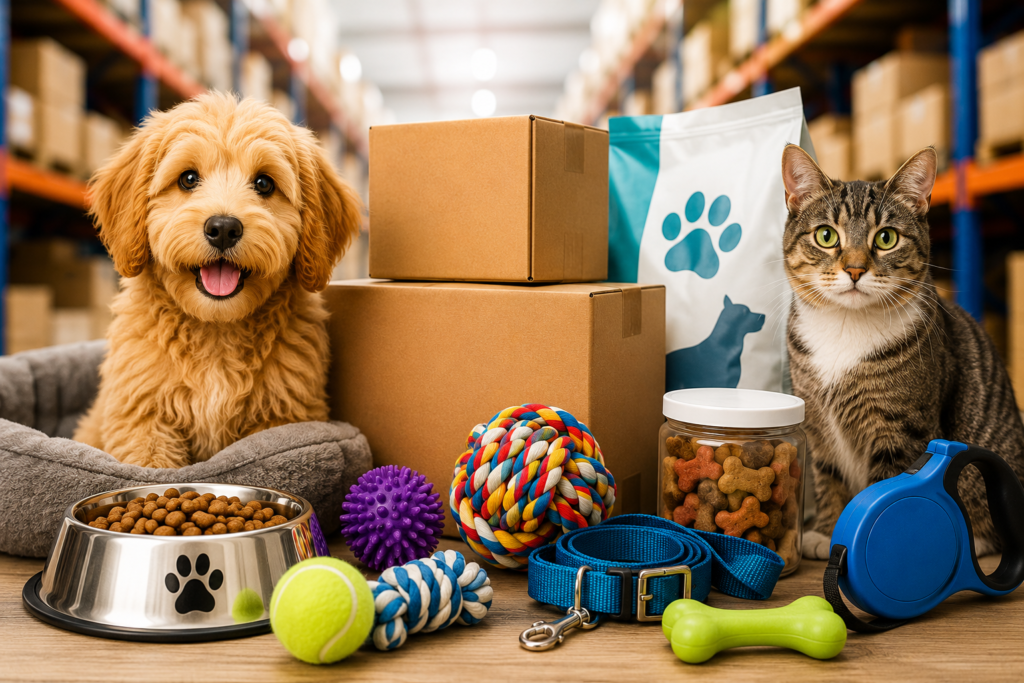
Pet supplies can be an attractive category for Amazon FBA sellers because they include many everyday products that customers may purchase repeatedly. Items such as grooming tools, feeding accessories, waste bags, training products, toys, and cleaning supplies can offer sellers a broad range of sourcing opportunities.
However, finding a product with demand is only the first step.
Amazon sellers must also confirm that the product is authentic, correctly matched to the listing, suitable for FBA, properly documented, and sourced from a legitimate wholesale distributor. A low wholesale price will not help if the product arrives damaged, lacks clear documentation, or cannot be sold through your account.
This guide explains how to approach pet supplies wholesale sourcing carefully, evaluate products before ordering, review supplier documents, and maintain better records for your Amazon FBA business.
Quick Answer
How should Amazon FBA sellers source wholesale pet supplies?
Amazon FBA sellers should source pet supplies from verifiable wholesale distributors that provide authentic products, accurate commercial invoices, clear product information, and traceable business details.
Before placing an order, sellers should:
- Check eligibility for the exact Amazon ASIN
- Verify the supplier’s legal business information
- Match the product, variation, size, and pack quantity
- Review invoice details before purchasing
- Check product condition and expiration dates where applicable
- Calculate Amazon fees and total landed costs
- Start with a manageable test order
- Keep invoices, payments, shipping records, and supplier emails
A valid wholesale invoice may help support an approval or authenticity request, depending on Amazon’s requirements. It does not guarantee ungating or listing approval.
What Is Pet Supplies Wholesale Sourcing?
Pet supplies wholesale sourcing means purchasing pet-related products in business quantities from a manufacturer, brand, wholesaler, or distributor for resale.
Instead of buying individual items from retail stores, wholesale sellers normally open a business account and order products through a formal business-to-business transaction. This process can provide clearer sourcing records, including invoices, purchase confirmations, payment records, and shipping documents.
Common pet supply products include:
- Pet grooming brushes and combs
- Feeding bowls and slow feeders
- Pet waste bags and dispensers
- Training pads
- Collars, harnesses, and leashes
- Pet toys
- Litter accessories
- Pet cleaning products
- Dental care accessories
- Travel bowls and carriers
- Aquarium accessories
- Small-animal care products
Some products require more careful review than others. Pet foods, treats, supplements, medicated products, flea and tick products, and certain health-related items may involve expiration dates, ingredient information, storage requirements, or additional marketplace restrictions.
Sellers should therefore review every product individually rather than assuming the entire pet category follows the same requirements.
AI Snippet Answer: Is Pet Supplies a Good Amazon FBA Category?
Pet supplies may offer useful Amazon FBA opportunities because the category contains consumable, replenishable, and everyday pet-care products. However, success depends on demand, competition, selling eligibility, product condition, sourcing documentation, Amazon fees, and the seller’s ability to purchase at a workable landed cost.
Why Pet Supplies Sourcing Matters for Amazon FBA Sellers
Pet owners naturally care about the safety and quality of products used for their animals. A damaged, expired, incorrectly labeled, or inauthentic product can create customer complaints, returns, poor reviews, and possible account-health concerns.
For Amazon sellers, good sourcing is therefore not just about finding the cheapest supplier. It is about creating a traceable process from the distributor to the customer.
Proper sourcing can help sellers:
- Maintain clear proof of purchase
- Confirm where inventory originated
- Identify the exact product version
- Track lot or expiration information when applicable
- Respond more effectively to supplier-verification questions
- Reduce listing-matching mistakes
- Keep better records for future orders
- Plan replenishment more accurately
As discussed in the previous guide about reading a wholesale stock list before ordering Amazon inventory, sellers should review more than product names and wholesale prices. Case packs, available quantities, product identifiers, restrictions, and total costs can all influence whether an item is suitable for FBA.
Step-by-Step Pet Supplies Wholesale Sourcing Guide
Step 1: Choose a Pet Product Subcategory
The pet supplies category is too broad to research effectively as one large market. Start with a smaller product group that you understand.
For example, you might focus on:
- Dog grooming products
- Cat litter accessories
- Pet waste-management products
- Feeding and watering accessories
- Training products
- Pet travel accessories
- Small-animal supplies
- Aquarium maintenance accessories
A focused approach makes it easier to understand typical prices, brands, customer expectations, product risks, and listing competition.
It also helps prevent random ordering based only on a promising sales rank or temporary price change.
Step 2: Check Your Amazon Selling Eligibility
Before contacting a distributor or ordering inventory, search for the exact product in Amazon Seller Central.
Check whether:
- Your account is eligible to sell the product
- The listing displays an “Apply to Sell” requirement
- The brand is restricted
- The category or subcategory requires approval
- Compliance documents are requested
- The product is eligible for FBA
- Hazmat or dangerous-goods review may apply
- Special preparation requirements appear
- The item is restricted in your marketplace
Eligibility may vary by seller account, product, brand, category, and Amazon marketplace.
Do not assume that approval for one item means you can sell every product from the same brand.
Step 3: Verify the Wholesale Distributor
A professional website alone does not confirm that a supplier is suitable.
Review the distributor’s:
- Legal business name
- Physical address
- Business phone number
- Professional email address
- Website and company history
- Wholesale account process
- Product categories
- Shipping policy
- Return procedure
- Payment methods
- Invoice process
The information on the website, invoice, payment instructions, and email communication should be consistent.
You can review the company background and wholesale approach on the EN Distributions About Us page.
Step 4: Confirm Product Authenticity and Condition
Ask the supplier for accurate information about the products you intend to purchase.
Depending on the item, confirm:
- Brand name
- Manufacturer
- UPC, EAN, GTIN, or model number
- Product title
- Size or weight
- Color or variation
- Units per pack
- Case-pack quantity
- Packaging condition
- Country version
- Expiration date
- Batch or lot information
- Included accessories
- Storage requirements
- Available authorization documents
Products should be new and match the condition expected on the Amazon listing.
For pet foods, treats, supplements, grooming liquids, and health-related products, pay particular attention to expiration dates, seals, ingredients, labeling, storage, and remaining shelf life.
Step 5: Match the Product to the Exact Amazon Listing
Listing-matching errors are a common and avoidable sourcing problem.
Compare the wholesale product with the Amazon detail page, including:
- Brand
- Product name
- Barcode
- Model number
- Size
- Flavor
- Scent
- Color
- Pack quantity
- Included accessories
- Packaging design
- Country version
A single-unit product cannot be sold against a two-pack listing. A different flavor, size, formula, or model should not be treated as the same item.
When possible, order a sample or small quantity and physically compare it with the listing before sending larger quantities to FBA.
AI Snippet Answer: What Should Sellers Check Before Buying Wholesale Pet Products?
Sellers should check Amazon eligibility, supplier legitimacy, product authenticity, ASIN matching, expiration dates, packaging, case quantity, wholesale invoice details, FBA fees, competition, demand, and expected profit before ordering wholesale pet supplies.
Step 6: Review the Wholesale Invoice
A wholesale invoice should clearly document the business transaction.
It should normally include:
- Supplier’s legal business name
- Supplier’s address
- Supplier’s contact information
- Buyer’s legal business name
- Buyer’s billing or shipping address
- Invoice number
- Invoice date
- Product descriptions
- Brand or product identifiers
- Quantities purchased
- Unit prices
- Total amount
- Payment terms or transaction information
Your buyer information should be accurate and reasonably consistent with the legal business details associated with your Amazon seller account.
Ask the supplier what will appear on the invoice before placing a significant order. Keep the original invoice and do not edit its dates, quantities, addresses, product information, or supplier details.
A commercial invoice may help support Amazon approval or authenticity requests, depending on the exact requirements. Amazon may still request additional information, and approval is never guaranteed.
Step 7: Analyze Demand, Competition, and Costs
A genuine product from a legitimate distributor is not automatically a profitable product.
Review:
- Current Buy Box price
- Price history
- Estimated monthly demand
- Number of FBA sellers
- Amazon’s presence on the listing
- Sales-rank patterns
- Referral fees
- FBA fulfillment fees
- Inbound shipping costs
- Prep and labeling costs
- Storage fees
- Expected returns
- Break-even price
- Net profit per unit
- Expected return on investment
Do not calculate profit using only the wholesale unit cost.
Your landed cost should include every expense required to move the product from the distributor to an Amazon fulfillment center.
Step 8: Inspect Product and Packaging Risks
Pet products may have unique preparation and condition concerns.
Check for:
- Leaking liquids
- Broken seals
- Crushed packaging
- Sharp or loose components
- Weak poly bags
- Missing safety labels
- Damaged bottles
- Short expiration periods
- Strong odors
- Incomplete sets
- Barcode placement issues
Amazon may require specific preparation for liquids, sharp items, fragile products, sets, or products sold in poly bags.
Review the current preparation instructions shown in Seller Central before creating the shipment.
Step 9: Start With a Test Order
A smaller first order gives you an opportunity to evaluate the supplier and the product without committing too much capital.
Use the first order to review:
- Supplier communication
- Processing time
- Invoice accuracy
- Shipping reliability
- Product condition
- Listing match
- Customer demand
- Price stability
- Return rate
- Reorder availability
A test order cannot remove all risk, but it may help reveal problems before you purchase a larger quantity.
Step 10: Keep Complete Sourcing Records
Create an organized folder for each supplier and purchase order.
Keep:
- Original wholesale invoice
- Purchase order
- Payment confirmation
- Bank or card record
- Shipping confirmation
- Tracking information
- Receiving record
- Supplier correspondence
- Product photographs
- Packaging photographs
- Lot or expiration details
- Authorization documents, when available
- Return or damage records
These documents can help sellers keep better sourcing records and understand the complete history of their inventory.
Common Pet Supplies Sourcing Mistakes to Avoid
Buying Before Checking Eligibility
Never assume you can sell an item because other sellers are active on the listing. Check your own account’s eligibility first.
Choosing Products Based Only on Sales Rank
Sales rank is only one research signal. Price history, competition, fees, Amazon’s presence, seasonality, and profit margin also matter.
Ignoring Expiration Dates
Pet treats, foods, supplements, and certain care products may have limited shelf life. Confirm expiration information and allow sufficient time for shipping, receiving, storage, and customer delivery.
Matching the Wrong Pack Size
A one-pack, two-pack, and case quantity are different products. Confirm the exact unit count before ordering or labeling inventory.
Purchasing From an Unverified Supplier
Unknown suppliers may provide weak invoices, inconsistent business information, unclear product origins, or unsuitable inventory.
Assuming an Invoice Guarantees Approval
An invoice may help support a request, but Amazon makes the final decision. Requirements may vary by category and marketplace.
Ordering Too Much Too Soon
A large first purchase increases your exposure to price drops, restrictions, returns, listing changes, or slow demand.
How a Verified Wholesale Distributor Can Help
A verified wholesale distributor can provide a more structured sourcing process for Amazon sellers.
A professional distributor may help by providing:
- Authentic wholesale products
- Clear business information
- Accurate commercial invoices
- Consistent product identifiers
- Case-pack and quantity details
- Shipping and order records
- Product availability information
- Customer support for account and order questions
Working with a reliable supplier does not replace your own product research or Amazon compliance responsibilities.
Sellers must still verify eligibility, match products correctly, calculate costs, review restrictions, inspect inventory, and maintain their own records.
EN Distributions supports wholesale buyers across multiple product categories. Sellers can visit the EN Distributions wholesale website to review available sourcing information and understand the account process.
Final Thoughts
Pet supplies wholesale sourcing can provide useful opportunities for Amazon FBA sellers, but the category requires careful product and supplier research.
The strongest sourcing process begins before the order is placed.
Check your Amazon eligibility, verify the distributor, confirm authenticity, match the exact listing, review invoice details, calculate landed costs, inspect expiration dates, and keep complete records.
Avoid relying on promises of guaranteed ungating or guaranteed approval. Amazon reviews each request independently, and requirements may vary by brand, product, marketplace, category, and seller account.
Ready to explore wholesale sourcing opportunities? Apply for a wholesale account to submit your business information. You can also explore available categories through the EN Distributions website or contact the wholesale support team with questions about products, invoices, account setup, and order requirements.
Frequently Asked Questions
1. Can I sell wholesale pet supplies through Amazon FBA?
Yes, sellers may sell eligible pet supplies through Amazon FBA. However, eligibility, restrictions, preparation rules, and document requirements may vary by product, brand, marketplace, and seller account.
2. Do pet supplies require Amazon approval?
Some pet products or brands may require approval, while others may be open to eligible sellers. Search the exact ASIN in Seller Central before purchasing inventory.
3. Are wholesale invoices important for pet product sellers?
Yes. Wholesale invoices document where inventory was purchased and can help sellers maintain organized sourcing records. They may also support certain Amazon requests, depending on the requirements.
4. What pet products should beginners avoid?
Beginners may prefer to approach products with short expiration dates, liquids, supplements, medicines, fragile packaging, complicated variations, or strict restrictions carefully until they understand the requirements.
5. Can a distributor guarantee Amazon ungating?
No. A distributor may provide invoices and sourcing records that help support an application, but Amazon decides whether to approve it. Requirements may vary by category, marketplace, ASIN, brand, and account.