
Health & Household Wholesale Sourcing Guide for Amazon Sellers
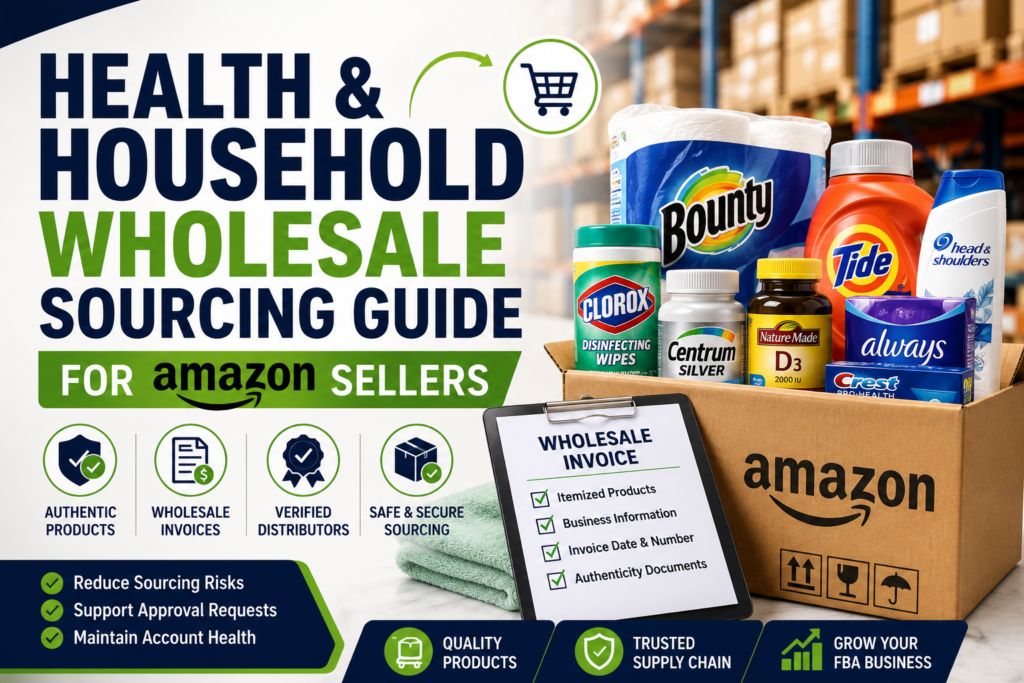
Health & Household can be an appealing category for Amazon sellers because it includes many everyday products that customers purchase regularly. Vitamins, household supplies, personal wellness items, first-aid products and cleaning essentials can all create potential wholesale opportunities. However, this category also requires careful sourcing. Products connected to personal health, hygiene or household use may have expiration dates, special labeling, packaging requirements or selling restrictions. Some individual products and brands may require approval, even when a seller is already permitted to sell other products in the same category. That means successful sourcing involves more than finding a profitable ASIN. Sellers must verify their eligibility, research the product, inspect supplier documentation and confirm that the inventory is authentic and suitable for resale. This Health & Household wholesale sourcing guide explains how to evaluate products, verify distributors, review invoices and maintain better sourcing records for an Amazon FBA business. Quick Answer How should Amazon sellers source Health & Household products? Amazon sellers should source Health & Household products from a traceable wholesale distributor, check selling eligibility for each ASIN, verify expiration dates and packaging, calculate the complete landed cost and retain itemized commercial invoices. A properly issued wholesale invoice may help support approval or product-authenticity requests, depending on Amazon’s requirements. However, no supplier or invoice can guarantee category approval, brand approval or Amazon ungating. What Is Health & Household Wholesale Sourcing? Health & Household wholesale sourcing is the process of purchasing eligible products in business quantities from a brand, manufacturer, wholesaler or distributor for resale on Amazon. The category can contain a wide range of products, including: Not every product within these groups will be suitable for every Amazon seller. Requirements can differ according to the product, brand, seller account, marketplace and fulfillment method. Amazon advises sellers to check Seller Central for the most current category and product restrictions because approval requirements can change. Wholesale Sourcing Versus Retail Purchasing Wholesale sourcing normally involves a business-to-business purchase from a supplier. Sellers may receive an itemized invoice, case-pack details, shipping records and other transaction documents. Retail purchasing generally involves buying individual products from a consumer-facing store. A retail receipt may not contain the same business and supply-chain information as a commercial wholesale invoice. This distinction becomes important when Amazon asks a seller to demonstrate where inventory came from. AI Snippet Answer What makes a Health & Household product suitable for Amazon FBA? A suitable product should have consistent demand, manageable competition, acceptable profit after fees, sufficient shelf life, secure packaging and a clear wholesale supply chain. The seller must also be eligible to list and fulfill the exact ASIN. Why Health & Household Sourcing Matters for Amazon FBA Sellers Sourcing quality affects more than product profitability. It can influence customer satisfaction, listing compliance, authenticity documentation and Amazon account health. Customers Expect Safe and Authentic Products Customers using personal-care, wellness or household products expect the item to be genuine, correctly labeled and in proper condition. A damaged seal, incorrect variation or expired product can result in complaints, returns and negative feedback. For that reason, sellers should verify: A seller should never assume that two visually similar packages belong to the same ASIN. Some Products May Have Additional Restrictions Health & Household is broad. One product may be open to a seller while another product from the same brand displays an “Apply to Sell” requirement. Some listings may also involve compliance documents, dangerous-goods reviews, expiration rules or fulfillment restrictions. Amazon states that approval may be required for various categories, brands and products, and restrictions can change as its catalog and marketplace needs evolve. Always check the exact ASIN in Seller Central before ordering inventory. Documentation Can Become Important Later Amazon may request sourcing documentation when reviewing a listing, authenticity complaint or policy concern. Amazon’s invoice guidance explains that invoices can be used to verify that products came from legitimate suppliers. The documentation should be itemized and contain clear transaction details. Good records do not guarantee that Amazon will accept a submission. They can, however, help sellers respond with clearer and more traceable information. For a deeper explanation, read the previous guide on how wholesale sourcing can reduce product-authenticity risk. Step-by-Step Health & Household Wholesale Sourcing Guide Step 1: Select a Specific Product Group Do not begin by trying to research the entire Health & Household category. Choose a narrower product type, such as: A focused approach makes it easier to compare competing listings, understand packaging and identify product-specific risks. If you are still deciding which category to enter, review the guide to the best wholesale product categories for Amazon FBA sellers. Step 2: Check the Exact ASIN in Seller Central Search for the exact product in your Amazon Seller Central account before requesting a quote or placing an order. Confirm: Do not rely on another seller’s approval experience. Amazon may evaluate accounts differently, and requirements may vary by marketplace. Step 3: Research Demand and Competition A product should make commercial sense before you buy it. Review: Avoid using only the current selling price. The price may fall when new inventory reaches the listing. A strong sourcing decision is based on realistic pricing, not the most optimistic number shown in a product-research tool. Step 4: Verify the Wholesale Distributor A distributor should have a traceable business identity. Look for: Compare the information across the website, quote, invoice and payment instructions. Major inconsistencies should be clarified before money is sent. You can learn more about the distributor and its business approach on the EN Distributions About Us page. Step 5: Ask Product-Specific Questions Do not ask only, “Is this product available?” Request the information needed to evaluate the actual inventory. Useful questions include: The supplier’s answers should be recorded in writing where possible. Step 6: Confirm Product Authenticity and Authorization A seller should understand where the product originated and what documentation is available. Depending on the product and supplier, useful information may include: Not every wholesale purchase includes a brand authorization letter. An authorization letter is also