
Authorized Distributor vs Wholesale Supplier: Key Difference for Amazon Sellers
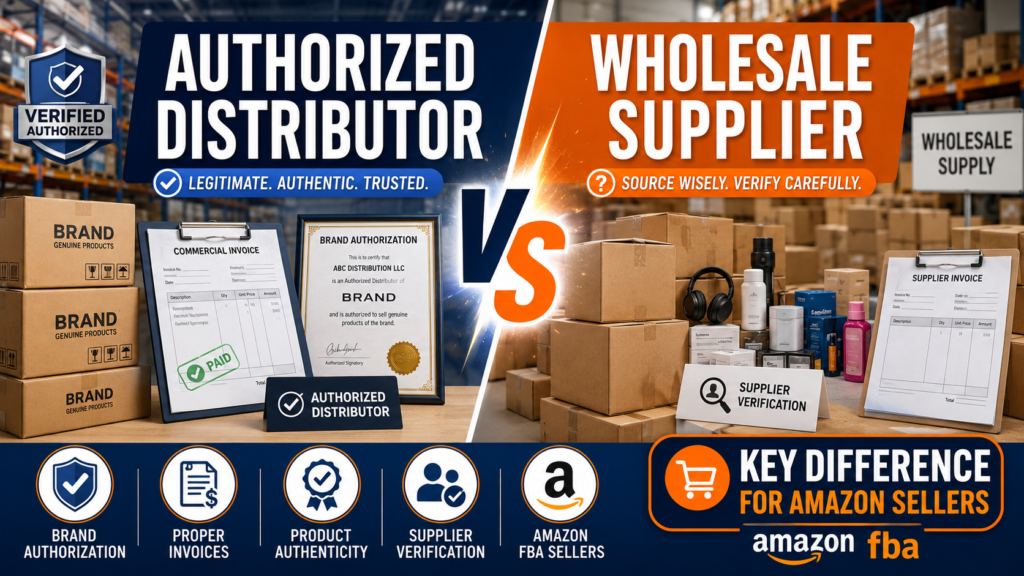
Finding products to sell on Amazon is often easier than finding a trustworthy source for those products. A supplier may offer competitive prices, popular brands, attractive stock lists, and large quantities. However, Amazon FBA sellers must look beyond price and availability. They also need to understand where the inventory comes from, whether the supplier has a legitimate relationship with the brand, and whether proper sourcing records will be available after the purchase. This is where the difference between an authorized distributor and a general wholesale supplier becomes important. Both may sell products in bulk, but they do not always have the same brand relationship, documentation, product traceability, or level of verification. Understanding this difference can help Amazon sellers make more informed sourcing decisions and avoid preventable documentation problems. As explained in our previous guide on how to verify a wholesale distributor before buying inventory, supplier verification should happen before payment—not after Amazon requests sourcing documents. Quick Answer What is the difference between an authorized distributor and a wholesale supplier? An authorized distributor has a recognized or documented distribution relationship with a manufacturer or brand. A wholesale supplier is a broader term for any business that sells products in bulk, but it may or may not be directly authorized by the brand. For Amazon sellers, an authorized distributor may provide stronger product traceability and clearer sourcing documentation. However, buying from an authorized distributor does not automatically guarantee category approval, brand approval, ungating, or permission to sell a particular ASIN. Requirements may vary by brand, category, seller account, marketplace, and Amazon’s current review instructions. What Is an Authorized Distributor? An authorized distributor is a business that has permission from a manufacturer or brand owner to distribute its products within a specific market, territory, sales channel, or customer group. That authorization may be supported by: An authorized distributor generally purchases products directly from the brand, manufacturer, or another approved source within the brand’s distribution network. This does not necessarily mean the distributor can authorize every reseller to sell the products on Amazon. Brand authorization, marketplace selling permission, and distributor status are related concepts, but they are not always the same thing. What an Authorized Distributor May Provide Depending on its relationship with the brand, an authorized distributor may be able to provide: These records can help sellers maintain a clearer sourcing history. They may also help support an approval request or authenticity review depending on Amazon’s requirements. However, sellers should never assume that the words “authorized distributor” automatically make every invoice acceptable. Amazon may review the complete document, supplier details, quantities, product identifiers, transaction history, and the seller’s account information. What Is a Wholesale Supplier? A wholesale supplier is any business that sells products in bulk to retailers, resellers, ecommerce businesses, or other commercial buyers. The term covers several types of businesses, including: This means every authorized distributor may operate as a wholesale supplier, but not every wholesale supplier is necessarily authorized by the original brand. A general supplier may obtain inventory through another distributor, excess stock, closeout channels, imports, secondary markets, or other legitimate sources. The products may still be genuine, but the supply chain could be longer or more difficult to verify. For an ordinary retail business, that may not always create a problem. For an Amazon seller who could be asked to provide detailed sourcing documentation, the difference can be significant. Authorized Distributor vs Wholesale Supplier: Main Differences The following comparison explains the practical differences Amazon sellers should understand. Brand Relationship An authorized distributor usually has a direct or officially recognized relationship with the manufacturer or brand. A general wholesale supplier may purchase from a distributor, importer, liquidator, or another wholesale business without having a direct relationship with the brand. Product Traceability Authorized distributors often have a shorter and clearer supply chain. A wholesale supplier may still sell authentic products, but the seller may need to verify how the supplier obtained the inventory and whether that sourcing path can be documented. Documentation Both businesses may provide invoices, but the strength and detail of those invoices can vary. A useful wholesale invoice should clearly identify: Amazon has stated that invoices used for certain policy appeals should be itemized, authentic, unaltered, connected to a completed transaction, and include identifiable products and supplier contact details. Amazon may also contact a supplier to verify the information. Brand Support An authorized distributor may be in a better position to confirm its relationship with a brand. A regular wholesale supplier may not be able to provide brand relationship details, even when the products are genuine. Amazon Approval Support Documents from a traceable distributor may help support certain applications or reviews, depending on Amazon’s requirements. However, neither an authorized distributor nor a wholesale supplier can promise: Amazon makes its own decisions based on the specific request, documents, account history, product, category, and marketplace. Why the Difference Matters for Amazon FBA Sellers Amazon sellers operate in a marketplace where product authenticity and sourcing records can directly affect listing access and account health. The supplier you choose may influence how easily you can answer questions such as: A low price does not answer any of these questions. It Can Affect Product Authenticity Reviews A customer complaint, rights-owner complaint, product condition issue, or authenticity concern may lead to a request for invoices or sourcing records. A clear invoice from a traceable source can help sellers respond more professionally. Poor documentation, edited files, unclear product descriptions, or an unreachable supplier may make the review more difficult. It May Affect Approval Requests Some brands, categories, and products require sellers to apply before listing. Amazon may ask for invoices, product images, brand documentation, compliance documents, or other records. The exact request should be followed carefully because requirements may vary by category and marketplace. An invoice from a recognized distributor may help support the request, but it should never be presented as a guarantee of approval. It Supports Better Account Records Supplier verification is not only useful when Amazon contacts you. Working with