
Your supplier decides your margins, your stock levels and, in many cases, whether your Amazon account stays healthy. That is why searching for the best Amazon suppliers in 2026 is the most important research a seller does before spending a dollar on inventory. The right supplier gives you authentic products, proper invoices, fair pricing and reliable restocks. The wrong one leaves you with counterfeits, stranded cash and an account at risk.
This guide breaks down the main types of Amazon suppliers, where to find them, how to compare them and which red flags to avoid. It also covers related questions sellers keep asking, such as wholesale vs private label, how to get approved by distributors and which categories are worth sourcing right now.
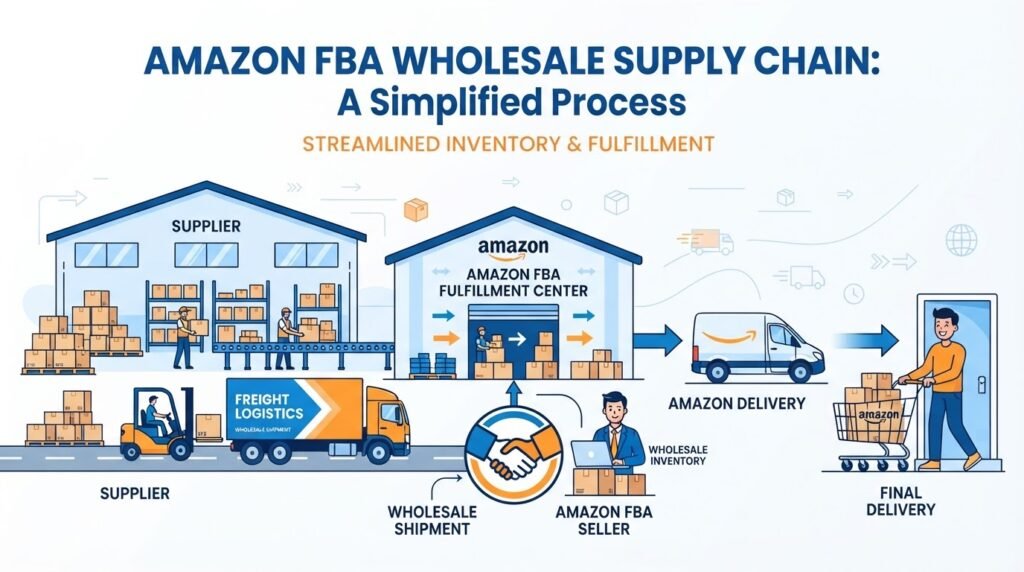
What Is an Amazon Supplier?
An Amazon supplier is any business that sells you products you then list and sell on Amazon. That can be a brand owner, an authorized distributor, a wholesaler, an overseas manufacturer or a dropship partner. Each one fits a different business model, so the “best” supplier depends on whether you run wholesale, private label or another approach.
If you are still deciding whether the model is worth your time, start with our breakdown of whether Amazon wholesale is worth it in 2026.
Types of Amazon Suppliers Compared
| Supplier type | Best for | Typical speed | Main risk |
|---|---|---|---|
| US wholesale distributors | Branded wholesale on FBA | Fast, domestic shipping | Approval and minimum orders |
| Brand owners and manufacturers | Best margins, direct relationships | Varies by brand | Strict requirements, larger commitments |
| Wholesale directories | Discovering many suppliers quickly | Depends on supplier | Quality of listings varies |
| Overseas manufacturers | Private label products | Slow, long shipping | Quality control, customs, lead time |
| Dropship suppliers | Low-capital testing | Depends on supplier | Amazon policy compliance, thin margins |
1. US Wholesale Distributors
For most FBA wholesale sellers, domestic distributors are the safest starting point. You get faster delivery, easier communication, simpler returns and invoices that support Amazon approval requests. The trade-off is that good distributors screen their buyers and may set minimum orders.
2. Brand Owners and Manufacturers
Buying direct from a brand usually gives the best pricing and the strongest paper trail. It also tends to come with the strictest requirements: a registered business, proof of sales history and larger first orders. Many sellers use distributors to build a track record first and approach brands later.
3. Wholesale Directories and Marketplaces
Directories such as Wholesale Central and SaleHoo collect large numbers of suppliers in one searchable place. They are useful for discovery, but listing in a directory is not proof of quality. Treat every result as a lead you still need to verify.
4. Overseas Manufacturers
Platforms like Alibaba, Global Sources and 1688 are built for private label and custom products. Margins can be attractive, but you take on quality control, customs, longer lead times and more upfront capital.
5. Dropship Suppliers
Tools and suppliers such as Doba, Syncee, Spocket and Wholesale2B offer products without you holding stock. Amazon enforces its dropshipping policy strictly, so you must be the seller of record, use your own invoices and packing slips and avoid suppliers that ship with another retailer’s branding.
Best Amazon Suppliers to Consider in 2026
Disclosure: EN Distributions is our own business, so we list it first and explain exactly who it fits. Always compare several suppliers before you commit.
- EN Distributions (USA wholesale): a wholesale supplier for Amazon FBA and Walmart WFS sellers, with categories in Pet Supplies, Health & Household, Beauty & Personal Care and Grocery & Gourmet Food. It also offers FBA prep and direct shipping, and free shipping on orders over $10,000. See how the process works step by step.
- Wholesale Central (directory): a long-running US directory where you can search by category and contact wholesalers directly.
- SaleHoo (directory): a paid directory with supplier profiles, handy if you want a starting list to research.
- Alibaba and Global Sources (manufacturers): best suited to private label sellers who can manage samples, inspections and freight.
- Doba, Syncee and Spocket (dropship platforms): useful for testing demand with low capital, provided you follow Amazon’s dropshipping rules.
For a deeper look at finding US-based partners, read our guide to finding the best wholesale suppliers for Amazon FBA in the USA.
How to Choose the Best Amazon Supplier
Use this checklist before you place a first order:
- Authenticity: the supplier buys from the brand or an authorized channel and can show it.
- Invoices: they provide complete, legitimate invoices that support Amazon approval and ungating requests. Amazon’s exact invoice rules change, so confirm the current requirements in Seller Central.
- Pricing and margin: your landed cost leaves room after fees, shipping and returns. Our Amazon FBA fee breakdown shows what to account for.
- Minimum order quantity (MOQ): it fits your budget so you can test before scaling.
- Reliability: consistent stock, honest lead times and responsive communication.
- Prep and shipping support: labeling, packaging and direct-to-Amazon shipping save time at scale.
Not sure what to ask? Use these questions every Amazon seller should ask before placing a wholesale order.
Red Flags: How to Avoid Fake or Risky Suppliers
- Prices far below what established distributors charge for the same brand.
- No business address, no registered company details or only a free email address.
- Refusal to provide invoices or documentation.
- Pressure to pay by untraceable methods or to rush a large first order.
- Vague answers about where the products come from.
Many of these mistakes show up in our list of 7 costly Amazon FBA wholesale mistakes.
Wholesale vs Private Label vs Dropshipping
Your business model decides which suppliers make sense:
- Wholesale: you resell branded products bought in bulk. You need distributors or brands, and competition on the listing is the main challenge.
- Private label: you sell your own brand made by a manufacturer. Margins can be higher, but you carry product development, branding and quality risk.
- Dropshipping: the supplier holds stock. Capital needs are low, but Amazon compliance is strict and margins are usually thin.
How to Get Approved by Wholesale Suppliers
Good suppliers receive many inquiries, so a professional approach matters:
- Register your business and set up your wholesale business correctly.
- Prepare your documents, such as business details and a resale certificate where required.
- Be specific about the brands, categories and order sizes you want.
- Explain that you will respect the brand’s pricing, including any MAP policy. Our guide on why MAP policy matters shows how brands think about this.
- Start with a small test order, then grow as sell-through proves out.
If a brand is restricted, you will also need to get ungated on Amazon before you can list it.
Which Product Categories Are Worth Sourcing?
Consumable, repeat-purchase categories such as pet supplies, household essentials, beauty and grocery tend to suit wholesale because buyers reorder. Always check demand, competition and Amazon fees on each product before buying. For ideas, see the top wholesale markets and most profitable products for Amazon FBA in 2026 and use our guide to calculating ROI before you buy.
Frequently Asked Questions
Who is the best supplier for Amazon FBA?
There is no single best supplier for everyone. Wholesale sellers usually do best with authorized US distributors, while private label sellers work with manufacturers. Pick the one that matches your model, budget and approval needs.
How do I find legitimate Amazon wholesale suppliers?
Contact brands and authorized distributors directly, use directories as a starting list and verify every lead through business details, references and sample invoices before ordering.
How much money do I need to start buying from suppliers?
It depends on the supplier’s minimum order and the products you choose. Starting with a small test order lets you confirm demand before you scale.
Are Alibaba suppliers good for Amazon?
They can work well for private label products, but you must manage quality checks, shipping and customs yourself. They are not a fit for branded wholesale.
Do I need invoices from my supplier?
Yes. Legitimate invoices protect your account and help with approval and ungating requests. Check Amazon’s current requirements in Seller Central.
Final Thoughts
The best Amazon suppliers in 2026 are the ones that give you authentic products, clean documentation and margins that survive Amazon’s fees. Compare more than one option, verify before you pay and start small. If you want a USA wholesale partner with a clear, documented process, apply for an account and our team will guide you through the next steps.