
Starting an Amazon FBA wholesale business can feel exciting, but it can also feel confusing when you are new. Many sellers begin by searching for profitable products, but they quickly realize that product research is only one part of the process.
To build a serious wholesale business, you need proper sourcing, clean invoices, verified suppliers, product authenticity, brand authorization awareness, and good record keeping. Without these foundations, sellers may face listing issues, approval problems, or account health concerns later.
This guide explains how new Amazon FBA sellers can set up a wholesale business step by step, source from reliable distributors, and prepare better documentation for long-term selling.
If you recently read our guide on Amazon wholesale invoice requirements for FBA sellers in 2026, this article continues the same topic from a broader business setup angle.
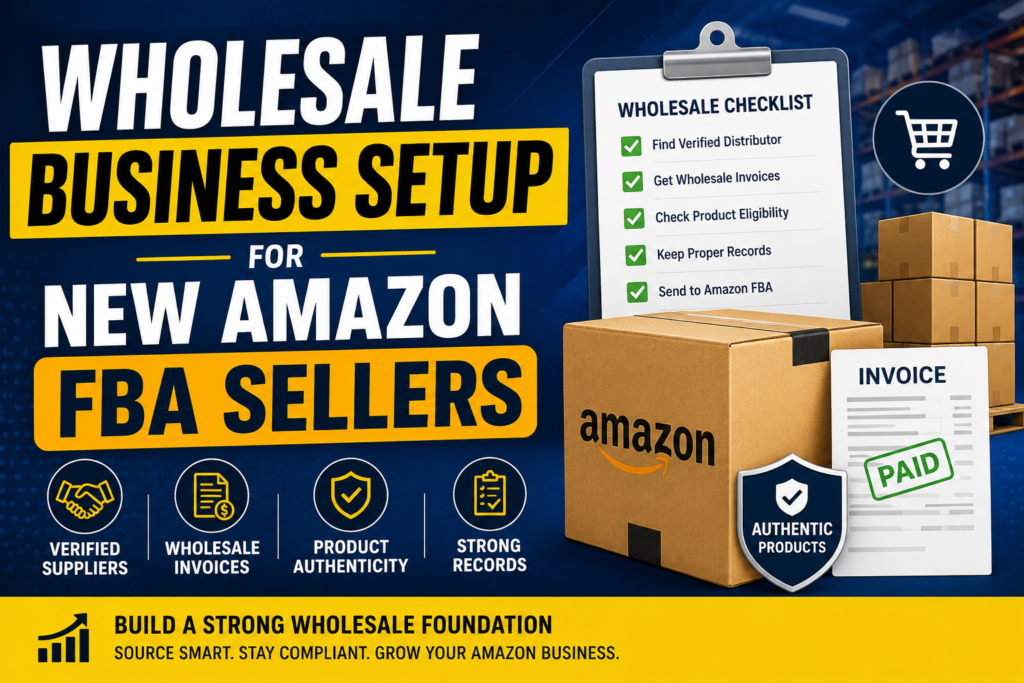
Quick Answer
A wholesale business setup for Amazon FBA means creating a proper sourcing system where sellers buy authentic products from verified wholesale distributors, keep clear invoices, check category requirements, manage inventory records, and follow Amazon’s documentation expectations. A good setup may help sellers keep better sourcing records and may support approval requests depending on Amazon’s requirements, category rules, and marketplace policies. Amazon may ask sellers for itemized invoices from suppliers to verify product details and policy compliance.
What Is a Wholesale Business Setup for Amazon FBA?
A wholesale business setup is the complete system a seller uses to buy products from suppliers and resell them through Amazon FBA. It is not just about buying bulk inventory. It includes supplier verification, invoice management, product selection, brand research, category checking, and account health planning.
For new Amazon sellers, wholesale can be a more structured model than random product buying because it focuses on sourcing from legitimate business suppliers. Instead of buying from retail stores or unknown online sellers, wholesale sellers usually work with distributors, brands, or authorized supply partners.
A proper wholesale setup usually includes:
- A registered business or seller account
- A reliable wholesale distributor
- Product categories that match your selling goals
- Proper invoices and transaction records
- Clear product authenticity documentation
- Inventory planning before sending stock to FBA
- Awareness of Amazon approval and category requirements
Amazon may review sourcing documents in certain situations, especially for restricted categories, brand approvals, product authenticity concerns, or account health reviews. EN Distributions’ previous ungating guide also explains that wholesale invoices may help support approval requests, but they do not guarantee approval because Amazon makes the final decision.
Why Wholesale Business Setup Matters for Amazon FBA Sellers
Many new sellers make the mistake of thinking Amazon FBA is only about finding a profitable product. In reality, the supplier behind that product matters just as much.
If your supplier is not reliable, your business can face problems such as missing invoices, unclear product details, poor packaging, counterfeit risk, delayed inventory, or difficulty proving where the products came from. These issues can become serious if Amazon asks for documentation.
A strong wholesale setup matters because it helps sellers:
Build Better Sourcing Records
Good records make it easier to track where products came from, when they were purchased, how many units were bought, and which supplier issued the invoice. This can help sellers stay organized if Amazon requests documentation later.
Reduce Supplier Risk
Working with a verified distributor can reduce the risk of dealing with fake suppliers, unclear product sources, or unrealistic offers. As explained in the previous guide on how to check if a wholesale supplier is legit, sellers should review supplier details, business information, invoice quality, and product authenticity before buying.
Support Approval Requests
Some sellers may need approval to sell certain brands, categories, or product types. A proper wholesale invoice may help support approval requests depending on Amazon’s requirements, but it should never be treated as a guaranteed approval document.
Protect Account Health
Amazon sellers need to think beyond one sale. Poor sourcing can lead to complaints, authenticity concerns, returns, or documentation issues. A clean wholesale setup can help sellers manage their business more professionally and keep better records for future reviews.
Step-by-Step Wholesale Business Setup for New Amazon FBA Sellers
Setting up a wholesale business becomes easier when you follow a clear process. Here is a practical step-by-step guide for new sellers.
Step 1: Understand Your Business Model
Before contacting suppliers, decide what type of wholesale seller you want to become. Some sellers focus on grocery, beauty, health, household, pet supplies, or branded everyday products. Others prefer slower-moving but more stable items.
Ask yourself:
- Which categories do I understand?
- What is my starting budget?
- Can I handle storage, prep, and shipping?
- Do I want fast-moving products or lower-competition items?
- Are the products restricted or open for my Amazon account?
This step helps you avoid buying inventory blindly.
Step 2: Check Amazon Category and Brand Requirements
Before purchasing any product, check whether you are eligible to sell it on Amazon. Some categories, brands, and ASINs may require approval. Requirements may vary by marketplace, category, product type, and seller account.
New sellers should always check listing eligibility inside Seller Central before placing a wholesale order. This reduces the risk of buying products that cannot be listed or sold from your account.
Step 3: Work with a Verified Wholesale Distributor
Your supplier is one of the most important parts of your wholesale setup. A verified wholesale distributor can provide product information, proper invoices, and clearer sourcing support.
When reviewing a supplier, check:
- Business name and contact details
- Product categories available
- Invoice format and details
- Brand or distributor relationship
- Shipping and fulfillment process
- Communication quality
- Product authenticity support
You can learn more about the company and its wholesale approach by visiting the About EN Distributions page.
Step 4: Request Proper Wholesale Invoices
Invoices are important for record keeping and may help support approval or account review requests depending on Amazon’s requirements.
A useful wholesale invoice should generally include:
- Supplier business name
- Supplier address and contact details
- Buyer business details
- Invoice date
- Product names or identifiers
- Quantities purchased
- Completed transaction details
- Clear and readable format
Amazon’s invoice guidance states that invoices should be itemized and show complete transaction details, and documents that are not completed invoices, are self-issued, or appear digitally manipulated may not be accepted in certain review situations.
Step 5: Keep Product and Supplier Records Organized
Do not wait until there is a problem to organize your documents. Create a simple record system from day one.
You can organize your files by:
- Supplier name
- Purchase date
- Product category
- Invoice number
- ASIN or SKU
- Brand name
- Shipment batch
This makes it easier to respond if Amazon requests information later.
Step 6: Start with Manageable Orders
New sellers should avoid buying too much inventory too soon. Start with products and quantities that match your budget, experience, and account eligibility.
Before scaling, review:
- Amazon fees
- FBA fees
- Storage costs
- Buy box competition
- Sales rank
- Product expiration dates if applicable
- Return risk
- Profit margin after all costs
Wholesale works better when sellers make careful purchasing decisions instead of chasing every “hot product.”
Step 7: Review Inventory Before Sending to FBA
Before sending products to Amazon FBA, check product condition, packaging, labels, expiration dates, and listing accuracy. This is especially important for categories like grocery, beauty, health, and household products.
A clean inventory process can help reduce returns, customer complaints, and listing issues.
Step 8: Keep Learning and Updating Your Process
Amazon policies and category requirements can change. Sellers should regularly review Amazon updates, supplier information, and sourcing best practices.
You can also visit the EN Distributions News section for more wholesale sourcing guides, Amazon FBA tips, and distributor-related updates.
Common Mistakes to Avoid
New Amazon wholesale sellers often make avoidable mistakes. Here are the most important ones to watch out for.
Buying Before Checking Eligibility
Never purchase inventory before checking whether you can sell the product on Amazon. A product may look profitable, but if your account is not eligible, your money can get stuck.
Trusting Unrealistic Supplier Claims
Be careful with suppliers who promise guaranteed ungating, guaranteed approval, or extremely high profits. No distributor can control Amazon’s final approval decision.
Safe wording is important: wholesale invoices may help support approval requests, but approval depends on Amazon’s requirements.
Using Retail Receipts Instead of Wholesale Invoices
Retail receipts are not the same as wholesale invoices. For a serious wholesale business, sellers should work with suppliers that can provide proper business invoices and product sourcing documentation.
Ignoring Product Authenticity
Product authenticity matters. Sellers should avoid unknown sources, suspiciously cheap inventory, and suppliers that cannot explain where products come from.
Poor Document Management
Losing invoices or saving unclear screenshots can create problems later. Always keep original, readable, and organized documents.
Buying Too Much Too Soon
Large orders can create storage pressure, cash flow issues, and slow-moving inventory. New sellers should test carefully and scale with better data.
How a Verified Wholesale Distributor Can Help
A verified wholesale distributor can make the Amazon FBA wholesale process more professional and organized. While no distributor can guarantee Amazon approval, a reliable distributor can help sellers build stronger sourcing records.
A distributor can help with:
- Access to wholesale product categories
- Proper invoice documentation
- Product authenticity support
- Clear business communication
- Category-based sourcing guidance
- Better inventory planning
- Distributor verification support
For Amazon sellers, the goal is not just to buy products. The goal is to build a sourcing system that is cleaner, safer, and easier to manage.
EN Distributions focuses on wholesale sourcing for sellers who want authentic products, proper invoices, and a more structured wholesale process. Sellers can visit the EN Distributions website to explore wholesale sourcing support and available business information.
If you are ready to begin, you can apply for a wholesale account and review which product categories may fit your Amazon FBA business. If you have questions about sourcing, invoices, or distributor verification, you can also contact EN Distributions directly.
Final Thoughts
A strong wholesale business setup gives new Amazon FBA sellers a better foundation. Instead of buying random products from unknown sources, sellers should focus on verified distributors, proper invoices, product authenticity, and organized records.
Wholesale sourcing is not about shortcuts. It is about building a cleaner and more professional supply chain. The right setup may help sellers manage documentation, support approval requests depending on Amazon’s requirements, and reduce avoidable sourcing problems.
Before buying inventory, check your Amazon eligibility, review the supplier carefully, ask about invoices, and keep your records organized.
Ready to start your wholesale sourcing journey? Apply for a wholesale account with EN Distributions, explore suitable product categories, or contact the distributor to discuss your Amazon FBA sourcing needs.
FAQs
1. What is a wholesale business setup for Amazon FBA?
A wholesale business setup is the process of creating a proper sourcing system for Amazon FBA. It includes finding verified distributors, buying authentic products, keeping wholesale invoices, checking category eligibility, and managing inventory records.
2. Do wholesale invoices guarantee Amazon approval?
No. Wholesale invoices do not guarantee Amazon approval. They may help support approval requests depending on Amazon’s requirements, category rules, marketplace policies, brand restrictions, and seller account status.
3. What should new Amazon FBA sellers check before buying wholesale products?
New sellers should check product eligibility, brand restrictions, category requirements, supplier legitimacy, invoice quality, profit margin, product condition, and FBA fees before buying inventory.
4. Why is supplier verification important for Amazon sellers?
Supplier verification helps sellers reduce the risk of fake products, poor documentation, unclear sourcing, and account health issues. A verified supplier can also help sellers keep better business records.
5. Can a wholesale distributor help with Amazon ungating?
A wholesale distributor may provide proper invoices and sourcing documentation that can help support ungating or approval requests. However, Amazon makes the final decision, and requirements may vary by category and marketplace.