
Product Authenticity on Amazon: How Wholesale Sourcing Reduces Risk
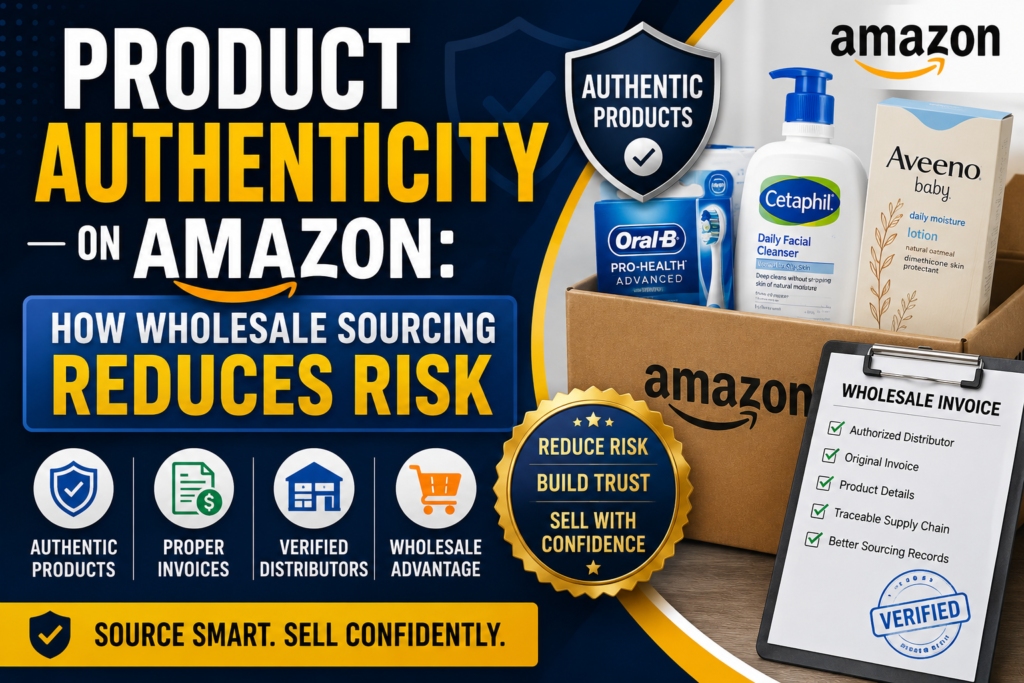
Selling branded products on Amazon can create valuable opportunities, but it also gives sellers an important responsibility: every item must be genuine, correctly described, properly sourced, and supported by reliable business records. The challenge is that a product can look authentic while still creating sourcing problems. A seller may receive genuine-looking inventory from an unknown supplier, list it under the wrong ASIN, receive an incomplete invoice, or discover that the supplier cannot be contacted when Amazon requests verification. That is why product authenticity on Amazon starts before inventory reaches a fulfillment center. It begins with the supplier you choose, the questions you ask, the documents you receive, and the records you maintain. As explained in our previous guide on how to verify a wholesale distributor, supplier verification should happen before payment—not after a listing or account issue appears. Quick Answer How does wholesale sourcing reduce product authenticity risks on Amazon? Wholesale sourcing can reduce risk when sellers purchase products from a traceable distributor, receive detailed commercial invoices, verify product identifiers, confirm selling eligibility, inspect inventory, and keep organized transaction records. These steps do not guarantee Amazon approval or prevent every authenticity complaint. However, they can help sellers demonstrate where their products came from and respond more effectively if Amazon requests sourcing documentation. Amazon recommends researching suppliers, verifying the authenticity and quality of products, and retaining records such as invoices and purchase orders. What Does Product Authenticity Mean on Amazon? Product authenticity means that an item is genuine and comes from the brand or manufacturer represented on the listing. It should not be counterfeit, materially altered, incorrectly branded, or presented as a different version of the product. For Amazon wholesale sellers, authenticity also involves traceability. A seller should be able to explain: A product may be genuine, but weak sourcing records can still make an authenticity review difficult. For example, Amazon may be unable to verify a supplier if the invoice contains incomplete contact information or the business cannot confirm the transaction. AI Snippet Answer What is proof of product authenticity for Amazon sellers? Proof of product authenticity may include original wholesale invoices, supplier contact information, payment records, purchase orders, shipping records, product photographs, and supply-chain documentation. The exact documents required depend on Amazon’s instructions, the product, the complaint, and the marketplace. An invoice is supporting evidence, not an automatic guarantee of approval. Why Product Authenticity Matters for Amazon FBA Sellers Product authenticity matters because customers expect to receive the exact branded product shown on the Amazon listing. When the received item appears different, damaged, used, expired, improperly packaged, or suspicious, the customer may submit a complaint or return request. Authenticity problems can also affect a seller’s ability to list certain products and maintain healthy account records. It Protects Customer Trust Customers rely on the brand name, photographs, product details, size, pack count, and condition information shown on the listing. Problems can occur when: Even a genuine product can create complaints when it does not match the customer’s expectations or the listing information. It Supports Better Documentation Amazon may request invoices or other sourcing information for certain selling applications, authenticity reviews, or policy matters. Amazon’s invoice guidance states that submitted invoices should contain identifiable supplier information, product details, and transaction information. Buying from a professional distributor can help sellers maintain: These records can help sellers respond in a more organized way when documentation is requested. It Can Affect Selling Eligibility Some products, categories, and brands require approval before a seller can list them. Seller Central may display either “Sell this product” or “Apply to sell,” depending on the seller’s eligibility and the product’s requirements. A product being available from a wholesaler does not mean every Amazon account is eligible to sell it. Requirements may vary by brand, ASIN, category, marketplace, and seller account. It Supports Account Health Management Authenticity complaints, product-condition complaints, intellectual-property concerns, and incorrect listing matches may create account health issues. Wholesale sourcing cannot remove all risk. However, buying through a traceable supplier and maintaining proper documents can help sellers avoid preventable problems caused by unknown inventory sources, informal receipts, or mismatched products. Step-by-Step Guide to Reducing Authenticity Risk Step 1: Check Your Eligibility Before Buying Search for the exact product in Seller Central before placing a wholesale order. Confirm: Do not assume that another seller’s ability to list the product means your account has the same access. Step 2: Verify the Wholesale Supplier A supplier should be treated as a business partner, not simply a source of low-priced inventory. Review the supplier’s: You can review the background and sourcing approach of EN Distributions before beginning the account application process. For a more detailed supplier-checking process, read our guide on verifying a wholesale distributor before purchasing inventory. Step 3: Understand the Supplier’s Relationship With the Brand Ask how the supplier obtains the inventory. Useful questions include: An authorized distributor and a general wholesaler are not always the same. An authorized distributor normally has a recognized relationship with a manufacturer or brand, while a wholesale supplier is a broader term for a company selling products in bulk. Our guide to the difference between an authorized distributor and a wholesale supplier explains why this distinction matters for Amazon sellers. Step 4: Request a Proper Wholesale Invoice Ask about the invoice before making payment. A professional wholesale invoice should generally include: The buyer’s information should match the business information connected to the seller account wherever possible. Amazon’s wholesale-sourcing guidance recommends keeping purchasing invoices and notes that sellers may need an invoice from a manufacturer or distributor—or authorization from a brand—when a product requires approval. A valid invoice may help support approval requests or authenticity reviews, depending on Amazon’s requirements. It does not guarantee ungating or approval. Step 5: Match Every Product to the Correct ASIN Do not rely only on the brand name or general product title. Compare the wholesale product with the Amazon listing by checking: For example, a single unit and a two-pack may look almost identical but belong