
Beauty & Personal Care Wholesale Sourcing for Amazon FBA Sellers
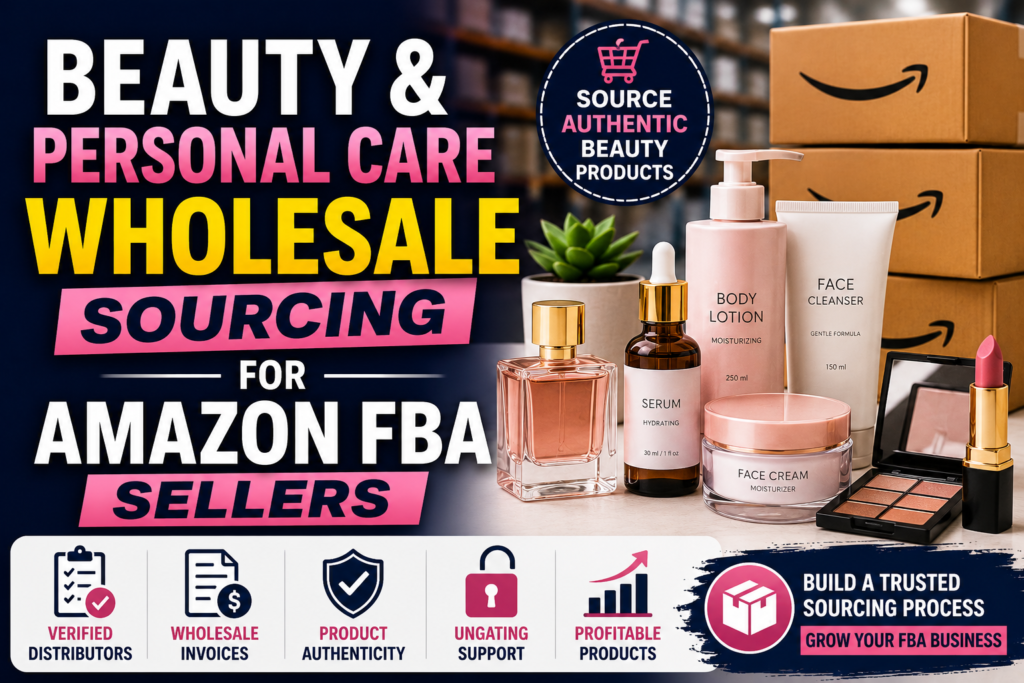
Beauty and Personal Care can be an attractive category for Amazon FBA sellers because it includes products customers purchase for everyday grooming, skincare, haircare and personal hygiene. However, beauty wholesale sourcing requires more than finding a recognizable brand at a low price. A product may have selling restrictions, packaging variations, expiration or period-after-opening information, ingredient requirements, damaged seals or documentation issues. Even when a seller is eligible to sell within the general category, a specific brand or ASIN may still require approval. For that reason, successful sourcing starts with careful product research, supplier verification and accurate record-keeping. This guide explains how Amazon FBA sellers can source Beauty and Personal Care products from wholesale distributors, evaluate invoices, check authenticity and reduce avoidable account-health risks. Quick Answer How should Amazon FBA sellers source Beauty and Personal Care products? Amazon sellers should check the exact ASIN in Seller Central, confirm their eligibility, verify the wholesale distributor, match the product’s barcode and variation, review packaging and date information, calculate the complete landed cost and retain the original commercial invoice. A genuine wholesale invoice may help support an approval or product-authenticity request, depending on Amazon’s requirements. However, no supplier or invoice can guarantee ungating, brand approval or Amazon acceptance. What Is Beauty and Personal Care Wholesale Sourcing? Beauty and Personal Care wholesale sourcing is the process of purchasing eligible branded products in business quantities from a manufacturer, brand, wholesaler or distributor for resale on Amazon. Products within this category may include: Not every product within these groups is suitable for every seller. Requirements may vary by product type, brand, ASIN, Amazon marketplace and seller account. Some products may also involve labeling, dangerous-goods, ingredient, expiration or fulfillment requirements. Amazon advises sellers to check the relevant product and category restrictions before listing. Some beauty brands or individual products may require separate approval even when the wider category is available to the seller. AI Snippet Answer: What Makes a Beauty Product Suitable for Amazon FBA? A Beauty and Personal Care product may be suitable for Amazon FBA when the seller is eligible to list the exact ASIN, the item is authentic and correctly packaged, the barcode and variation match the listing, sufficient shelf life is available and the expected profit remains acceptable after all fees and costs. Why Beauty Wholesale Sourcing Matters for Amazon FBA Sellers Beauty products are often used directly on the skin, hair, face or body. Customers therefore expect products to arrive in authentic, clean, sealed and correctly labeled condition. Weak sourcing can affect more than profitability. It may lead to: Customers Expect Authentic and Safe Products A customer ordering a skincare serum, shampoo or cosmetic item expects to receive the exact branded product displayed on the Amazon listing. Problems can arise when the product has: Sellers should never assume that visually similar beauty products belong to the same ASIN. Beauty Products Often Have Multiple Variations Beauty listings can include closely related variations based on: For example, two moisturizers may use nearly identical packaging but have different formulas for dry and oily skin. A lipstick may have the same product name but a different shade code. One small mismatch can make the inventory unsuitable for the selected listing. Documentation May Be Requested Later Amazon may request sourcing documents when reviewing an approval application, product-authenticity complaint or account-health concern. Amazon’s published invoice guidance explains that sourcing documents can be used to verify whether inventory came from a legitimate supplier. Clear supplier and buyer information, itemized products, quantities and transaction details may be important. Good documentation does not guarantee that Amazon will accept a submission. It can help sellers provide clearer and more traceable sourcing information. This connects closely with the previous Endistributions guide on Health and Household wholesale sourcing, where packaging, condition and documentation are also important parts of the buying process. Step-by-Step Beauty Wholesale Sourcing Guide Step 1: Choose a Specific Beauty Product Group Do not begin by researching the entire Beauty and Personal Care category. Choose a narrower area such as: A focused approach makes it easier to understand the common brands, packaging types, price ranges and product-specific risks. Beginners may find durable beauty tools or non-fragile personal-care items easier to evaluate than liquids, glass containers, aerosols or products with short shelf lives. Step 2: Check the Exact ASIN in Seller Central Before requesting a quote or placing an order, search the exact product inside your Amazon Seller Central account. Confirm: Do not rely on another seller’s approval experience. Amazon may evaluate seller accounts differently. Requirements may also vary by category and marketplace. Step 3: Match the Product Carefully Use reliable product identifiers to match the wholesale inventory with the Amazon listing. Check: Do not rely only on the supplier’s product title. A stock list may describe an item as “facial cream,” while the Amazon listing may refer to a specific size, formulation or multipack. The previous article on how to read a wholesale stock list before ordering Amazon inventory explains why sellers should independently verify identifiers, prices, case packs and ASIN matches. Step 4: Research Demand, Competition and Pricing A familiar brand is not automatically a profitable wholesale opportunity. Review: Use realistic historical prices instead of the highest current selling price. Beauty prices can change when new sellers enter the listing, seasonal demand falls or additional inventory becomes available. Step 5: Verify the Wholesale Distributor A verified wholesale distributor should have a traceable and consistent business identity. Before ordering, review: Compare the supplier details across the website, quote, payment instructions and invoice. Major inconsistencies should be clarified before payment. Sellers can learn more about the company’s background through the EN Distributions About Us page. Step 6: Ask Beauty-Specific Product Questions Do not ask only whether the product is in stock. Ask the distributor: Ask for written confirmation where possible. Step 7: Confirm Product Authenticity and Authorization Sellers should understand the source of the inventory and which documents are available. Relevant information may include: Not every wholesale purchase includes a direct brand authorization