
Amazon FBA Fee Breakdown Every Wholesale Seller Should Understand
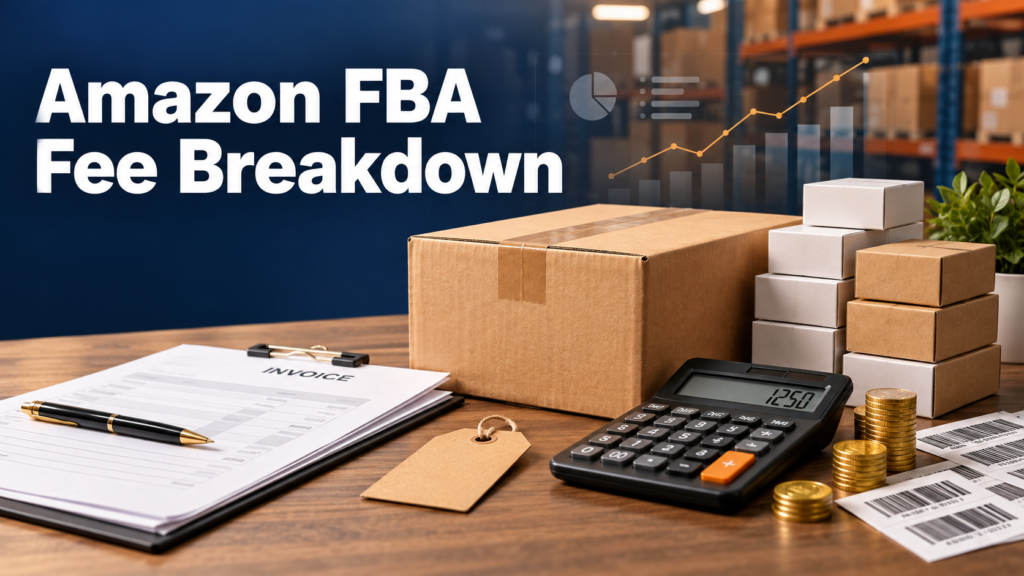
Amazon wholesale can look profitable on a product spreadsheet until Amazon fees, storage charges, prep costs, and returns enter the picture. A product may sell regularly, but that does not automatically make it a good FBA buy. Sellers need to understand the full cost behind every unit before placing a wholesale order. This guide breaks down the main Amazon FBA fees wholesale sellers should understand, how they fit into a practical profit calculation, and what to check before you commit capital to inventory. The goal is not to memorise every possible charge. It is to build a repeatable method for judging whether a product still leaves enough margin after real operating costs. Quick Answer: Amazon FBA wholesale sellers generally need to account for the referral fee, FBA fulfilment fee, storage costs, inbound shipping, product cost, preparation or labelling costs, and potential return or removal costs. Calculate estimated profit by subtracting all expected costs from the selling price, then review the margin before buying inventory. Amazon’s charges and requirements may vary by category, marketplace, product size, and season, so verify current figures in Seller Central. What Is Included in an Amazon FBA Fee Breakdown? An Amazon FBA fee breakdown is a unit-by-unit view of the costs that affect a product’s profitability. It starts with the customer selling price and subtracts every predictable cost connected with acquiring, preparing, storing, and fulfilling that unit. For a wholesale product, the core formula is: Estimated profit = Selling price − Amazon fees − wholesale cost − shipping/prep costs − expected operating costs The calculation is simple in principle, but the detail matters. If you only subtract the wholesale purchase price and one Amazon fee, you may overlook costs that slowly erode your margin. This is why our earlier article on hidden costs that reduce Amazon wholesale profits is a helpful next read: it looks at the expenses sellers often forget after the initial product calculation. The main cost areas to review What fees do Amazon FBA wholesale sellers pay?Amazon FBA wholesale sellers commonly pay referral fees, fulfilment fees, storage fees, inbound shipping and product-preparation costs. The exact charges depend on the product, category, size, marketplace, and Amazon’s current fee schedule. Why Amazon FBA Fees Matter for Wholesale Sellers Wholesale buying often involves case packs and larger purchase quantities. That can improve unit cost, but it also increases the impact of a poor buying decision. If your fee estimate is off by even a small amount per unit, the total impact can become significant across a larger order. Understanding fees helps you decide whether to: Fee awareness also supports better inventory planning. Overstock can lead to extended storage exposure, while stockouts can interrupt sales momentum. For a deeper look at this balance, see overstock versus stockout in Amazon wholesale inventory. Step-by-Step Guide to Calculating Your Amazon FBA Costs Step 1: Start with the realistic selling price Do not base your calculation on the highest price you have seen on an Amazon listing. Use a realistic price based on the current offer landscape, your product condition, and the competition you expect to face. If the price is volatile, build your calculation around a conservative figure rather than a best-case scenario. For example, if a product has recently sold between $24 and $30, planning around $30 may make the opportunity look better than it really is. A cautious price assumption gives you more room for market changes. Step 2: Add the referral fee Amazon generally charges a referral fee for each sale. The rate can depend on the product category and marketplace. Treat it as a percentage of the sale price unless Amazon’s current fee details state otherwise for your product. Check the exact category before you buy. A product that appears similar to another item may be placed in a different category, which can affect the estimate. When possible, use Amazon’s current revenue calculator or Seller Central fee tools for the actual ASIN. What is an Amazon referral fee?An Amazon referral fee is a selling fee charged by Amazon when an item is sold. It is commonly calculated as a percentage of the sale price, but the amount can vary by category and marketplace. Step 3: Estimate the FBA fulfilment fee The FBA fulfilment fee covers Amazon’s pick, pack, shipping, customer-service, and return-handling processes for eligible FBA orders. It is typically influenced by factors such as the product’s size tier and shipping weight. This is why accurate dimensions matter. A small difference in packed size or weight can move an item into a different fee tier. Use the dimensions of the final sellable unit, including any bagging, boxing, or bundle packaging you will add. Do not estimate from an unprepared product alone. If you sell a bundle, calculate the fee based on the completed bundle, not on the fee of one component. Step 4: Include monthly storage costs FBA storage costs apply while inventory is held in Amazon fulfilment centres. These charges can vary based on inventory size, time of year, and current Amazon policies. They are easy to overlook because they may seem small per unit, but slow-moving cases can change the economics of a wholesale purchase. Estimate how long the inventory is likely to sit. A fast-moving product and a product expected to remain in storage for several months should not be evaluated in the same way. Review historical sales pace where you can, and buy quantities that match your cash flow and replenishment ability. Step 5: Calculate your true landed product cost Your landed cost is more than the supplier’s unit price. It should include the wholesale cost plus the share of shipping, delivery, handling, prep-centre charges, labels, protective packaging, and any other expense needed to make the item FBA-ready. A clear formula is: Landed cost per unit = Product cost + supplier shipping share + prep cost + label cost + inbound shipping share Suppose a supplier charges $10 per unit, shipping to your prep location adds $0.60 per unit, labelling and
Hidden Costs That Reduce Amazon Wholesale Profits
A product can look profitable when you first compare the wholesale price with its Amazon selling price. But once the order is placed, the real numbers often begin to change. Amazon referral fees, FBA fulfillment fees, prep costs, storage charges, inbound shipping, returns, and slow-moving inventory can all reduce the profit you expected to make. These costs do not always appear in one place, which is why many new wholesale sellers feel surprised when a “good” product produces only a small return—or no meaningful profit at all. The good news is that most of these costs can be planned for. You do not need to predict every possible expense perfectly. You simply need a consistent process for calculating your true landed cost before you place a wholesale order. This guide explains the hidden costs in Amazon wholesale and how to account for them before they affect your margins. Quick Answer Hidden costs in Amazon wholesale often include Amazon referral and FBA fees, inbound shipping, prep and labeling, storage, returns, price changes, damaged inventory, and the cost of money tied up in slow-selling products. To protect profit, calculate your total landed cost per unit—not just the supplier price. Your landed cost should include the product cost, shipping, prep, labels, taxes where applicable, and a realistic allowance for returns or unexpected issues. Always review current fees in Seller Central because requirements may vary by category and marketplace. What Are Hidden Costs in Amazon Wholesale? Hidden costs are expenses that are easy to overlook when evaluating a wholesale product for Amazon FBA. They are not always “hidden” by Amazon or your supplier; rather, they may be missed because sellers focus mainly on purchase cost and selling price. For example, a seller might buy a product for $12 and see it selling on Amazon for $28. At first glance, the deal seems attractive. But after subtracting Amazon fees, shipping to the fulfillment center, prep materials, returns, and price competition, the actual profit may be far lower. A more realistic profit calculation looks like this: Selling Price – Amazon Fees – Product Cost – Inbound Shipping – Prep Costs – Storage Allowance – Return Allowance = Estimated Net Profit This does not mean every product needs a complicated spreadsheet. It means sellers should evaluate the complete cost of getting one sellable unit from a verified supplier into a customer’s hands. Why Hidden Costs Matter for Amazon FBA Sellers Wholesale is often built on repeatability. You find products that meet your criteria, place orders, send inventory to Amazon, monitor performance, and reorder when the numbers continue to make sense. If your calculations ignore important costs, you may reorder products that are not truly profitable. Over time, this can affect cash flow and make it harder to invest in better opportunities. Understanding your real costs can help you: This connects directly with inventory planning. If you have read our articles about how often Amazon sellers should reorder wholesale inventory, inventory forecasting for Amazon wholesale sellers, or seasonal inventory planning, you already know that timing matters. However, the amount you reorder should also reflect the full cost of carrying that inventory. Step-by-Step Guide to Finding Your True Amazon Wholesale Cost 1. Start With the Wholesale Product Cost The first number is the supplier’s unit price. This may include case pricing, minimum order quantities, quantity discounts, or shipping terms that affect the final amount you pay. Do not only look at the lowest advertised unit cost. Ask practical questions: A low purchase price is helpful, but it does not automatically create a profitable Amazon listing. 2. Add Amazon Referral and FBA Fulfillment Fees Amazon generally charges a referral fee when an item sells. For FBA products, there is also a fulfillment fee that covers services such as picking, packing, shipping, customer service, and returns processing. Fees can depend on the product category, selling price, size tier, and shipping weight. This is why sellers should check the current fee estimate in Seller Central or Amazon’s revenue calculator before purchasing inventory. Do not rely on an old calculation from a similar product. Small differences in dimensions or weight can change the expected FBA fee. 3. Include Inbound Shipping to Amazon Inbound shipping is the cost of moving inventory from your supplier, warehouse, prep center, or office to Amazon’s assigned fulfillment center. This cost may include: For smaller orders, inbound shipping per unit can be much higher than expected. Divide the total shipping expense by the number of units shipped to understand its real effect on each product. 4. Account for Prep, Labels, and Packaging Amazon FBA preparation costs are usually manageable per unit, but they add up when you handle many products. Some inventory may only need a label, while other products need poly bags, bubble wrap, seal stickers, multipack labels, or special handling. Your prep cost may include: Even if you prepare inventory yourself, your time has value. You do not need to assign a high labor cost to every unit, but it is useful to track how long larger shipments take. This helps you decide whether self-prep remains efficient as your wholesale business grows. 5. Consider Storage and Inventory-Age Risk FBA storage fees are a normal part of selling through Amazon, but slow-moving inventory can become expensive. Products that remain in fulfillment centers for longer periods may affect your cash flow and create additional charges depending on Amazon’s current policies. Storage risk is especially important when: This is why forecasting should be based on actual sales data, not only on a single strong month. A product that sells consistently at a moderate pace can sometimes be safer than a product with a high sales rank but unstable pricing. 6. Build in a Return and Damage Allowance Not every unit you send to Amazon will create a perfect sale. Customers may return products, items may arrive damaged, or inventory may become unsellable. You cannot always know the exact return rate in advance, but you can include a modest allowance