
Millions of Americans who depend on Social Security may face a serious financial shock in the coming years. A new analysis warns that monthly Social Security checks could be reduced by an average of about $500 per month if the retirement trust fund becomes insolvent by the end of 2032. The possible reduction would equal around a 24% cut in typical benefits, according to an analysis from the Committee for a Responsible Federal Budget.
This warning is important because Social Security is not just an extra income source for many retirees. For millions of older Americans, it is the main money they use to pay for housing, groceries, medicine, utilities, and daily living costs. A $500 monthly cut could create major stress for households that already live on fixed incomes.
Why Social Security Benefits Could Be Cut
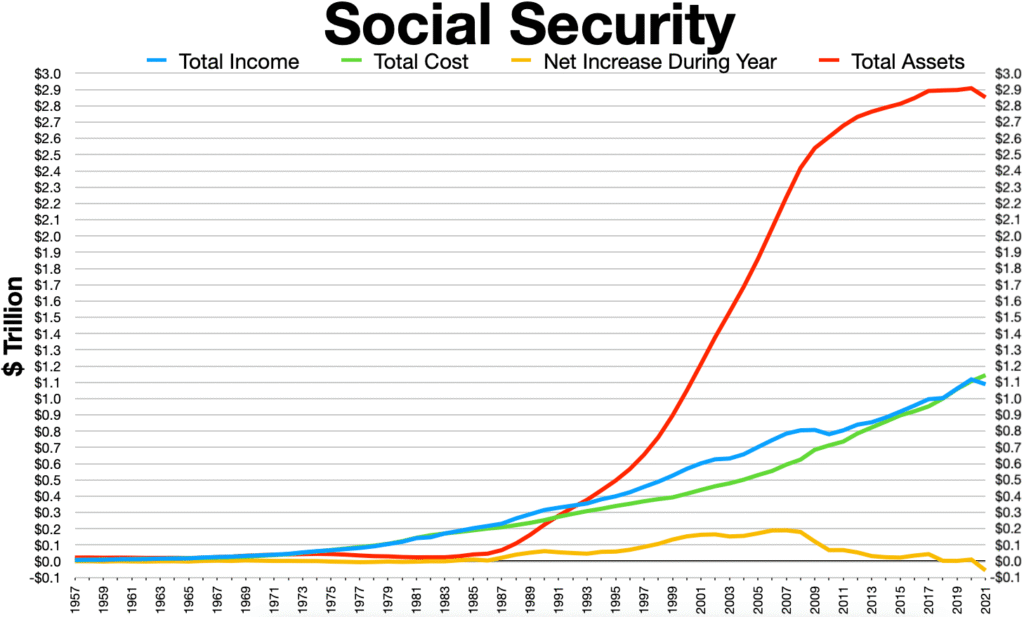
Social Security is funded mostly through payroll taxes paid by workers and employers. For many years, the program collected enough money to cover benefits and build reserves in its trust fund. But now, the program is facing pressure because more baby boomers are retiring, people are living longer, and the number of beneficiaries is growing faster than the money coming into the system.
The Social Security trust fund helps cover the gap between the program’s income and what it owes in benefits. If the fund runs out, Social Security would not stop completely. Instead, the program would still collect payroll taxes, but it would only be able to pay benefits based on the revenue coming in. That is why retirees could see automatic benefit reductions unless Congress changes the law or improves the program’s finances.
What the New Report Says
The Committee for a Responsible Federal Budget says the retirement trust fund is currently projected to be exhausted in 2032, less than seven years away. If that happens, all retirees could face an immediate 24% benefit cut under current law. The report estimates that average monthly cuts would range from $459 to $556 depending on the state.
Nationally, the average cut would be about $500 per month. For many seniors, that is more than a small adjustment. It could mean choosing between paying rent, buying groceries, or covering health care expenses. The report also says average monthly benefit cuts would be more than $500 in 29 states.
Which States Could See the Biggest Cuts?
Some states could face larger monthly benefit reductions than others. According to the report, the states with the biggest average monthly cuts include:
| State | Estimated Monthly Cut |
|---|---|
| Connecticut | $556 |
| New Jersey | $554 |
| New Hampshire | $553 |
| Delaware | $549 |
| Maryland | $541 |
| Washington | $531 |
| Minnesota | $530 |
| Massachusetts | $527 |
| Michigan | $523 |
| Utah | $523 |
These numbers show that the issue is not limited to one part of the country. Retirees in both high-income states and smaller states could feel the impact. The report says no state would be spared from the effects of Social Security insolvency.
How Many People Could Be Affected?
The report estimates that about 63 million Americans could be affected if the retirement program faced a 24% cut today. This includes retired workers, survivors, spouses, and dependents. In many states, more than 15% of the population would be directly impacted.
States such as Maine, West Virginia, Vermont, Delaware, Montana, and New Hampshire would have some of the highest shares of residents affected. This is because these states have larger older populations or more people who rely on retirement benefits. For local economies, this could also reduce spending in communities where Social Security checks support small businesses, pharmacies, grocery stores, and service providers.
Why a $500 Cut Matters So Much
For working families, $500 may already be a major part of a monthly budget. For retirees, it can be even more serious because many do not have the option to work more hours or easily increase income. A cut of this size could affect:
- Rent or mortgage payments
- Food and grocery budgets
- Prescription medicine
- Utility bills
- Transportation costs
- Emergency savings
- Support for dependents
Many retirees already depend heavily on Social Security. CBS News reported that a Senior Citizens League survey found 73% of retirees rely on Social Security for more than half of their income, while 39% depend on it for all of their income.
This means a benefit cut would not just reduce comfort. It could directly affect basic survival for many older Americans.
Does Insolvency Mean Social Security Will Disappear?
No. This is an important point. Social Security insolvency does not mean checks would completely stop. The program would still receive payroll tax money from current workers. However, without enough money in the trust fund, the program would not be able to pay full scheduled benefits.
So the risk is not that Social Security disappears overnight. The risk is that benefits become smaller unless lawmakers take action before the deadline. This is why experts and policy groups are warning Congress to act early instead of waiting until the problem becomes an emergency.
What Can Congress Do?
Fixing Social Security will require political decisions. Some proposals include increasing payroll taxes, raising or removing the income cap on wages subject to Social Security taxes, adjusting future benefits, changing retirement age rules, or using a mix of tax increases and benefit reforms.
One commonly discussed proposal is removing or raising the payroll tax cap. In 2026, wages above $184,500 are not subject to Social Security payroll taxes, according to the CBS report. Supporters argue that taxing more high-income earnings could bring more money into the system. Critics argue that tax increases could affect workers, employers, or the economy.
The challenge is that every solution has trade-offs. But waiting too long could make the eventual changes more painful.
Why This News Is Important Now
The 2032 date may sound far away, but for retirement planning, it is very close. People who are already retired could be affected. Workers close to retirement may also need to rethink savings plans if no solution is passed. Younger workers may worry about whether Social Security will be stable when they retire.
The report’s main message is simple: if policymakers do not act, benefit cuts could happen automatically. That would affect retirees in every state and could reduce household income by thousands of dollars per year.
Conclusion
The possibility of a $500 monthly cut to Social Security checks is a serious warning for retirees, families, and lawmakers. Social Security remains one of the most important financial support systems in the United States, but its retirement trust fund is under pressure. If the fund becomes insolvent in 2032, benefits could be reduced by about 24% unless Congress takes action.
For millions of Americans, this is not just a policy debate. It is about rent, food, medicine, and daily security. The sooner lawmakers address the funding gap, the better chance retirees have of avoiding sudden and painful benefit cuts.
click here for wholesaler account : https://endistributions.com/apply-for-wholesale/