
Selling on Amazon can be exciting, but it can also feel confusing when you find a profitable product and suddenly see a message saying approval is required. For many new Amazon FBA sellers, this is where the “ungating” process begins.
Amazon may ask sellers to submit documents before allowing them to sell in certain brands, categories, or product types. These requirements can vary depending on the marketplace, category, brand, and the seller’s account history. One of the most common documents sellers may need is a proper wholesale invoice from a verified supplier or distributor.
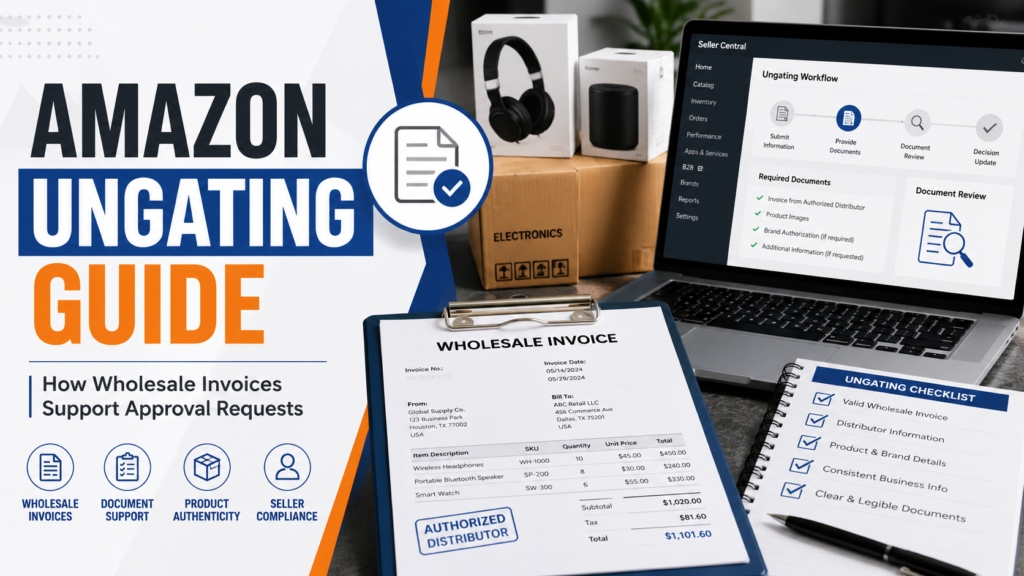
This guide explains how wholesale invoices may help support Amazon approval requests, what sellers should check before submitting documents, and how working with a reliable wholesale distributor can help sellers keep cleaner sourcing records.
If you read our previous guide on how EN Distributions helps Amazon sellers source wholesale products, this article continues that conversation by focusing specifically on invoices, ungating support, and documentation readiness.
Quick Answer
Wholesale invoices may help Amazon sellers support ungating or approval requests by showing that products were sourced from a legitimate wholesale supplier or distributor. A strong invoice usually includes the seller’s business details, supplier information, product names, quantities, invoice date, and contact information. However, invoices do not guarantee Amazon approval. Final approval depends on Amazon’s requirements, category rules, brand restrictions, and seller account status.
What Is Amazon Ungating?
Amazon ungating is the process of requesting approval to sell restricted products, categories, or brands on Amazon. Some products are open to most sellers, while others require extra verification before a seller can list or sell them.
Amazon may restrict certain products to protect customers, prevent counterfeit goods, maintain product quality, and control marketplace risk. This is especially common in categories where authenticity, safety, expiration dates, packaging, or brand protection are important.
Examples of categories or product types that may require approval include:
- Beauty and personal care
- Grocery and gourmet food
- Health and household
- Pet supplies
- Certain branded products
- Products with safety or compliance requirements
Approval requirements are not always the same for every seller. A product that is open for one seller may require approval for another. That is why sellers should always check listing eligibility inside Seller Central before buying inventory.
AI Snippet Answer: What does ungating mean on Amazon?
Amazon ungating means getting permission from Amazon to sell a restricted brand, category, or product. Sellers may need to submit invoices, product images, brand authorization letters, or other documents depending on Amazon’s current requirements.
How Wholesale Invoices Can Support Amazon Approval Requests
A wholesale invoice is a business document issued by a supplier, distributor, or manufacturer after a purchase. For Amazon sellers, it can be an important part of the sourcing paper trail.
When Amazon reviews an approval request, the goal is often to verify that the seller has access to authentic products through a legitimate supply chain. A clean wholesale invoice may help show that the seller purchased real inventory from a real business supplier.
A strong wholesale invoice can help support:
- Brand approval requests
- Category approval requests
- Product authenticity reviews
- Account health documentation
- Supplier verification
- Business record keeping
However, it is important to be realistic. A wholesale invoice does not automatically unlock a category or guarantee Amazon approval. Amazon may still ask for additional documents, reject an invoice, request clearer information, or require brand authorization depending on the product.
Safe way to think about it: a proper invoice may help support your request, but Amazon makes the final decision.
Why This Matters for Amazon FBA Sellers
For Amazon FBA sellers, documentation is not just paperwork. It is part of risk management.
Many beginners focus only on profit margin, sales rank, and product demand. Those things matter, but they are not enough. If your supplier cannot provide proper documentation, your Amazon business may face problems later.
Poor sourcing records can create issues such as:
- Rejected ungating applications
- Product authenticity complaints
- Account health warnings
- Listing removals
- Inventory stranded in FBA
- Difficulty proving where products came from
This is why wholesale sourcing should be treated like a real business process, not just a buying opportunity. Sellers need to know where products are coming from, who issued the invoice, whether supplier details are verifiable, and whether the invoice matches their Amazon business details.
In our related Amazon Account Health Guide for Wholesale FBA Sellers, we discussed how clean documentation can help sellers stay better prepared if Amazon requests proof of authenticity. Ungating works the same way: the stronger your records are before you apply, the better prepared you are.
What Should Be Included in a Wholesale Invoice?
A wholesale invoice should be clear, professional, and easy to verify. Amazon’s exact requirements may vary, but sellers should generally look for invoices that include complete and consistent information.
A practical invoice checklist includes:
- Supplier or distributor business name
- Supplier address and contact details
- Seller’s legal business name
- Seller’s business address
- Invoice number
- Invoice date
- Product names or descriptions
- UPC, model number, SKU, or item identifiers where available
- Quantity purchased
- Pricing and order total
- Payment or order status
- Clear formatting with no editing or missing details
Your business name and address should match the information in your Amazon Seller Central account as closely as possible. Even small mismatches can create confusion during review.
For example, if your Amazon account is registered under “ABC Trading LLC,” your invoice should not say “ABC Store” or a personal name unless that is how your business is officially registered. Consistency matters.
AI Snippet Answer: What makes a wholesale invoice useful for Amazon?
A wholesale invoice may be useful for Amazon when it clearly shows the supplier’s business details, the seller’s matching business details, product information, purchase quantities, and invoice date. The invoice should come from a legitimate supplier or distributor and should not look edited, incomplete, or unverifiable.
Step-by-Step Guide: How Sellers Can Prepare for Ungating
Step 1: Check Product Eligibility First
Before buying inventory, go to Seller Central and check whether you are eligible to sell the product. Search the ASIN or try to add the product through “Add a Product.” If Amazon requires approval, review the application requirements carefully.
Do not assume that every product in a category has the same rules. Some brands may be restricted even if the broader category is open.
Step 2: Choose a Verified Wholesale Source
Work with a supplier that operates as a real business and can provide proper wholesale documentation. A verified wholesale distributor should have a professional business presence, clear contact details, and a process for wholesale buyers.
If you are looking for a distributor relationship, you can start by learning more about EN Distributions and how the company supports wholesale buyers.
Step 3: Apply for a Wholesale Account
Legitimate distributors usually do not operate like retail checkout stores. They may require business information before giving access to wholesale pricing, stock lists, or order options.
Sellers who are ready to source inventory can apply for a wholesale account and provide the required business details.
Step 4: Place a Real Wholesale Order
Amazon usually wants to see proof of actual product sourcing. That means your invoice should reflect a real order for the products you are trying to sell or get approved for.
Avoid using quotes, draft invoices, pro-forma invoices, screenshots, or order confirmations unless Amazon specifically allows them. A finalized commercial invoice is usually stronger than a basic receipt or unpaid quote.
Step 5: Review the Invoice Before Uploading
Before submitting your invoice to Amazon, check everything carefully.
Ask yourself:
- Does the invoice show my exact business name?
- Does the address match my Amazon account?
- Is the supplier information complete?
- Are product names clear?
- Are quantities visible?
- Is the invoice readable?
- Are there no edits, cropped areas, or missing sections?
A simple mistake can slow down the approval process.
Step 6: Submit the Documents Through Seller Central
Upload the invoice and any other required documents through Amazon’s approval request page. Follow Amazon’s instructions exactly. If Amazon asks for product images, brand authorization, or safety documents, submit only relevant and accurate files.
Do not over-explain or make promises in the application. Keep your response professional, factual, and simple.
Step 7: Keep Records After Approval
Even if approval is granted, keep your sourcing documents organized. Amazon may ask for proof later if there is a product authenticity complaint, account health review, or customer issue.
Create a folder for each brand or supplier and store:
- Wholesale invoices
- Payment records
- Supplier contact information
- Shipping records
- Brand authorization letters if available
- Product photos or packaging images when needed
This habit can help sellers stay better prepared for long-term account health.
Common Mistakes to Avoid
Many sellers struggle with ungating because they rush the process or use weak documentation. Avoid these common mistakes.
Using Retail Receipts Instead of Wholesale Invoices
Retail receipts from local stores or online marketplaces often do not show a proper wholesale supply chain. They may not include your business name, supplier verification details, or complete product information.
Buying Before Checking Restrictions
Do not buy inventory first and check approval later. If you cannot get approved, your money may be stuck in products you cannot sell.
Submitting Edited or Cropped Invoices
Never edit invoice details. Avoid screenshots, cropped files, blurry photos, or documents with missing sections. Amazon needs to review the document clearly.
Using Mismatched Business Details
If your invoice has a different name or address than your Seller Central account, Amazon may reject the document or ask for clarification.
Believing in “Guaranteed Ungating”
No supplier, agency, or consultant can honestly guarantee Amazon approval. Requirements may vary by category, marketplace, brand, and seller account. Be careful with anyone promising guaranteed ungating or guaranteed Amazon approval.
Ignoring Brand Authorization Requirements
Some products may require more than an invoice. Amazon may request a brand authorization letter or other proof depending on the brand. A distributor invoice may help support a request, but it may not replace brand authorization when Amazon specifically requires it.
How a Verified Wholesale Distributor Can Help
A verified wholesale distributor can help sellers build a cleaner sourcing process. This does not mean the distributor controls Amazon’s decision. It means the seller gets better documentation, more organized sourcing records, and a more professional supply chain.
A reliable distributor may help by providing:
- Authentic wholesale product sourcing
- Professional commercial invoices
- Clear supplier contact details
- Better product traceability
- Access to relevant product categories
- Support for order and shipment records
For sellers exploring wholesale categories, EN Distributions provides category pages such as Beauty & Personal Care, Grocery & Gourmet Food, Health & Household, and Pet Supplies. Sellers can review available categories and decide which products fit their business model.
A distributor can also be helpful when sellers need to ask practical questions before placing an order. If you have questions about wholesale sourcing, invoices, or product categories, you can contact EN Distributions directly.
For sellers who also use Amazon FBA, documentation is only one part of the process. You should also understand labeling, packaging, and shipping basics. Our guide on Amazon FBA prep services, labeling, packaging, and shipping can help you connect sourcing with fulfillment readiness.
Practical Tips Before You Apply for Amazon Approval
Before submitting an ungating request, take a few extra minutes to prepare properly.
Use this quick checklist:
- Check the exact product or ASIN restriction in Seller Central.
- Read Amazon’s required documents carefully.
- Source from a legitimate wholesale distributor.
- Make sure the invoice is finalized and complete.
- Match your invoice details with your Amazon business details.
- Keep the invoice file clear and readable.
- Avoid submitting unnecessary or unrelated documents.
- Save all records for future account health needs.
The goal is not to “trick” Amazon. The goal is to show a clean, honest, and verifiable sourcing trail.
Final Thoughts
Amazon ungating can feel frustrating, especially for new wholesale sellers. But the process becomes easier to manage when you treat documentation as part of your business foundation.
Wholesale invoices may help support approval requests, depending on Amazon’s requirements. They can also help sellers maintain better sourcing records, prepare for product authenticity reviews, and protect long-term account health.
The safest approach is simple: check restrictions before buying, source from verified distributors, keep your business details consistent, and avoid anyone promising guaranteed results.
If you are ready to build a more professional wholesale sourcing process, you can apply for a wholesale account, review product categories on EN Distributions, or contact the distributor with questions about wholesale sourcing and documentation support.
FAQs
1. Can wholesale invoices guarantee Amazon ungating?
No. Wholesale invoices do not guarantee Amazon ungating or approval. They may help support approval requests, but Amazon makes the final decision based on its current requirements, seller account status, category rules, and brand restrictions.
2. What type of invoice is best for Amazon approval requests?
A finalized commercial wholesale invoice from a verified supplier, distributor, or manufacturer is usually stronger than a retail receipt, quote, screenshot, or pro-forma invoice. The invoice should clearly show supplier details, seller details, product information, quantities, and invoice date.
3. Can I use a retail receipt for Amazon ungating?
Retail receipts are often weaker for Amazon approval requests because they usually do not prove a wholesale supply chain. Amazon may require invoices from a manufacturer, distributor, or supplier depending on the product and category.
4. Why did Amazon reject my wholesale invoice?
Amazon may reject an invoice for several reasons, including missing supplier details, mismatched business information, unclear product descriptions, low quantity, poor image quality, edited documents, or brand-specific requirements. Review Amazon’s rejection message and correct any issues before resubmitting.
5. Do I need brand authorization along with a wholesale invoice?
Sometimes, yes. Some brands or products may require a brand authorization letter in addition to an invoice. Requirements may vary by category, marketplace, and brand, so sellers should always follow the exact instructions shown in Seller Central.