
Amazon FBA Inventory Planning for Wholesale Businesses

For Amazon FBA wholesale sellers, buying inventory is easy compared with planning it properly. Many sellers find a product with potential, place an order, and send it to Amazon—only to discover that they ordered too much, ran out too quickly, or tied up too much cash in slow-moving stock. These issues are common, especially when you are building a wholesale business and managing several products at once. Good inventory planning helps you make purchasing decisions with more control. It allows you to balance product demand, supplier lead times, Amazon fees, storage capacity, cash flow, and the risk of stockouts. The goal is not to predict every sale perfectly. The goal is to create a repeatable process that helps you order more thoughtfully, stay in stock where possible, and avoid holding inventory you cannot move. Quick Answer Amazon FBA inventory planning for wholesale businesses means estimating product demand, tracking sales speed, considering supplier and shipping lead times, setting reorder points, and avoiding overbuying. Sellers should review inventory regularly, use accurate wholesale invoices, and source through verified distributors to keep purchasing records organized. Results and Amazon requirements may vary by category and marketplace. What Is Amazon FBA Inventory Planning? Amazon FBA inventory planning is the process of deciding what to order, when to reorder, and how much inventory to send to Amazon fulfillment centers. For wholesale sellers, this process starts before products are purchased. You need to consider whether the item is suitable for your account, whether demand appears stable, how quickly the distributor can fulfill an order, and whether your business has enough capital to hold the inventory. A simple inventory plan usually includes: The best inventory plan is not necessarily complex. A spreadsheet, inventory software, or structured replenishment routine can work well if the information is accurate and reviewed regularly. Why Inventory Planning Matters for Amazon FBA Sellers Inventory planning affects almost every part of an Amazon wholesale business. When you run out of stock, your listing may lose sales momentum. You may also miss an opportunity to sell during a busy period. When you overstock, your cash is tied up in inventory, and storage-related costs can become harder to manage. For a wholesale seller, poor planning can also lead to rushed sourcing decisions. This may cause someone to buy from an unfamiliar supplier simply because the original product is out of stock. That can create unnecessary risk around documentation, product authenticity, and account health. Strong planning helps sellers: This article also connects with our guides on seasonal inventory planning for Amazon wholesale sellers, hidden costs that reduce Amazon wholesale profits, and managing overstock vs. stockouts efficiently. Each topic supports the same goal: making inventory decisions based on practical business information rather than impulse. Step-by-Step Guide to Planning Wholesale Inventory for Amazon FBA Start With Demand, Not Just Product Price A low wholesale price does not automatically make an item a good inventory choice. Before ordering, look at how the product fits your business model. Review factors such as: A product may look profitable on paper but become less attractive once you account for inbound shipping, prep, storage, returns, and price competition. Start with a realistic order size, particularly when testing a new product. This gives you a chance to understand demand without committing too much capital at once. Calculate Your Average Sales Pace Your sales pace tells you how quickly a product is selling over a specific period. For example, if you sell 60 units in 30 days, your average sales pace is around two units per day. This is not a guarantee that future sales will remain the same, but it gives you a useful starting point for planning. Use a consistent review period, such as the last 30, 60, or 90 days. Shorter periods can be useful for fast-moving products, while longer periods may provide a steadier picture for slower items. When reviewing sales pace, also ask: Do not base every reorder on one strong week. Look for patterns before making larger commitments. Understand Supplier and Delivery Lead Times Lead time is the total time between placing an order and having inventory available for sale on Amazon. For a wholesale FBA seller, this may include: If your average sales pace is two units a day and the full lead time is 20 days, you may need at least 40 units to cover that period. You may also need extra safety stock in case of delays. Lead times can change due to product availability, shipping volume, carrier issues, or Amazon receiving delays. Review them regularly instead of assuming every order will arrive on the same schedule. Set a Clear Reorder Point A reorder point is the inventory level that signals it is time to place another order. A simple formula is: Reorder Point = Average Daily Sales × Lead Time + Safety Stock For example: Your reorder point would be: 2 × 20 + 15 = 55 units This means you may consider reordering when your total available and incoming inventory reaches around 55 units. Your safety stock does not need to be excessive. It is simply a buffer for normal uncertainty, such as slightly faster sales or slower delivery. The right amount depends on your budget, product volatility, seasonality, and supplier reliability. Plan for More Than Amazon’s Current Stock Level Do not only look at the units currently marked as available on Amazon. Your inventory view should include all relevant locations and stages. Track: This broader picture helps prevent duplicate orders or unnecessary stockouts. A seller may think an item is low when another shipment is already inbound, or assume enough inventory is available when most units are reserved. Review Landed Cost Before Reordering Landed cost is the total cost of getting a product ready for sale, not just the wholesale price. It may include: Review these costs before scaling an order. If a product’s selling price has fallen or fees have increased, the same order quantity may no longer make sense. Keeping an updated landed-cost
How to Verify a Wholesale Distributor Before Buying Inventory
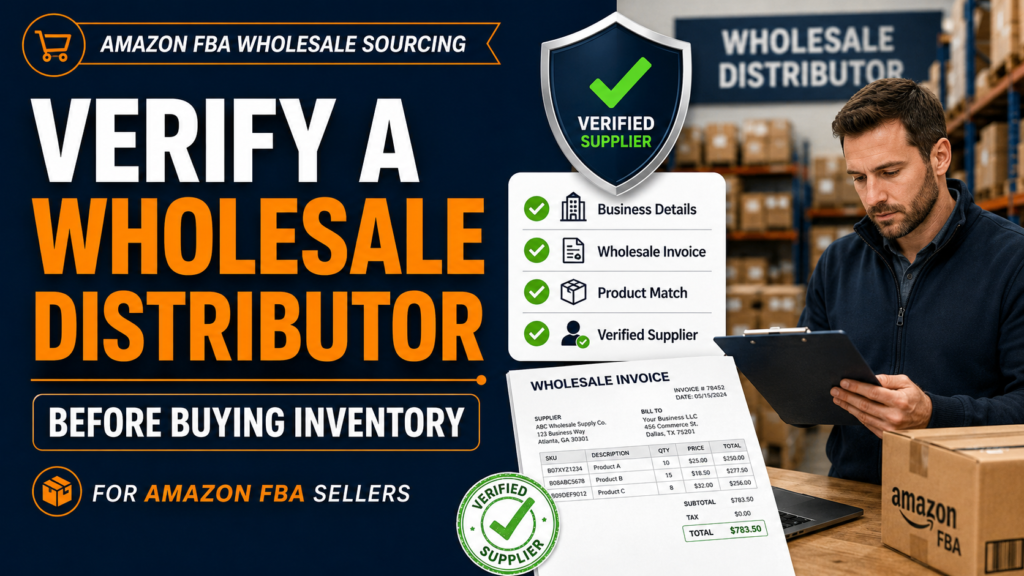
Buying inventory is one of the biggest decisions an Amazon FBA seller makes. The product may look profitable, the sales rank may look attractive, and the wholesale price may seem good — but if the distributor is not verified, the risk can be bigger than the opportunity. Many beginner wholesale sellers focus only on product cost and ROI. That is understandable, but Amazon wholesale sourcing is not only about finding cheap products. It is about finding authentic products from reliable suppliers, keeping proper invoices, and building a clean sourcing record that can support your business if Amazon asks questions later. This article continues the topic from our previous guides on wholesale business setup for new Amazon FBA sellers, Amazon account health for wholesale FBA sellers, and how to read a wholesale stock list before ordering Amazon inventory. Now, let’s focus on one of the most important steps before buying inventory: verifying your wholesale distributor. Quick Answer To verify a wholesale distributor before buying inventory, check the company’s business details, website, contact information, invoice format, product categories, brand relationships, and communication quality. Ask whether they provide proper wholesale invoices and confirm that the products match Amazon listings before ordering. A verified distributor can help sellers keep better sourcing records, but Amazon approval or ungating still depends on Amazon’s requirements. What Does It Mean to Verify a Wholesale Distributor? Verifying a wholesale distributor means checking whether the supplier is a real, professional, and reliable business before you spend money on inventory. It is not enough for a supplier to say, “We sell authentic products.” Sellers should look for proof, business transparency, and proper documentation. For Amazon FBA sellers, distributor verification usually includes checking: A verified wholesale distributor should be able to explain what they sell, how they invoice, what categories they support, and what sellers can expect during the buying process. If a supplier avoids basic questions, uses unclear payment methods, or cannot provide proper invoices, that is a warning sign. For sellers who want a structured sourcing process, working with a company like EN Distributions can make the buying journey more organized because sellers can review business information, services, and contact details before moving forward. Why Distributor Verification Matters for Amazon FBA Sellers Distributor verification matters because Amazon sellers are responsible for the products they list and sell. Even if the supplier makes a mistake, the seller may still face the account health issue, product complaint, or documentation request. Amazon may ask sellers for sourcing documents depending on the product, brand, category, marketplace, or account situation. These documents may include wholesale invoices, supplier details, brand authorization letters, product images, or other records. That is why sellers should verify suppliers before buying inventory — not after a problem happens. A verified distributor can help sellers: This is especially important for branded products and categories such as beauty, health, household, grocery, baby, supplements, toys, and personal care. These categories may have additional documentation or approval requirements depending on Amazon’s rules. Distributor verification also protects your cash flow. If you buy from the wrong supplier, you may end up with products that are restricted, mismatched, expired, damaged, slow-moving, or not accepted by Amazon. Good verification helps you make smarter buying decisions before your money is tied up in inventory. Step-by-Step Guide: How to Verify a Wholesale Distributor Before Buying Inventory 1. Check the Distributor’s Business Identity Start with the basics. A real wholesale distributor should have clear business information. Visit their website, review their about page, check contact details, and see whether the company explains what it does. Look for: You can review a company’s background through its About Us page before starting a business conversation. A supplier that hides basic company information may not be the best choice for Amazon wholesale sourcing. 2. Review Their Website and Services A professional distributor should clearly explain its services. The website does not need to be fancy, but it should help sellers understand what the company offers. Check whether the distributor provides information about: For example, sellers can review the services offered by EN Distributions to understand what type of wholesale sourcing support may be available before applying. 3. Ask About Wholesale Invoices Before placing an order, ask the distributor if they provide proper wholesale invoices. For Amazon sellers, invoices are not just receipts. They are important business records. A good wholesale invoice should usually include: Invoices do not guarantee Amazon approval, but they may help support approval requests, authenticity reviews, or account health documentation depending on Amazon’s requirements. Avoid suppliers who only provide screenshots, informal payment notes, or unclear receipts. Your invoice should look like a real business document. 4. Confirm Product Authenticity and Source Clarity Product authenticity is one of the biggest concerns for Amazon sellers. Before buying, ask the distributor how they source products and whether the products are genuine, new, and suitable for resale. You do not need to ask aggressive questions, but you should ask practical ones: A trustworthy distributor should answer these questions clearly. If the answers are vague or inconsistent, move carefully. 5. Check Product Categories Before Ordering Not every product category is suitable for every Amazon seller. Some categories may require approval, invoices, safety documents, brand authorization, or other information depending on Amazon’s rules. Before buying inventory, check whether the product is restricted in your Amazon Seller Central account. Search the product or ASIN and see whether Amazon shows “Sell this product” or “Apply to Sell.” Do this before placing your wholesale order. Do not assume that a product is open for selling just because another seller is already selling it. 6. Match the Product With the Correct Amazon Listing A common mistake is buying the right brand but matching it to the wrong Amazon listing. This can create serious problems. Before ordering, compare: If the stock list says “1 pack” but the Amazon listing is “2 pack,” your profit calculation will be wrong. If the UPC does not match, you may be looking at the wrong