
Amazon FBA Sourcing Mistakes New Sellers Should Avoid
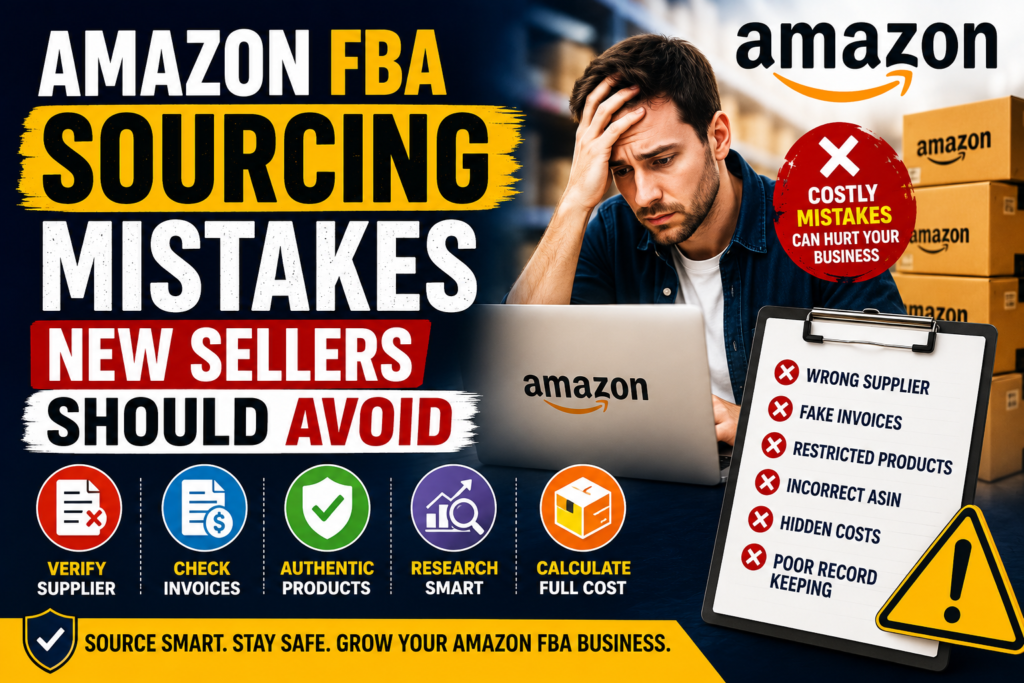
Starting an Amazon FBA wholesale business can feel simple: find a branded product, receive a wholesale price, calculate the margin, and place an order. In practice, a product can look profitable on a spreadsheet and still become an expensive mistake. New sellers often purchase inventory before checking restrictions, trust suppliers without proper verification, accept weak invoices, or overlook important costs. Some mistakes reduce profit, while others can leave sellers with inventory they cannot list or documentation that may not support an Amazon review. The goal is not to remove every possible risk. It is to build a sourcing process that helps you make informed decisions before your money is tied up in inventory. Quick Answer The most common Amazon FBA sourcing mistakes include: A safer approach is to verify the distributor, confirm the exact product, review Amazon requirements, calculate the complete landed cost, and begin with a manageable order. What Are Amazon FBA Sourcing Mistakes? Amazon FBA sourcing mistakes are preventable errors made while selecting products, evaluating suppliers, reviewing documentation, calculating costs, or purchasing wholesale inventory. Before ordering, a seller should be able to answer four important questions: When one of these answers is unclear, the order requires more research. AI Snippet Answer What is the biggest Amazon FBA sourcing mistake? The biggest mistake is purchasing inventory before verifying both the supplier and the exact Amazon listing. A profitable-looking product can become unsellable when the seller is restricted, the ASIN does not match, the invoice is unclear, or the total costs remove the expected margin. Why Sourcing Mistakes Matter for Amazon FBA Sellers Amazon sellers are responsible for the products they list, their condition, and the sourcing records connected to their inventory. Some brands, categories, and individual products require selling approval. Amazon explains that certain branded-product applications may request a purchase invoice from a manufacturer or distributor or a brand authorization letter. Requirements can vary, so sellers should follow the exact instructions shown in their Seller Central account. Amazon also requires accurate product information and restricts illegal, unsafe, and certain regulated products. Product matching and eligibility checks should therefore happen before inventory is purchased. Poor sourcing decisions can lead to: Our previous guide on wholesale business setup for new Amazon FBA sellers explains why business documents, supplier relationships, invoices, product research, and recordkeeping should be prepared before a serious wholesale order is placed. Step-by-Step Practical Guide to Safer Amazon FBA Sourcing Step 1: Confirm Selling Eligibility Before Buying Search the exact product in Seller Central before purchasing inventory. Do not check only the general category. Selling limitations may apply to a specific brand, condition, product type, or individual ASIN. A supplier may legally sell the product to you while your Amazon account is still restricted from listing it. Look for notices such as: Check your eligibility again shortly before making payment because requirements may vary by account, category, product, and marketplace. Step 2: Match the Product to the Exact ASIN A familiar brand name is not enough. Compare the supplier’s product information with the Amazon product detail page. Confirm the following details: A one-pack product should not be sold against a two-pack listing. Amazon also maintains specific multipack identifier rules, so sellers should verify the listing structure carefully before ordering. Even a small mismatch can affect profitability calculations and create customer complaints or return problems. Step 3: Verify the Wholesale Distributor A professional website or attractive stock list does not automatically prove that a supplier is reliable. Review the distributor’s: Amazon’s guidance for finding wholesalers recommends validating supplier credibility before doing business. For a complete due-diligence checklist, read how to verify a wholesale distributor before buying inventory. Step 4: Understand the Supplier’s Brand Relationship An authorized distributor and a general wholesale supplier are not always the same. An authorized distributor normally has a recognized relationship with a manufacturer or brand. A general wholesaler may purchase through distributors, importers, closeout channels, or other legitimate sources. Both may offer authentic inventory, but the available documentation and level of product traceability can differ. Our guide to the difference between an authorized distributor and a wholesale supplier explains what Amazon sellers should verify before purchasing branded products. Remember that distributor authorization does not automatically give you permission to list every product, brand, or ASIN on Amazon. Step 5: Review the Invoice Before Sending Payment Ask what the final invoice will include before placing your order. A wholesale invoice is an important sourcing record, not simply a payment receipt. A proper invoice should clearly show: Amazon publishes invoice requirements for certain policy appeals and may use invoices to evaluate whether products were sourced from legitimate suppliers. Sellers should always follow the exact document request displayed in Seller Central. Never edit an invoice yourself. When a genuine mistake appears, ask the supplier to correct it and issue a new original document. Step 6: Calculate the Complete Landed Cost A product is not profitable simply because the Amazon selling price is higher than the supplier’s wholesale price. Your calculation should include: Use a realistic selling price based on current competition and price history. Avoid calculating profit using a temporary high price that may disappear before your inventory becomes available. Step 7: Start With a Controlled First Order A larger order may offer a lower unit price, but it also increases your exposure to mistakes. A smaller first order allows you to evaluate: Increase your order size only after the supplier and product have performed as expected. Step 8: Keep Complete Sourcing Records Do not rely only on email history or your Amazon inventory dashboard. Create an organized digital folder for every supplier, order, or brand. Keep copies of: Organized sourcing records can help sellers manage inventory, calculate costs, track supplier performance, and respond more efficiently when documentation is requested. Common Amazon FBA Sourcing Mistakes to Avoid Choosing Products Only by Sales Rank Sales rank is only one product-research signal. It does not show your complete competition, selling restrictions, price stability, expected returns, or final profit. Research