
Starting an Amazon FBA wholesale business sounds simple from the outside: find products, buy them in bulk, send them to Amazon, and make sales. But once new sellers begin, they quickly realize that wholesale is not only about finding “profitable products.” It is about setting up the business correctly from the beginning.
A weak setup can create problems later. You may struggle with supplier approvals, missing invoices, unclear product records, restricted categories, account health issues, or inventory that looks profitable but does not move as expected.
That is why a proper wholesale business setup for Amazon FBA sellers matters. Before ordering inventory, sellers should understand the basics: business documents, supplier verification, invoice records, product research, category requirements, and account health protection.
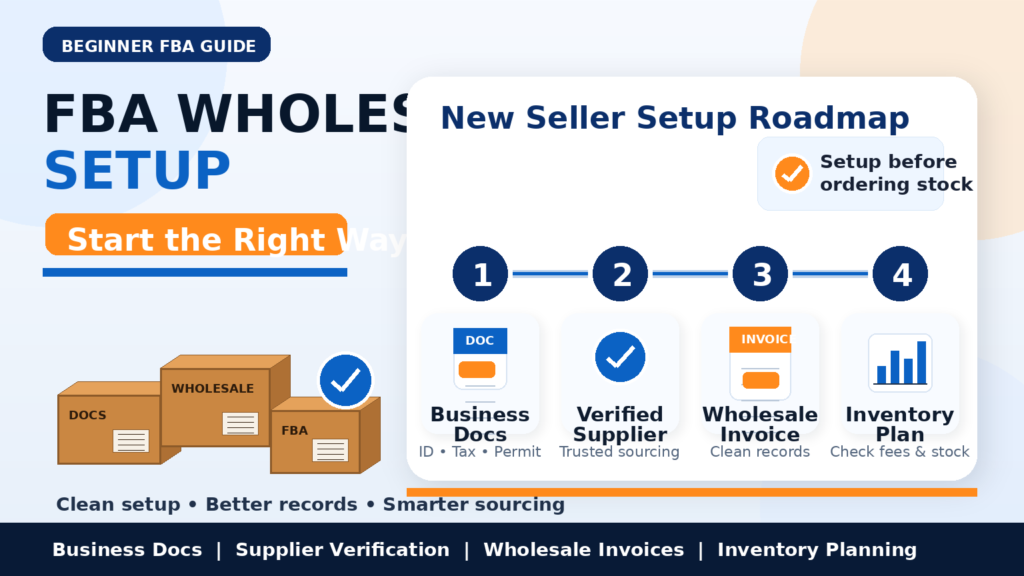
In the previous guide on how to read a wholesale stock list before ordering Amazon inventory, we discussed how sellers should review product titles, UPCs, case packs, wholesale costs, and Amazon restrictions before buying. This article connects with that topic by explaining what new sellers should set up before they even place their first serious wholesale order. EN Distributions’ earlier stock-list guide also explains that sellers should verify product details, restrictions, profit calculations, and invoice support before ordering inventory.
Quick Answer
A wholesale business setup for Amazon FBA means preparing your seller account, business documents, supplier relationships, invoice records, product research process, and inventory workflow before buying wholesale products. New sellers should work with reliable wholesale distributors, keep proper invoices, check Amazon restrictions, calculate landed costs, and organize records for account health. Wholesale invoices may help support approval requests depending on Amazon’s requirements, but approval is not guaranteed.
What Is a Wholesale Business Setup for Amazon FBA?
A wholesale business setup is the foundation that helps sellers buy branded products from suppliers or distributors and resell them through Amazon FBA in a more organized way.
In a wholesale model, sellers usually do not create their own products. Instead, they source existing branded products from wholesale suppliers, distributors, or authorized sources. Then they list or sell those products on Amazon where allowed, send inventory to Amazon fulfillment centers, and let Amazon handle storage, packing, shipping, and customer service.
A proper setup usually includes:
- A professional Amazon seller account
- Business information and tax details
- Resale certificate or seller permit where required
- Supplier application details
- Wholesale invoice management
- Product research tools or spreadsheets
- Inventory tracking system
- FBA prep and shipping process
- Account health monitoring routine
- Supplier communication records
This setup helps sellers avoid random buying and build a more professional wholesale sourcing system.
Why Wholesale Business Setup Matters for Amazon FBA Sellers
Wholesale FBA can be a strong model, but it also comes with responsibilities. Amazon sellers are expected to sell authentic products, follow category rules, provide accurate listings, and keep proper documentation.
Amazon may request invoices from sellers to verify that products are sourced from legitimate suppliers. This is one reason new sellers should not treat documentation as an afterthought. If you wait until Amazon asks for proof, it may already be too late to fix weak sourcing records.
A proper setup matters because it can help sellers:
- Avoid buying from unreliable suppliers
- Keep better sourcing records
- Prepare cleaner invoice documentation
- Check product restrictions before ordering
- Understand real profit after fees and shipping
- Reduce avoidable account health risks
- Communicate professionally with distributors
- Build a repeatable wholesale buying process
EN Distributions’ account health guide also explains that wholesale account health is closely connected to sourcing, invoices, supplier records, and how quickly sellers handle account issues.
For beginners, this is especially important. Early mistakes can be expensive. Buying the wrong product, using an unclear supplier, or missing invoice details can create problems before the business has time to grow.
Step-by-Step Practical Guide to Set Up a Wholesale FBA Business
Step 1: Set Up a Professional Amazon Seller Account
Before contacting wholesale distributors, make sure your Amazon seller account is properly created and verified. Most serious wholesale suppliers prefer working with sellers who look prepared and professional.
Check that your account details are accurate, including:
- Legal business name
- Business address
- Phone number
- Tax information
- Bank account details
- Identity verification
- Return address
- Notification email
Your seller account information should match your business documents where possible. This can help reduce confusion when suppliers or Amazon review your information.
Step 2: Prepare Your Business Documents
Wholesale distributors may ask for business details before giving you access to pricing or stock lists. The exact requirements may vary by supplier, state, category, and marketplace.
Common documents may include:
- Business registration details
- EIN or taxpayer identification
- Resale certificate or seller permit
- Business address
- Contact information
- Amazon store name
- Product category interest
- Billing and shipping information
On the Apply for Wholesale page, EN Distributions asks applicants for details such as name, email, phone number, product or service needed, payment method, taxpayer/employer ID, address, city, state, and country.
Having this information ready makes the onboarding process smoother.
Step 3: Choose the Right Wholesale Product Categories
New sellers should not try to sell everything at once. It is better to focus on categories they understand and can manage carefully.
Popular wholesale categories may include:
- Beauty and personal care
- Health and household
- Grocery and gourmet food
- Pet supplies
- Baby products
- Home and general merchandise
EN Distributions’ website includes product category navigation for beauty and personal care, grocery and gourmet food, health and household, and pet supplies.
Before choosing a category, check:
- Amazon selling restrictions
- Expiration date requirements
- Product size and storage needs
- Competition level
- Demand consistency
- Supplier availability
- Documentation needs
Some categories may require extra approval or documentation. Requirements may vary by category and marketplace.
Step 4: Find and Verify Wholesale Suppliers
A supplier should not be selected only because they offer low prices. New sellers should verify whether the supplier is a real business and whether they can provide proper wholesale documentation.
Check these points before ordering:
- Does the supplier have a real website?
- Do they have business contact details?
- Do they explain their wholesale process?
- Can they provide proper invoices?
- Do they work with verified or authorized sources?
- Do they communicate professionally?
- Do they understand Amazon FBA needs?
- Are they transparent about product categories and order process?
EN Distributions describes itself as an Amazon FBA wholesale supplier and distributor in the USA, with sourcing from verified and authorized brands.
This type of supplier verification can help sellers avoid risky sourcing decisions, but sellers should still do their own product and account checks before ordering.
Step 5: Understand Wholesale Invoices
Invoices are one of the most important parts of Amazon wholesale sourcing. A proper wholesale invoice can help show where products came from, when they were purchased, who supplied them, and how many units were bought.
A good wholesale invoice should usually include:
- Supplier business name
- Supplier address
- Supplier phone or contact details
- Buyer business name
- Buyer address
- Invoice number
- Invoice date
- Product name or description
- Quantity purchased
- Unit cost or total cost
- Clear document format
Wholesale invoices may help support approval requests or authenticity reviews depending on Amazon’s requirements. However, an invoice does not guarantee ungating, brand approval, or selling permission.
Avoid relying on:
- Retail receipts
- Screenshots
- Order confirmations
- Packing slips
- Pro-forma invoices
- Edited or unclear documents
Keep every invoice in a clean folder by supplier, date, and product category.
Step 6: Build a Product Research Process
A wholesale stock list is not a shopping list. It is a research starting point.
Before buying any item, check:
- Product title
- Brand name
- UPC or EAN
- Amazon ASIN match
- Pack count
- Current selling price
- FBA fees
- Referral fees
- Estimated profit
- Number of sellers
- Buy Box competition
- Sales rank
- Price history
- Category restrictions
- Expiration date, if applicable
New sellers often make the mistake of calculating profit only from wholesale cost and Amazon selling price. Real profit should include shipping, prep, FBA fees, storage, possible returns, and price changes.
Step 7: Check Amazon Restrictions Before Buying
Before placing an order, check whether your account is allowed to sell the product.
Some products may require:
- Category approval
- Brand approval
- Invoice submission
- Compliance documentation
- Expiration date management
- Product condition approval
- Additional Amazon review
Do not assume that buying from a wholesale distributor automatically gives you permission to sell every product. Approval depends on Amazon’s requirements, your seller account, category rules, marketplace, and the specific product or brand.
Step 8: Plan Inventory, Prep, and Shipping
Once a product passes your research, plan how inventory will move from supplier to Amazon.
Think about:
- Order quantity
- Case pack size
- Shipping cost
- FBA prep needs
- Labeling requirements
- Poly bagging or bundling
- Expiration date labels
- Carton labels
- Shipment creation
- Storage limits
- Restock timing
A clean inventory process helps reduce delays, stranded inventory, and avoidable mistakes.
Step 9: Track Account Health and Records
Amazon account health should be checked regularly, not only when there is a warning.
Create a simple routine:
- Check Account Health dashboard weekly
- Save invoices after every order
- Store supplier emails and payment records
- Monitor product complaints
- Review listing accuracy
- Watch for restricted product alerts
- Respond quickly to Amazon notifications
- Keep stock list and order history organized
Good records can help sellers respond more confidently if Amazon asks for sourcing information.
Common Mistakes to Avoid
Buying Inventory Before Setting Up Documents
Many beginners contact suppliers before preparing business details. This can slow down the approval process and make the seller look unprepared.
Choosing Suppliers Only by Price
Cheap inventory can become expensive if the supplier is unreliable, invoices are weak, or products create account issues.
Ignoring Amazon Restrictions
Never buy inventory before checking selling eligibility. Some products may look profitable but require approval.
Confusing Sales Rank With Guaranteed Sales
Sales rank can help estimate demand, but it does not guarantee sales. Always check competition, Buy Box activity, price history, and seller count.
Not Calculating Landed Cost
Your total cost includes product cost, shipping, prep, FBA fees, referral fees, storage, and possible returns. Without landed cost, profit numbers can be misleading.
Depending on “Guaranteed Approval” Claims
Avoid suppliers or services that promise guaranteed ungating or guaranteed Amazon approval. Safe wording is more realistic: invoices may help support approval requests depending on Amazon’s requirements.
Poor Record Keeping
If invoices, payment records, and supplier communication are scattered, it becomes harder to manage account health and product history.
How a Verified Wholesale Distributor Can Help
A verified wholesale distributor can make the setup process easier for new Amazon FBA sellers by providing a more organized sourcing path.
A distributor may help with:
- Wholesale product access
- Product category options
- Supplier communication
- Professional invoices
- Repeat ordering support
- FBA-focused sourcing guidance
- Better sourcing records
- Inventory planning support
EN Distributions states that it works with verified suppliers and provides services tailored to Amazon FBA, with support for product sourcing, order updates, and account setup questions through its contact page.
If you are new to wholesale sourcing, you can start by visiting EN Distributions, learning more about the company on the About Us page, or submitting details through the wholesale account application.
For direct questions about sourcing, categories, or account setup, sellers can also contact EN Distributions.
Final Thoughts
Setting up a wholesale business for Amazon FBA is not just about buying products. It is about building a clean, professional, and repeatable sourcing system.
New sellers should prepare their business documents, verify suppliers, understand invoices, check Amazon restrictions, calculate real costs, organize inventory records, and protect account health from the beginning.
A strong setup will not guarantee Amazon approval, ungating, or product success. But it can help sellers make better sourcing decisions, keep cleaner records, and operate with more confidence.
If you are ready to start sourcing wholesale products, you can apply for a wholesale account, explore product categories on EN Distributions, or contact the distributor to discuss your business needs.
FAQs
1. What is wholesale business setup for Amazon FBA?
Wholesale business setup for Amazon FBA means preparing your seller account, business documents, supplier relationships, invoices, product research process, and inventory workflow before buying wholesale products.
2. Do new Amazon sellers need a business license for wholesale?
Requirements may vary by location, supplier, and marketplace. Many wholesale distributors may ask for business details, taxpayer information, or a resale certificate before approving an account.
3. Can wholesale invoices help with Amazon approval?
Wholesale invoices may help support approval requests depending on Amazon’s requirements, category rules, brand restrictions, and marketplace policies. However, invoices do not guarantee approval or ungating.
4. What should beginners check before buying wholesale inventory?
Beginners should check product title, UPC, ASIN match, pack count, selling eligibility, wholesale cost, Amazon fees, competition, sales rank, expiration dates, and invoice support before ordering.
5. How can a verified distributor help Amazon FBA sellers?
A verified distributor can help sellers access wholesale product options, receive professional invoices, improve sourcing records, and create a more organized buying process. Requirements and results may vary.