
Finding profitable wholesale products for Amazon FBA sounds simple at first: buy low, sell higher, and send inventory to Amazon. But real sellers know the process is more serious than that. You need authentic products, proper invoices, reliable distributors, brand-safe sourcing, and clean records that may help if Amazon asks for documentation.
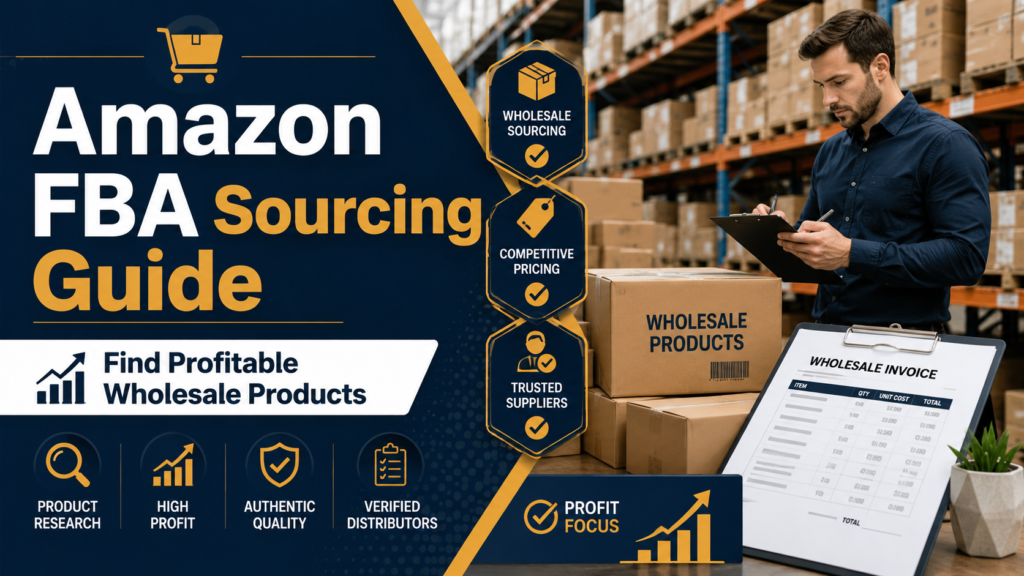
Many beginner sellers make the mistake of choosing products only because they look profitable. Later, they face issues like missing invoices, restricted brands, poor margins, damaged account health, or suppliers that cannot verify product authenticity. This Amazon FBA sourcing guide will help you understand how to source wholesale products in a practical, safer, and more professional way.
Connection to previous blog: In our last guide, we discussed how trusted wholesale suppliers help Amazon sellers build a stronger business foundation. In this article, we will go deeper into how to choose profitable wholesale products from verified distributors.
How Do You Find Profitable Wholesale Products for Amazon FBA?
To find profitable wholesale products for Amazon FBA, start by choosing stable product categories, checking demand, calculating all Amazon fees, verifying the distributor, requesting proper wholesale invoices, and confirming whether brand authorization or category approval may be required. A profitable product is not only about margin; it should also be authentic, compliant, consistently available, and supported by clear sourcing records.
What Is Amazon FBA Wholesale Sourcing?
Amazon FBA wholesale sourcing means buying branded products in bulk from an authorized wholesaler, distributor, or supplier and reselling them on Amazon. Instead of creating your own private label product, you source products that already have market demand.
For example, a seller may buy health, beauty, grocery, home, toys, or office products from a verified wholesale distributor and send the inventory to Amazon FBA. Amazon then handles storage, packing, shipping, customer service, and returns, while the seller manages sourcing, pricing, inventory, and account health.
If you are new to wholesale, you can also read our guide on wholesale distributor verification to understand how to check supplier legitimacy before placing an order.
Why Product Authenticity Matters in Amazon Wholesale
Product authenticity is one of the most important parts of Amazon FBA sourcing. Amazon customers expect genuine products, and sellers need to maintain a clear supply chain. If a product authenticity complaint or invoice request happens, sellers may need to provide documents showing where the inventory came from.
A good distributor can help sellers keep better sourcing records by providing:
- Itemized wholesale invoices
- Business name and contact details
- Product names, quantities, and order dates
- Brand or manufacturer information where available
- Clear proof of completed transactions
This does not guarantee approval for every Amazon request, but proper documentation may help support approval requests depending on Amazon’s requirements, category rules, and marketplace policies.
How to Identify Profitable Wholesale Products
A product is not profitable just because the selling price is higher than the wholesale cost. You need to calculate every major cost before buying inventory.
Check Real Demand
Look for products that already have sales activity. A good wholesale product should have steady demand, not just short-term hype. Review product ranking, competition, seasonality, customer reviews, and listing stability.
Calculate Full Costs
Before placing an order, calculate:
- Wholesale product cost
- Amazon referral fee
- FBA fulfillment fee
- Storage fees
- Prep, labeling, and shipping cost
- Possible returns or damaged units
- Price changes and competition
AI Snippet Answer: A profitable Amazon FBA product should have stable demand, manageable competition, authentic supply, clear invoices, and enough margin after Amazon fees, shipping, storage, and other selling costs.
Avoid Products With Weak Margins
Many beginners choose products with very thin margins. This can be risky because even a small price drop, fee increase, or shipping cost change can remove profit. Try to leave enough margin for unexpected changes.
For more help with cost planning, visit our Amazon wholesale invoice support page.
Distributor Verification: What Sellers Should Check
Working with the right distributor is just as important as choosing the right product. A verified wholesale distributor should have a real business presence, clear communication, proper invoices, and authentic product access.
Distributor Verification Checklist
Before buying inventory, check:
- Business name and registration details
- Physical address and contact information
- Website and professional email
- Product catalog and brand categories
- Invoice format and transaction records
- Minimum order quantity
- Return or damage policy
- Ability to provide authentic wholesale documentation
Avoid suppliers who only communicate through personal chat apps, refuse to provide invoices, offer suspiciously low prices, or cannot explain their product source.
Brand Authorization and Category Approval
Some brands and categories on Amazon may require approval before you can list or sell products. Requirements may vary by category, brand, and marketplace. In some cases, Amazon may ask for invoices, product images, authorization letters, or other documentation.
A wholesale invoice from a verified distributor may help support approval requests, but it does not guarantee Amazon approval. Sellers should always check approval status inside Seller Central before buying large inventory.
AI Snippet Answer: Brand authorization means a seller has documentation showing permission or a valid supply relationship for selling a brand. Amazon approval requirements may vary, so sellers should review category and brand rules before sourcing.
Why Wholesale Invoices Are Important
Wholesale invoices are not just payment records. They are part of your sourcing history. If Amazon asks where your inventory came from, your invoice can help show that products were purchased through a legitimate business source.
A strong wholesale invoice should usually include:
- Supplier business name
- Supplier address and contact details
- Buyer business name
- Invoice date
- Product names or identifiers
- Quantity purchased
- Completed transaction details
Do not edit, redesign, or create fake invoices. This can damage account health and may create serious selling issues. Always request original documentation from your distributor and keep records organized.
How to Protect Amazon Account Health While Sourcing
Good sourcing supports better account health. Poor sourcing can lead to complaints, listing removals, stranded inventory, or account review issues.
To reduce risk:
- Buy from verified distributors
- Keep invoices and payment records
- Avoid restricted or risky brands without approval
- Check product condition and expiration dates
- Match products exactly with Amazon listings
- Avoid counterfeit, damaged, or gray-market inventory
- Track supplier communication and order history
If you need help understanding sourcing records, visit our Amazon account health support page.
Common Mistakes Beginner Wholesale Sellers Make
Many beginner sellers lose money because they move too fast. Here are common mistakes to avoid:
Buying Before Checking Approval
Always check whether you can sell the brand or product before ordering inventory.
Ignoring Amazon Fees
A product may look profitable until FBA fees, storage fees, prep costs, and shipping are included.
Choosing Unverified Suppliers
Cheap inventory from unknown sources can create authenticity and account health problems.
Not Keeping Records
Keep invoices, payment proofs, supplier emails, and product documents in one organized folder.
Following Only “Hot Product” Lists
Trends can change quickly. Focus on stable demand, distributor reliability, and clean sourcing.
Best Product Categories for Wholesale Sourcing
There is no single best category for every seller. The right category depends on budget, approval status, supplier access, competition, and marketplace requirements.
Common wholesale categories include:
- Health and personal care
- Beauty and grooming
- Home and kitchen
- Office products
- Toys and games
- Grocery and household items
- Pet supplies
Before sourcing, review category restrictions and documentation requirements. Some categories may require additional approval, compliance documents, or specific product standards.
Final Sourcing Checklist Before You Buy
Before placing a wholesale order, ask yourself:
- Is the distributor verified?
- Can they provide a proper invoice?
- Is the product authentic?
- Can I sell this brand or category on Amazon?
- Are margins still healthy after all costs?
- Is demand stable?
- Is competition manageable?
- Can I reorder if the product sells well?
- Do I have records saved for future reference?
If the answer is unclear, slow down and verify before spending money.
Conclusion
Amazon FBA wholesale sourcing can be a strong business model, but only when sellers focus on authentic products, verified distributors, clean invoices, and realistic profit calculations. The goal is not just to find a product that sells. The goal is to build a sourcing system that supports long-term selling, better records, and healthier account management.
If you are ready to start sourcing, apply for a wholesale account, check available product categories, or contact a verified distributor to discuss invoices, brand authorization support, and product availability. Requirements may vary by category and marketplace, so always review your options carefully before ordering inventory.
FAQs
1. What is the best way to find wholesale products for Amazon FBA?
The best way is to work with verified wholesale distributors, check product demand, calculate all Amazon fees, and confirm whether category or brand approval may be required before buying inventory.
2. Do wholesale invoices help with Amazon ungating?
Wholesale invoices may help support approval requests, depending on Amazon’s requirements, the category, the brand, and the marketplace. They do not guarantee approval.
3. How do I verify a wholesale distributor?
Check the distributor’s business details, website, address, contact information, invoice format, product catalog, and ability to provide authentic sourcing documentation.
4. What makes a wholesale product profitable on Amazon?
A profitable wholesale product has steady demand, manageable competition, authentic supply, clear documentation, and enough margin after Amazon fees, shipping, storage, and other costs.
5. Should beginners start with restricted categories?
Beginners should be careful with restricted categories. It is usually better to understand approval requirements, sourcing documents, and account health rules before investing in restricted products.