
Robert Irwin has spent his entire life around some of the world’s most powerful and unpredictable animals, but even for the young wildlife conservationist, one crocodile encounter became a heart-stopping reminder of how dangerous his work can be. The 22-year-old son of the late Steve Irwin recently revealed that he survived a terrifying moment with a massive crocodile named “Jimmy Fallon,” a reptile that has grown into what Irwin described as a “Boss croc.”
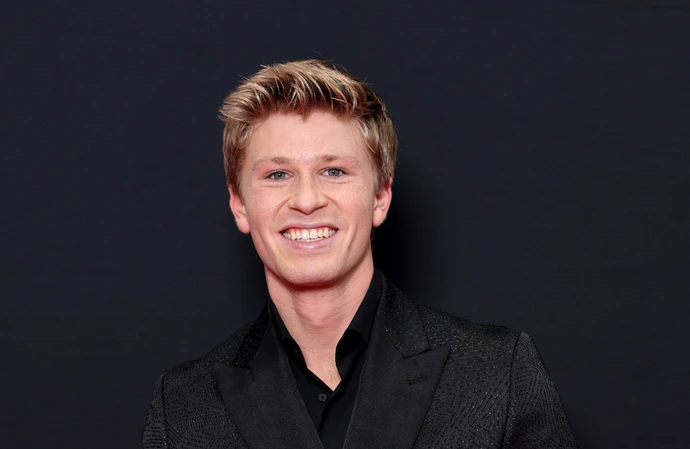
The story came to light during Robert’s appearance on The Tonight Show Starring Jimmy Fallon, where he explained that the crocodile, once small enough to be named playfully after the host, is now a 14-foot giant. What began as part of serious crocodile conservation research quickly turned into a frightening near-death experience when the animal performed a death roll, trapping Robert beneath its enormous weight.
According to Robert, the encounter happened while he was researching methods to better protect and understand wild crocodiles in Australia. The method, inspired by his father Steve Irwin’s conservation work, involves getting extremely close to crocodiles in order to study them safely and effectively. But on this occasion, the animal’s raw strength took over, and Robert suddenly found himself pinned beneath a 700-pound crocodile.
The “death roll” is one of the most feared movements in the crocodilian world. Scientists describe it as a rapid spinning maneuver in which crocodilians rotate around the length of their bodies, often using the movement to subdue or dismember prey. For a human being caught in that motion, the situation can become life-threatening within seconds.
Robert recalled that he had jumped onto the crocodile’s back as part of the research method when the massive reptile suddenly rolled. In that instant, the conservationist was no longer simply handling a crocodile; he was trapped beneath one. With part of his body pinned and one arm reportedly hanging out, he was left wondering what to do next as the full force of the animal pressed down on him.
The terrifying part of the story is how little control a person has once a crocodile begins such a powerful movement. Crocodiles are built for explosive force, especially in water and close-contact situations. Their bodies are muscular, their tails are powerful, and their instinctive reactions can be almost impossible to predict. Robert’s years of experience likely helped him stay calm, but even experience has limits when a 14-foot crocodile is rolling over you.
Fortunately, the encounter ended without injury. Robert explained that the crocodile rolled back the other way, giving him the chance to escape. That single movement may have made the difference between a frightening story and a tragedy. His calm retelling of the event may have sounded humorous on television, especially because the crocodile was named Jimmy Fallon, but the danger behind the moment was very real.
The incident also highlights the unusual life Robert Irwin has lived. While many people know him as a television personality, photographer, and Dancing with the Stars winner, his deepest connection remains wildlife conservation. Australia Zoo describes Robert as someone who grew up with a love of nature, photography, crocodile feeding, and learning about the world around him.
Robert’s work continues the legacy of his father, Steve Irwin, whose fearless approach to wildlife education made him known around the world as “The Crocodile Hunter.” Steve’s mission was not simply to entertain audiences but to make people care about animals that are often feared or misunderstood. Robert has followed that path, using his platform to show that conservation is not always glamorous, easy, or safe.
At Australia Zoo, the Irwin family’s conservation message remains central. The zoo, located on Queensland’s Sunshine Coast, says its mission is connected to Steve and Terri Irwin’s vision of creating one of the world’s leading wildlife conservation facilities. The zoo also supports conservation projects for species including saltwater crocodiles, koalas, tigers, and cheetahs.
That conservation background is important because Robert’s crocodile encounter was not a stunt in the usual sense. While the story is dramatic and headline-grabbing, it came from work connected to understanding and protecting crocodiles. Research involving large predators is always risky, but conservationists often accept those risks because close study can help improve safety, management, and protection for both animals and people.
Still, the encounter shows why crocodiles command so much respect. A crocodile does not need to be angry to be dangerous. A defensive reaction, a sudden roll, or a misread movement can create a serious emergency. Even trained professionals like Robert Irwin know that every interaction with a large crocodile must be treated with caution.
For fans of the Irwin family, the story may feel especially emotional because of Steve Irwin’s legacy. Steve died in 2006 after being injured by a stingray while filming in Australia, a loss that deeply affected wildlife lovers around the world. Robert was very young when his father died, but he has grown up carrying the family’s conservation mission forward.
Robert’s public life has expanded far beyond wildlife shows. He recently won Dancing with the Stars season 34 and has continued appearing in entertainment projects, but his identity remains closely tied to animals and conservation. During the same television appearance, he also reflected on emotional moments from his dancing journey and the role his mother, Terri Irwin, has played in helping him through grief.
The contrast between ballroom dancing and crocodile research may seem extreme, but for Robert, both are part of the same public mission: using attention for something meaningful. Whether he is dancing on television or talking about a frightening crocodile encounter, he often brings the conversation back to family, wildlife, and conservation.
The crocodile named Jimmy Fallon has now become part of that story. What started as a lighthearted name for a small crocodile has turned into a headline-making tale involving a massive reptile capable of overpowering a trained handler. Robert joked that the crocodile is “a goer,” but the story also showed how quickly a playful anecdote can become a serious reminder of nature’s strength.
For viewers, the encounter is both thrilling and unsettling. It is easy to be amazed by Robert’s bravery, but it is also important to understand that such situations should never be copied. Crocodiles are apex predators, and close contact with them should only happen under expert supervision in controlled conservation or professional wildlife settings.
Robert Irwin’s near-death crocodile encounter proves that even a lifetime of training cannot remove the danger from working with wild animals. It also reinforces why the Irwin family’s message has always been built around respect. Loving wildlife does not mean underestimating it. True conservation requires admiration, caution, science, and humility.
In the end, Robert survived because the crocodile rolled back, giving him the chance to get free. The moment could have gone very differently, but instead it became another dramatic chapter in the Irwin family’s long relationship with crocodiles. For Robert, it was a frightening experience. For fans, it was a reminder that the work behind wildlife conservation can be as dangerous as it is inspiring.
FAQs
1. What happened to Robert Irwin during the crocodile encounter?
Robert Irwin revealed that he was death-rolled by a 14-foot crocodile named Jimmy Fallon while taking part in crocodile conservation research in Australia. He was pinned beneath the animal but escaped unharmed when the crocodile rolled back the other way.
2. What is a crocodile death roll?
A death roll is a rapid spinning movement used by crocodilians. Scientists describe it as rotation around the body’s long axis, often used to subdue or tear apart prey.
3. Was Robert Irwin injured?
No serious injury was reported. Robert said he was able to escape after the crocodile rolled back, allowing him to get free.
4. Why was the crocodile named Jimmy Fallon?
Robert said he named the crocodile Jimmy Fallon years earlier, when it was much smaller. The crocodile has since grown into a large 14-foot “Boss croc.”
5. What does Robert Irwin do now?
Robert Irwin is a wildlife conservationist, photographer, television personality, and part of the Irwin family’s ongoing work at Australia Zoo. He is also known for winning Dancing with the Stars season 34.